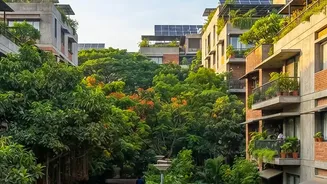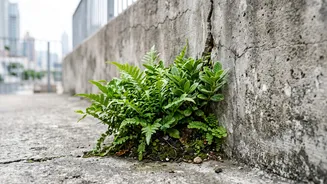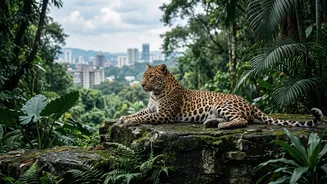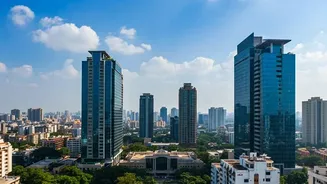






A flash of gold and black spots in the headlights, a hulking shadow on a quiet street. These are not tales from a distant jungle, but the new reality in India's cities, where wildlife is carving out a life among the concrete and chaos.
The New Urban Jungle
Forget the idea
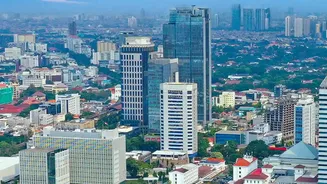
that Indian cities are barren landscapes of just concrete and steel. A different kind of life is taking root. From the bustling metropolis of Mumbai to the tech hub of Bengaluru and the political heart of Delhi, a surprising array of wildlife is adapting to urban environments. This isn't just a few stray animals; it’s a sign of a major ecological shift. As natural habitats shrink due to relentless urban expansion, many species are being pushed into cities. But it's not only a story of displacement. For some adaptable creatures, cities offer a new frontier filled with opportunities: an abundance of food from waste, shelter in man-made structures, and fewer natural predators. This has created a complex, and often tense, new ecosystem where the line between the wild and the city is blurring.
Mumbai’s Leopard Chronicles
Perhaps the most dramatic example of this urban rewilding is Mumbai, a city of over 20 million people that shares its space with a thriving population of leopards. The Sanjay Gandhi National Park (SGNP), a massive green lung in the city's heart, is home to a dense population of these big cats. A 2024 survey identified at least 54 leopards in the park and its surrounding areas. At night, these predators often venture into the adjacent suburbs, navigating alleyways and backyards. Their diet has adapted to the urban menu, with stray dogs making up a significant portion of their food. This has led to a fascinating, if precarious, coexistence. While attacks on humans have occurred, especially in the past, a great deal of effort from conservation groups and the forest department now focuses on awareness and conflict mitigation, teaching residents how to live alongside their feline neighbours.
Beyond the Big Cats
The phenomenon extends far beyond Mumbai's leopards. In Delhi, rhesus macaques have become an integral, and often problematic, part of the urban fabric. They roam through government buildings, temples, and residential colonies, their populations sustained in part by people who feed them for religious reasons. This has led to escalating conflicts and safety concerns. On the outskirts of Bengaluru, a city grappling with rapid expansion, elephants from the Bannerghatta forest are increasingly seen wandering into villages and residential areas, sometimes with tragic consequences. These elephant corridors are frequently disrupted by new roads and construction, forcing the animals into closer contact with humans. Elsewhere, jackals have been spotted in Gurugram, and Nilgai (blue bulls) have famously been seen wandering the empty streets of Noida.
The Roots of Cohabitation
So, why is this happening on such a scale? The primary driver is habitat loss and fragmentation. As cities expand, they consume forests and agricultural land, leaving animals with nowhere to go. This pushes them into human-dominated landscapes in search of food and territory. However, it's also a story of animal ingenuity. Species like leopards, monkeys, and wild boars are incredibly adaptable. They have learned that cities can provide easy meals, from overflowing garbage bins to stray animals, and that buildings and storm drains can offer shelter. In some cases, urban greening projects and cleaner waterways can also create new habitats, inadvertently inviting wildlife back into areas they once abandoned. The result is a landscape where human and animal lives are more intertwined than ever before.
A Fraught Coexistence
This proximity is not without its challenges. Human-wildlife conflict is a growing crisis across India, leading to crop destruction, property damage, and, tragically, loss of life for both humans and animals. Fear and panic often lead to calls for the removal or culling of animals, while retaliatory killings are not uncommon. Yet, there is also a deep-seated cultural tolerance for wildlife in India that creates a unique dynamic. Conservationists, NGOs, and government bodies are working to find a middle ground. The focus is shifting from simple reactive measures, like capturing and relocating animals, to proactive strategies. These include securing wildlife corridors, educating communities on how to avoid conflict, implementing better waste management to reduce food attractants, and promoting urban planning that accounts for the needs of wildlife from the outset.