


Seeing the Invisible
To understand why infrared is a game-changer, we first have to think about light. The light our eyes can see is just a tiny fraction of the total light in the universe. Beyond the red light we can perceive lies infrared, a wavelength of light that behaves
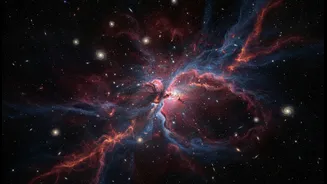
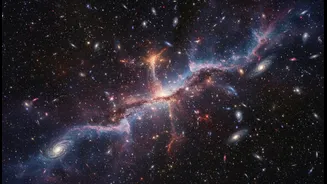
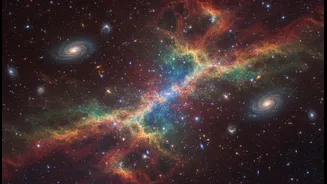
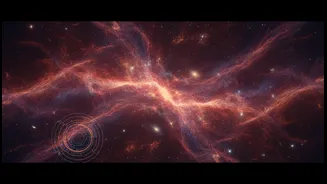
differently. While cosmic dust clouds can block visible light, acting like a thick fog, infrared light can pass right through them. This makes infrared telescopes invaluable for peering into dusty regions of space, like the centres of galaxies and areas where new stars are born. It allows astronomers to see what was previously hidden from view, revealing the full picture of celestial objects that were once obscured.
The Challenge of Looking Back in Time
When we look at very distant galaxies, we are also looking back in time because of the immense time it takes their light to reach us. The universe has been expanding since the Big Bang, and this expansion stretches everything within it, including waves of light. Light from the most distant galaxies, which were formed in the early universe, has been stretched so much on its long journey to us that what may have started as visible or ultraviolet light arrives as infrared light. This phenomenon is called 'cosmological redshift'. To see the universe's first-born galaxies, you cannot just use a traditional telescope; you have to look for this stretched, redshifted infrared signal.
A New Golden Eye on the Universe
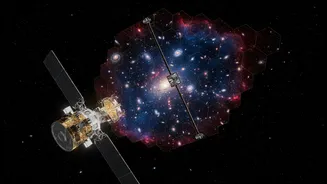
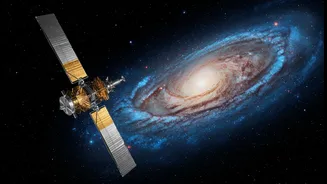
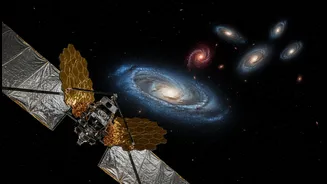
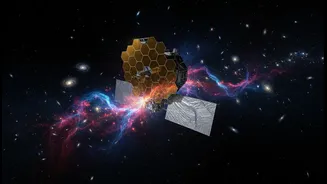
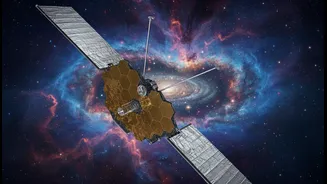
This is where the James Webb Space Telescope (JWST) comes in. Launched as the successor to the Hubble Space Telescope, JWST was specifically designed to be a master of infrared astronomy. With its enormous mirror and incredible sensitivity to infrared light, it can detect the faint, ancient light from the dawn of the cosmos. It is showing us what the universe was like just a few hundred million years after the Big Bang, an era that was largely out of reach for previous observatories. This powerful new tool is not just taking prettier pictures; it is fundamentally changing our ability to study the origins of everything.
Galaxies More Mature Than Expected
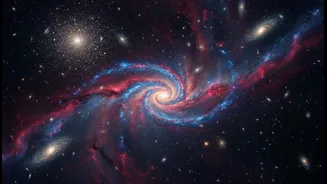
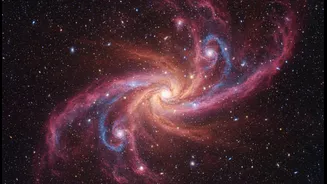
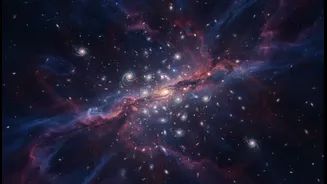
The 'fresh' feeling about these old galaxies comes from the surprising discoveries JWST has made. Cosmological models predicted that the very first galaxies would be small, simple, and somewhat chaotic. Instead, JWST is finding galaxies in the early universe that are shockingly bright, massive, and well-structured. Some of these galaxies, seen as they were when the universe was only 2% of its current age, are already showing complex structures and signs of multiple generations of stars. These findings have been described by astronomers as astonishing, suggesting that the process of galaxy formation may have been far more rapid and efficient than our theories accounted for.
Rewriting the Cosmic Storybook
These unexpected discoveries are forcing scientists to rethink some of their most fundamental ideas about how the universe evolved. If galaxies grew bigger and more complex much earlier than predicted, it could mean our understanding of everything from star formation to the behaviour of dark matter needs adjustment. Researchers are now exploring new theories to explain this rapid early development. The discovery of these 'impossibly' large early galaxies doesn't break our understanding of the universe, but it certainly challenges and refines it, proving that even the oldest parts of the cosmos still hold fresh secrets.