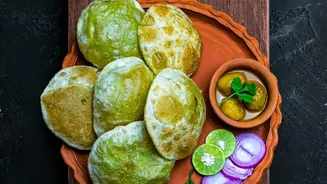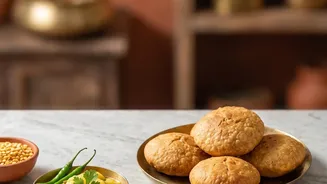

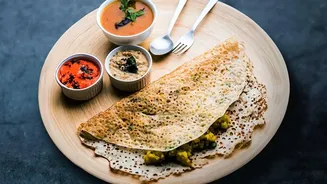

There is a special joy in watching a puri puff up into a golden sphere. Yet for many first-time cooks, the journey is paved with uneven shapes and puris that refuse to rise. This guide breaks down the simple secrets to achieving breakfast perfection.
The Foundation: A Perfect Dough
The secret to a great puri begins long before it hits the hot oil; it starts with the dough. Unlike the soft, pliable dough for chapatis, puri dough must be stiff and firm. This is the most crucial step. Use whole wheat flour (atta), a pinch of salt, and perhaps a teaspoon of semolina (sooji) for extra crispness. Add water little by little, kneading until you have a dough that is tight but smooth, and not crumbly or sticky. If the dough is too soft, your puris will absorb excess oil and fall flat. Once kneaded, drizzle a little oil over it and let it rest, covered, for at least 15-30 minutes. This allows the gluten to relax, making the dough easier to roll.
The Art of Rolling: Aim for Evenness
This is where many beginners falter, often ending up with shapes that resemble maps rather than circles. First, divide your rested dough into small, equal-sized balls. To prevent sticking, it's better to lightly oil your rolling surface and pin rather than using dry flour. Excess dry flour can burn in the hot oil, leaving dark specks and a bitter taste. When you roll, apply even pressure from the centre outwards. Try to roll the puri in one go without flipping it over, as this can help it puff better. The goal is a disc that is of uniform thickness—not too thin like a papad, and not so thick that it remains uncooked inside. An even thickness is key for an even puff.
Frying to Perfection: The Hot Oil Sizzle
The temperature of the oil is everything. It needs to be hot, but not smoking. A simple test is to drop a tiny piece of dough into the kadhai; if it sizzles and rises to the surface immediately, the oil is ready. If the oil isn't hot enough, the puri will soak it up and become greasy. If it's too hot, it will brown too quickly on the outside while staying raw inside. Gently slide the rolled puri into the oil. As it rises to the surface, use the back of a slotted spoon to press it down lightly. This gentle pressure is the magic trick that helps trap steam inside, encouraging the puri to balloon up perfectly.
Troubleshooting Common Puri Problems
Why aren't my puris puffing up? This is usually due to three things: the dough was too soft, the oil wasn't hot enough, or the puri was rolled too thin or unevenly. Why are my puris oily? Again, the culprits are likely dough that is too soft or oil that is not hot enough. Using old, refrigerated dough can also lead to oilier puris. Why are my puris hard? If your puris are turning out crisp like a biscuit, the dough might be too dry and lack moisture, or you've rolled them far too thin. Remember to knead a firm, but not dry, dough.