






India’s Next Giant Leap
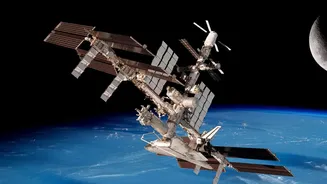
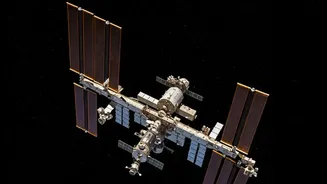
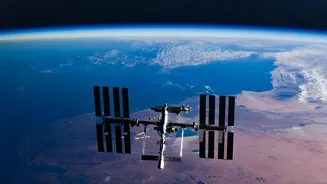
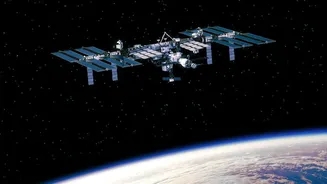
India is charting an ambitious course to cement its status as a major spacefaring nation. By 2035, the Indian Space Research Organisation (ISRO) plans to have its own operational space station, the Bharatiya Antariksh Station (BAS). This orbital outpost
is the logical next step after the Gaganyaan programme, which is developing the capability to send Indian astronauts into orbit. The station, expected to orbit at an altitude of around 400-450 kilometres, will initially host a crew of three to four astronauts for missions lasting three to six months. It is envisioned not just as a piece of hardware in the sky, but as a dynamic platform for scientific discovery, technological innovation, and a stepping stone for future deep-space missions, including a crewed lunar landing by 2040.
A Laboratory in the Sky
One of the primary benefits of the Bharatiya Antariksh Station will be the creation of a dedicated microgravity laboratory. The unique environment of space, where the effects of gravity are negligible, allows for experiments that are impossible to conduct on Earth. This opens up new frontiers for research in medicine, materials science, and biology. Scientists will be able to study the long-term effects of space on the human body, like muscle atrophy and bone density loss, which is crucial for planning future long-duration missions to the Moon and Mars. Furthermore, research in space could lead to breakthroughs in pharmaceutical development, the creation of new alloys and perfect crystals for the electronics industry, and even innovations in agriculture.
Fueling Technological and Economic Growth
Building and operating a space station is one of the most complex engineering challenges a nation can undertake. The project will act as a powerful catalyst for technological advancement across numerous sectors in India. Developing reliable life support systems, advanced robotics for assembly and maintenance, and efficient docking technologies will push Indian industry to new heights. These innovations often have significant 'spin-off' applications on Earth, benefiting everything from healthcare to manufacturing. Economically, the space station is expected to be a major driver. The government aims to increase India's share of the global space economy from 2% to over 8-10%. The BAS will create a new ecosystem, providing opportunities for private companies and startups in satellite deployment, space tourism, and in-space manufacturing, generating high-skilled jobs and boosting economic output.
Securing India’s Place in the Cosmos
Beyond science and economics, the Bharatiya Antariksh Station holds immense strategic and geopolitical significance. Having an independent space station provides India with autonomy in space activities. It ensures that Indian researchers have guaranteed access to a space laboratory, without being dependent on other nations. It also makes India the fourth entity, after the US, Russia, and China, to possess such a capability, elevating its status as a global space power. This permanent presence in orbit will serve as a training ground for astronauts and a testbed for technologies needed for more ambitious explorations. The station is a crucial bridge between the Gaganyaan missions and India's long-term goal of landing an astronaut on the Moon, ensuring the nation is not just visiting space, but staying there.