


A New Era in Low-Earth Orbit
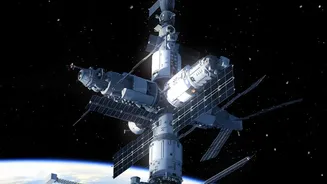
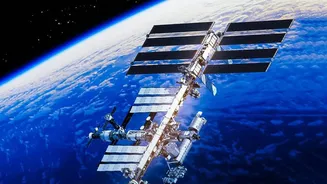
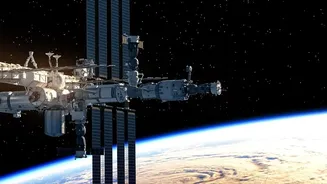
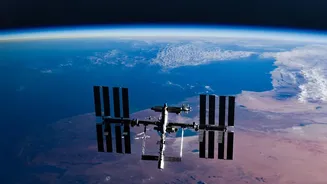
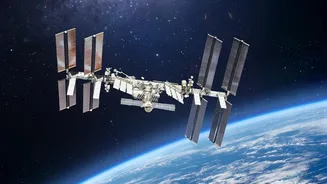
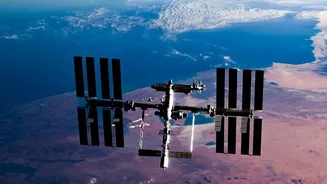
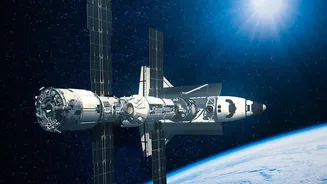
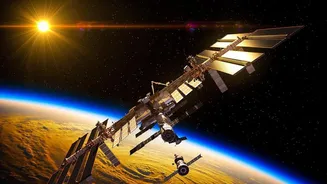
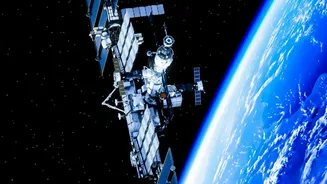
For decades, the International Space Station (ISS) has been humanity's lone outpost in the cosmos. But with the iconic station scheduled for deorbit around 2030, NASA is turning to the private sector to prevent a gap in American orbital presence. Instead
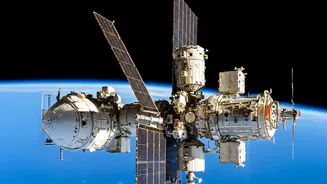
of building a successor itself, the agency is funding and supporting commercial companies to develop their own space stations. This shift marks the beginning of a new commercial economy in low-Earth orbit (LEO), where services from research to tourism will be provided by private enterprise. Several companies are developing concepts, but one of the most revolutionary approaches involves leaving rigid metal structures behind in favor of expandable, inflatable habitats.
The Advantages of Inflating Your Address
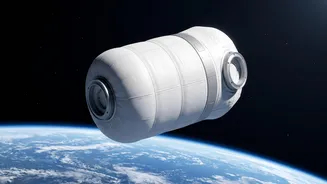
Why build a space station like a high-tech balloon? The primary advantage is efficiency. Traditional rigid modules are limited by the size of a rocket's payload fairing, the nose cone that protects cargo during launch. Inflatable habitats, however, can be launched in a highly compressed state and then expanded in space to create a much larger internal volume for the same mass. This volume-to-mass ratio is a game-changer, promising more spacious living quarters, laboratories, and work areas, which can improve crew morale and productivity on long-duration missions. Furthermore, their multi-layered fabric shells, often made of materials stronger than steel, can offer superior protection against micrometeoroid impacts and space radiation compared to conventional single-wall aluminum designs.
From Fabric to Fortress in Space
Building an inflatable habitat is a feat of advanced materials science. These are not simple rubber bladders. The structures are composed of multiple sophisticated layers. An inner, airtight bladder holds the atmosphere. Surrounding this is a crucial structural restraint layer, woven from immensely strong, high-performance yarns like Vectran, a liquid-crystal polymer five times stronger than steel. This layer is what contains the pressure and gives the habitat its shape and strength. Outer layers provide thermal insulation and protection from the vacuum and orbital debris. The modules launch in a compact form, sometimes built around a rigid core that provides structural support during ascent. Once in orbit, they are inflated with air to become vast, rigid, and habitable environments.
The Companies Racing for Orbit
Several key players are pioneering inflatable habitat technology under NASA's Commercial LEO Destinations program. Sierra Space is a major contender with its Large Integrated Flexible Environment (LIFE) habitat. The LIFE module is a three-story inflatable designed to house astronauts and experiments, which successfully passed a full-scale burst pressure test that far exceeded NASA's safety requirements. It is slated to be a core component of the Orbital Reef space station, a joint project with Blue Origin. Another major venture is Starlab, a partnership between Voyager Space and Airbus, which also plans to use an inflatable habitat as part of its single-launch station design. Northrop Grumman, after initially proposing its own station, has now joined the Starlab team to provide cargo resupply and autonomous docking technology. These companies, along with others like Lockheed Martin and Max Space, are all betting that softgoods technology is the future of orbital infrastructure.
More Than Just a Place to Live
These future commercial stations are envisioned as bustling mixed-use business parks in space. Their primary purpose will be to continue the critical microgravity research currently conducted on the ISS, with applications in medicine, materials science, and biotechnology. But the business model extends far beyond that. They will serve as platforms for in-space manufacturing, where the unique zero-gravity environment allows for the creation of products impossible to make on Earth, such as flawless fiber optics or superior protein crystals for drug development. They will also host private astronauts, cater to space tourism, and offer sovereign nations a way to run their own astronaut programs without the massive expense of building a national space station.