








The Changing Rhythm of the Trail
For decades, the backpacker’s creed in Asia was simple: cover as much ground as possible, as quickly as possible. The rise of budget airlines in the early 2000s supercharged this mindset, turning the legendary “Banana Pancake Trail” into a series of disconnected
hops between tourist hubs. A flight from Bangkok to Chiang Mai, or from Ho Chi Minh City to Hanoi, became a sterile, one-hour affair. But a significant cultural shift is underway. An increasing number of travellers, armed with little more than a rucksack and a desire for deeper connection, are consciously choosing the slow route. They are trading the convenience of a boarding pass for the romance and rhythm of a train ticket, fundamentally altering the texture of modern budget travel.
More Than Just a Cheaper Ticket
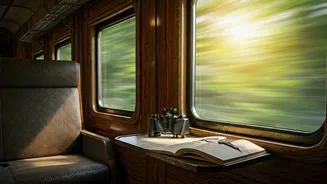
On the surface, the choice seems driven by economics. And it's true, train travel in countries like Thailand, Vietnam, and Malaysia is often significantly cheaper than flying, especially when you factor in the hidden costs of air travel. Budget airlines lure you with a low base fare, but extra charges for luggage, seat selection, and expensive taxis to and from remote airports quickly add up. In contrast, a train ticket is usually an all-in price, delivering you directly to the heart of a city. But the financial argument is only part of the story. For many, the decision is philosophical. The time “wasted” on a 12-hour train journey is being reframed as time gained—time to read, to write, to talk to fellow passengers, or to simply watch the world unfold at a human pace.
The Green Conscience
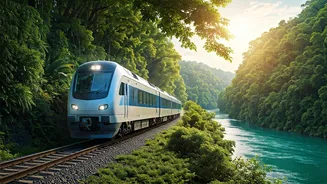
You cannot discuss the move away from short-haul flights without acknowledging the growing climate consciousness of young travellers. The concept of 'flight shame' has found a firm footing in the backpacker community. For a generation acutely aware of its carbon footprint, choosing a train over a plane is a tangible, responsible act. A single short-haul flight can have a disproportionately high environmental impact. Rail travel, while not entirely carbon-neutral, is vastly more efficient per passenger. This ethical consideration has become a powerful motivator, allowing travellers to align their actions with their values. It’s less about shaming others and more about a personal commitment to exploring the world more gently.
A Journey Through, Not Over
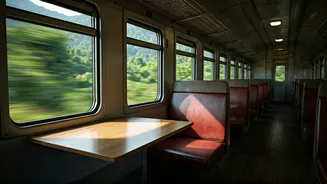
Perhaps the most compelling reason for this shift is the search for authenticity. A flight offers a bird’s-eye view, but it disconnects you from the very landscape you’ve come to see. You leap from one sanitized tourist bubble to another, completely bypassing the country in between. A train, however, immerses you in it. The journey on Vietnam’s Reunification Express, for example, is not just a way to get from north to south; it's a rolling documentary of the nation’s coastline, its rice paddies, its bustling towns, and its quiet moments. You share space with local families, buy snacks from vendors at rural stations, and witness the subtle shifts in geography and culture kilometre by kilometre. This is the kind of travel that creates stories, not just Instagram posts. It’s the difference between seeing a country and experiencing it.
Reclaiming the Adventure
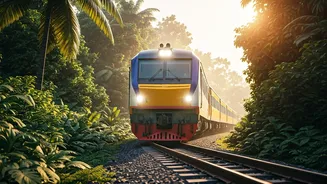
Ultimately, the embrace of slow rail is a quiet rebellion against the hyper-optimised, checklist-driven tourism that has dominated the last two decades. It’s a return to the idea that the journey itself is the destination. The overnight sleeper from Bangkok to Chiang Mai isn't just transport; it’s a rolling hostel, a place of shared experiences and unexpected friendships. The slow crawl through Malaysia's Cameron Highlands by rail is an experience in itself, not just a means to an end. By choosing the train, backpackers are reclaiming the sense of adventure and serendipity that was once the hallmark of travel. They are proving that sometimes, the most rewarding path is not the fastest one.