

A Visitor From Beyond Our Solar System
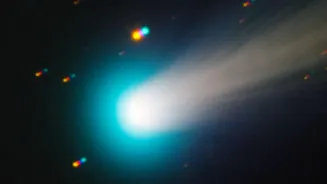
Discovered on July 1, 2025, by the ATLAS survey telescope in Chile, 3I/ATLAS was quickly identified as no ordinary comet. Its incredible speed and hyperbolic trajectory—a path so extreme it looks almost straight—confirmed it was not bound by our Sun's
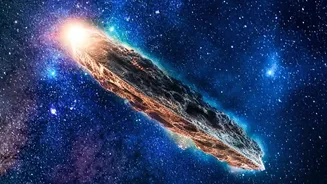
gravity. Instead, it came from interstellar space, the vast expanse between stars, making it only the third such object ever detected by humans, following ‘Oumuamua in 2017 and 2I/Borisov in 2019. For millions or even billions of years, it drifted through the galaxy before its path brought it through our solar system, offering us a brief, up-close look at a building block from another world.
What Makes This Comet So Special?
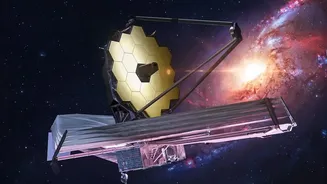
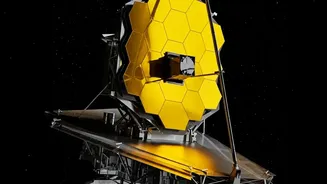
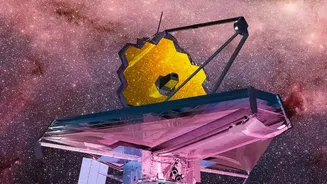
While any interstellar visitor is a major event, 3I/ATLAS is proving to be exceptionally strange and scientifically valuable. Observations from the James Webb Space Telescope (JWST) and other observatories have revealed a chemical composition unlike any comet from our own solar system. It has an unusually high amount of carbon dioxide compared to water and a distinct ratio of carbon isotopes. Furthermore, it contains a high concentration of "deuterated" or heavy water, which suggests it formed in an extremely cold and lonely environment, far different from the one that birthed our own planets. These chemical fingerprints have led some scientists to estimate that 3I/ATLAS could be ancient, perhaps as old as 10 to 12 billion years, making it potentially one of the oldest objects ever seen in our solar system.
A Priceless Sample of Another World
The chance to study an interstellar object is the closest scientists can get to physically sampling another solar system. Because comets are leftover fragments from the planet-formation process, the composition of 3I/ATLAS provides direct clues about the chemistry and conditions of its home star system. By analyzing the gas and dust boiling off the comet's icy nucleus as it gets warmed by our Sun, astronomers can piece together a story about its birthplace. This helps them understand whether our solar system's formation was typical or unique, a fundamental question in astronomy. Each new piece of data, from its surprising nickel-to-iron ratio to its carbon-rich makeup, helps paint a more detailed picture of cosmic diversity.
The Race Against Time
The urgency to study 3I/ATLAS comes from its trajectory. It is not here to stay. After making its closest approach to the Sun in late October 2025, the comet is now on its way out, having already passed the orbit of Jupiter. Astronomers around the world have been using every available instrument, from ground-based telescopes in Chile to space-based powerhouses like Hubble and JWST, to gather as much data as possible. Even orbiters at Mars were tasked with observing the comet as it flew past. This intense, coordinated effort is necessary because the window of opportunity is rapidly closing. The comet will continue its journey outwards, becoming progressively fainter. While large telescopes may be able to track it until 2027 or 2028, it will soon become too distant and dim to observe, vanishing back into the interstellar void forever.