






The debate over AI's impact on jobs has a new, authoritative voice. A major forecast from Gartner, released on November 10, 2026, projects that AI will be a net job creator by 2030, putting to rest some of the worst fears about automation.
The Big Picture: More Jobs Created Than Lost
Forget the dystopian
vision of robots taking every job. According to Gartner's latest forecast, artificial intelligence is projected to create more employment opportunities than it eliminates by the end of the decade. The report predicts that AI will generate 10.6 million new jobs worldwide while removing 8.9 million by 2030, resulting in a net increase of 1.7 million jobs. This counters the prevailing narrative of mass unemployment, suggesting a future of transformation rather than outright replacement. However, one report noted these global figures exclude India and China, a crucial detail for professionals in the subcontinent. The overarching message from Gartner is that organisations leading in AI adoption see it as a tool to reinvent their operations, not just as a way to cut headcount.
The Hidden Impact: 'Deferred' Jobs
Beyond simple creation and destruction, Gartner highlights a more subtle effect: 'deferred jobs'. This refers to positions that companies delay filling or creating because they anticipate AI will eventually handle the workload. In 2026 alone, executives postponed the creation of 1.3 million positions. By 2030, Gartner expects a cumulative total of 5 million people will have experienced these hiring delays. This is a significant, often invisible, impact on the job market, particularly for those in entry-level roles. It represents a 'wait-and-see' approach from businesses that creates uncertainty for the workforce long before any roles are officially made redundant.
Job Transformation: The New Shape of Work
While outright job loss attributable to AI is predicted to affect a relatively small slice of the workforce—at most 1.8% globally—the bigger story is job transformation. Gartner projects that by 2030, over 20% of the global workforce, or about 435.5 million employees, will have to adapt to a new way of working. This means their daily tasks, responsibilities, and workflows will change as AI tools become integrated into their roles. Think of it less as replacement and more as augmentation, similar to how spreadsheet software changed the accounting profession without eliminating it. This shift will require a massive wave of upskilling and reskilling as employees learn to collaborate with AI systems.
Sector by Sector: An Uneven Impact
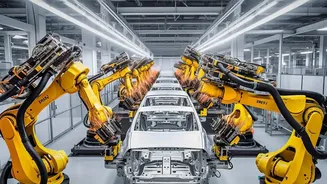
The impact of AI will not be uniform across industries. The technology sector, despite having high exposure to AI, is projected to be a major engine of job growth. Gartner forecasts it will see a net gain of 1.5 million jobs, with 1.9 million created and only 400,000 lost. Asset-intensive industries like manufacturing will see a smaller net gain, with 6.4 million jobs created and 6 million lost. In contrast, the public sector is expected to see a net loss of 500,000 jobs, as AI investment is unlikely to be sufficient to offset other pressures like skills shortages. This uneven distribution means that workforce strategies must be tailored, as the challenges and opportunities will vary greatly between a software firm in Bengaluru and a factory in Gujarat.
The Rise of New AI-Centric Roles
The 10.6 million new jobs will come from entirely new categories of work centred around managing and interacting with AI. Gartner highlights the emergence of roles such as AI training specialists, who refine models for specific industries, and AI ethics officers, who ensure responsible deployment. The demand for prompt engineers, data annotation experts, and AI integration consultants is also expected to surge. These roles require a blend of traditional domain expertise and new technical literacy, creating pathways for professionals to transition into the AI-powered economy. The focus for leading companies is on rebalancing their workforce capabilities to compete, rather than simply replacing labour.