


Understanding the 'Street-Style' Magic
What separates street-style misal from a simple sprout curry is its complex structure. Authentic misal is a 'mixture' (the literal meaning of the word) of several distinct components layered together. The foundation is 'usal', a wholesome curry made from sprouted
moth beans (matki). On top of this comes the 'farsan' or 'sev', a crunchy savoury mix that provides a textural contrast. The soul of the dish is the 'kat' or 'tari', a fiery, thin red gravy that’s ladled over everything, often with a glistening layer of spiced oil on top. Finally, it's garnished with sharp raw onion, fresh coriander, and a squeeze of lime. It's this careful assembly of textures and flavours that creates the iconic experience.
The Foundation: Perfectly Cooked Matki Usal
The base of any great misal is the 'matki usal'. Matki, or moth beans, are small brown beans that have a nutty, earthy flavour. While you can buy them already sprouted, sprouting them at home is simple: soak the beans overnight, drain them, and then tie them in a muslin cloth, leaving them in a warm place for a day or two until sprouts appear. To make the usal, you begin by pressure-cooking the sprouts with a little salt and turmeric until they are tender but not mushy. In a separate pan, you create a simple base by tempering mustard seeds, cumin seeds, and curry leaves, then sautéing onions, ginger, and garlic before adding the cooked sprouts. This lightly spiced usal forms the nutritious and hearty foundation of the dish.
The Soul: Crafting a Fiery 'Kat' or 'Tari'
The 'kat' is what gives misal its signature punch. This spicy gravy is made separately to control its intensity. The process begins with creating a special masala paste, often called 'vatan'. This typically involves roasting ingredients like dry coconut, onions, garlic, ginger, and a blend of whole spices such as coriander seeds, cumin, cloves, and peppercorns. For that deep red colour, dried red chillies (like Kashmiri chillies) are a must. Once roasted, these ingredients are ground into a smooth, aromatic paste. To finish the kat, heat a generous amount of oil, fry the masala paste until it becomes fragrant and the oil separates, then add water to create a thin, flavour-packed gravy that is brought to a boil. Many vendors create an extra layer of spice by blooming chilli powder in hot oil and pouring this 'tarri' on top right before serving.
The Grand Assembly: Layering for Perfection
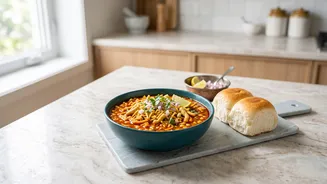
Assembling misal is an art form that ensures every spoonful is a perfect blend of tastes and textures. Start by placing a layer of a simple potato sabzi (optional, but used in many traditional versions like Kolhapuri misal) in a deep bowl. Follow this with a generous ladle of the warm matki usal. Next, add a handful of crunchy farsan or sev. Now, it’s time for the main event: pour the piping hot 'kat' or 'rassa' over the layers. Be generous with it. Garnish with a heap of finely chopped raw onion and fresh coriander leaves. Place a lemon wedge on the side for a final burst of acidity. The key is to serve it immediately while the gravy is hot and the farsan is still crunchy.
Serving with the Perfect Pav
The misal experience is incomplete without its trusted companion: the pav. These are soft, slightly sweet Indian bread rolls that are perfect for soaking up the spicy gravy. For the most authentic experience, lightly butter the pav and toast it on a tawa until it's warm and slightly crisp on the outside but still pillowy-soft inside. Serve the pav alongside the bowl of misal. The combination of the soft, buttery bread with the spicy, crunchy, and flavourful misal mixture is what makes this dish a timeless classic beloved across Maharashtra and beyond. Some even enjoy it with a side of cooling buttermilk or curd to balance the heat.