






The Next Hubble: Nancy Grace Roman Space Telescope
Get ready for a new window into the cosmos. The Nancy Grace Roman Space Telescope is one of NASA's most anticipated projects, and it's on the final stretch before its journey into space. Recent updates from August 2026 confirm that the telescope is undergoing
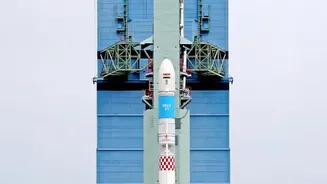
its final integrations with the SpaceX Falcon Heavy rocket hardware. The launch is currently scheduled for August 30, 2026, months ahead of its original target. Named after NASA's first chief of astronomy, Roman is a Hubble-sized observatory but with a field of view 200 times larger. This incredible wide-angle vision will allow it to map the universe with unprecedented speed, tackling two of the biggest mysteries in cosmology: dark energy and dark matter. It is also expected to discover thousands of new exoplanets, adding to our growing catalogue of worlds beyond our solar system. After its launch, it will travel for months to its operational orbit about 1.5 million kilometres from Earth before it begins its five-year primary mission.
Artemis: The Push to Return to the Moon
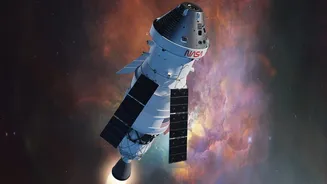
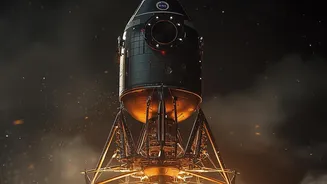
The Artemis program, NASA’s ambitious plan to establish a long-term human presence on the Moon, is moving steadily forward. Following the successful uncrewed Artemis I flight and the crewed Artemis II lunar flyby in April 2026, all eyes are on Artemis III. This historic mission will be the first to land astronauts, including the first woman, on the lunar surface since the Apollo era. According to an August 2026 statement from the NASA Administrator, confidence is high for a 2027 launch. The massive Space Launch System (SLS) rocket for the mission is currently being assembled at Kennedy Space Center, with key components like the solid rocket boosters and the Orion crew capsule undergoing integration. The program isn't just about single landings; it's about building a sustainable presence. To that end, NASA is working with commercial partners like Firefly Aerospace and Voyager Technologies to deliver supplies, science experiments, and infrastructure to the lunar surface. These landers are critical for building out a future Moon base.
Dragonfly: A Nuclear-Powered Drone for Titan
One of the most futuristic missions on NASA’s slate is Dragonfly, a car-sized, nuclear-powered rotorcraft designed to fly through the thick atmosphere of Saturn’s largest moon, Titan. This bizarre world has a methane cycle with clouds, rain, and seas, making it a prime target for studying prebiotic chemistry—the building blocks of life. Throughout 2026, the Dragonfly mission has hit major milestones. Structural testing of the lander is complete, and teams have officially begun the complex process of installing its flight hardware, instruments, and electronics. Its heat shield, crucial for surviving entry into Titan's dense atmosphere, has also successfully passed extreme thermal testing. Dragonfly is not scheduled to launch until July 2028, and its journey will be a long one, arriving at Titan in late 2034. Once there, it will fly between dozens of promising locations, sampling and analyzing the surface to unlock the secrets of this unique ocean world.
Europa Clipper: Journey to an Ocean Moon
Launched in October 2024, the Europa Clipper spacecraft is currently on its long journey to Jupiter. Its destination is the icy moon Europa, which is believed to hide a vast liquid water ocean beneath its frozen shell, making it one of the most promising places to search for life. Recent news in August 2026 highlighted an interesting discovery made by the spacecraft on its way to Mars for a gravity assist. Its plasma instrument detected a 'hidden' solar outburst that was not seen from Earth, revealing a potential blind spot in space-weather forecasting that could be important for future crewed missions. The probe is scheduled for an Earth gravity assist in December 2026 before it finally enters orbit around Jupiter in April 2030. Beginning in 2031, Clipper will perform dozens of close flybys of Europa, using its suite of instruments to study the ice shell, geology, and composition of the moon to determine if it truly has the ingredients for life. While it's not a life-detection mission itself, its findings will be critical for any future search.
VIPER: A Revived Hunt for Lunar Water
The story of NASA's VIPER rover is one of resilience. The golf-cart-sized rover is designed to hunt for water ice in the permanently shadowed craters of the Moon's south pole, a crucial resource for future lunar bases. The mission faced a major setback when it was cancelled in 2024 due to costs and delays. However, following strong support from the scientific community, the mission was revived in 2025. NASA awarded a contract to Blue Origin to deliver the fully-built rover to the lunar surface using its Blue Moon lander. The launch is now planned for late 2027. Once on the Moon, VIPER will operate for 100 Earth days, using its drill and spectrometers to create the first-ever resource maps of the Moon. This data will be vital for the long-term goals of the Artemis program, as water ice can potentially be converted into drinking water, breathable air, and even rocket fuel.