


Living in a compact Indian home doesn’t mean sacrificing style. An accent wall is a powerful tool to inject personality and create a sense of depth without adding clutter. Here are five classic ideas to make your space feel truly your own.
Embrace a Single, Rich Colour
One of the most
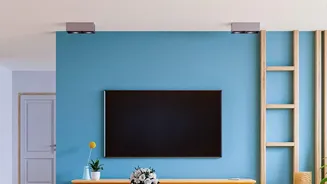
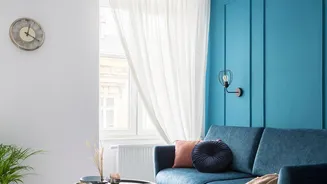
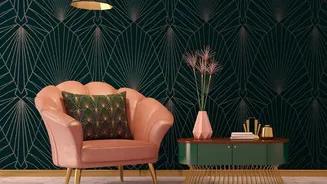
common myths about small spaces is that they must be painted white. In reality, a single wall painted in a deep, saturated colour can create a profound sense of depth. Think of jewel tones like emerald green, sapphire blue, or a warm, earthy terracotta. When placed behind a sofa or bed, this dark wall appears to recede, making the room feel more expansive, not smaller. This technique works best when the other three walls are kept in a light, neutral shade to balance the look and reflect light. It's a high-impact, low-cost way to add a touch of luxury and drama to an otherwise simple room.
Introduce Subtle, Earthy Textures
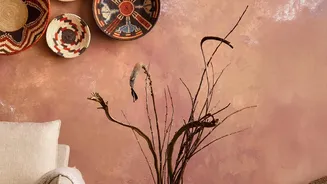
Texture adds character that flat paint cannot replicate, a quality especially valuable in minimalist or small homes. Finishes like lime wash (chuna), stucco, or sand-textured paint provide a tactile quality that interacts beautifully with light. These handcrafted finishes connect a modern apartment to a long tradition of Indian architecture, adding warmth and an artisanal touch. Unlike a busy pattern, a subtle texture creates visual interest without overwhelming the space. It's perfect for hiding minor wall imperfections and creating a serene, earthy backdrop in a living room or bedroom.
Go Bold with Statement Wallpaper
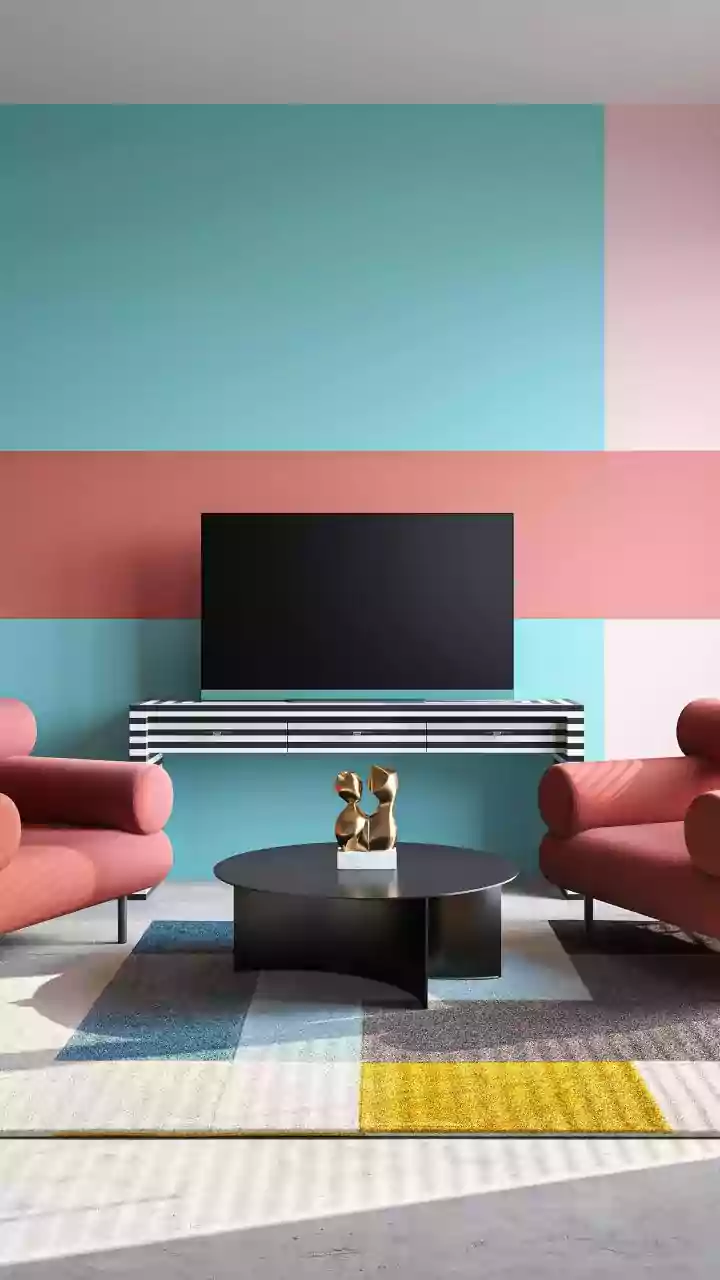
In a compact home, limiting a bold pattern to a single accent wall is a golden rule. A large-scale wallpaper print—such as botanical leaves, abstract geometrics, or traditional motifs—can serve as a stunning focal point. Large patterns can trick the eye, making the wall seem further away. For an Indian context, consider wallpapers inspired by traditional textiles like ikat, block prints, or with nature-inspired floral designs. Using removable, peel-and-stick options is also a practical choice for renters common in Indian metro cities. The key is to apply it to a natural focal point, like the wall behind the TV or the headboard, to anchor the room.
Add Warmth with Vertical Wood Panels
Fluted or slatted wood panels are a major trend in modern Indian interiors for a reason. Arranging them vertically draws the eye upward, creating an illusion of height, which is a significant advantage in apartments with standard ceilings. This technique adds architectural character, warmth, and a sophisticated, clean line that works well in both contemporary and traditional settings. A wood-panelled wall behind a media console or as a headboard adds texture without feeling heavy. While solid wood can be a concern in humid climates, more stable factory-finished MDF panels offer a durable alternative.
Celebrate Heritage with a Mural or Stencil
Turn a wall into a personal canvas by incorporating traditional Indian art forms. This could be a hand-painted mural inspired by Kalamkari, Gond, or Pichwai art, or stencils featuring classic motifs like paisleys or mandalas. This approach transforms the accent wall from a design choice into a piece of storytelling. Many artists and online stores offer custom murals or stencils that can be scaled to fit a specific wall. It creates a unique focal point that celebrates cultural heritage, making a home feel deeply personal and rooted. Even a simple, free-hand design can bring an irreplaceable human touch.