





A Blueprint Passed Through Generations
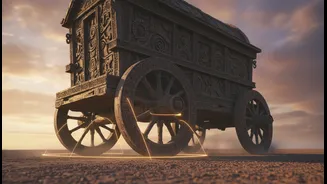
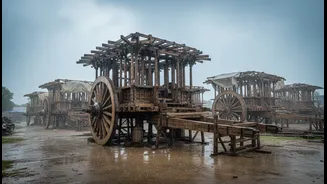
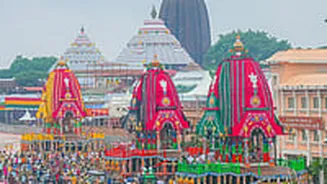
The construction of the three iconic chariots—Nandighosha for Lord Jagannath, Taladhwaja for Lord Balabhadra, and Darpadalana for Devi Subhadra—is a tradition devoid of modern machinery or formal architectural plans. The knowledge is hereditary, passed
down through generations of skilled artisans known as Biswakarmas. These craftsmen use age-old units of measurement like 'haat' (hand size) and 'anguli' (finger size), ensuring that the chariots are built to the exact same specifications year after year. This meticulous process, starting on Akshaya Tritiya, is a living testament to a knowledge system preserved not in books, but in practice, turning raw timber into mobile temples that are both structurally sound and spiritually significant.
The Science of Material Selection
The choice of wood is the first step in this engineering marvel. The chariots are not built from just any timber; specific types of wood are selected for their unique properties. Key among them are Phasi (Anogeissus acuminata), known for its robustness, and Dhaura (Anogeissus latifolia), valued for its strength and durability. These woods are used for the most critical load-bearing parts of the structure, such as the wheels and axles. Other woods like Asana and Simli are also employed for various components. This careful selection is a form of ancient material science, ensuring each part of the chariot possesses the right balance of strength, weight, and resilience to withstand the immense stresses of the journey along the Bada Danda, or Grand Avenue.
Engineering Without Iron Nails
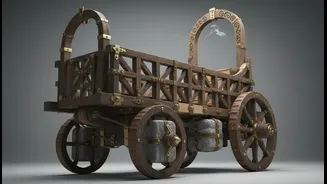
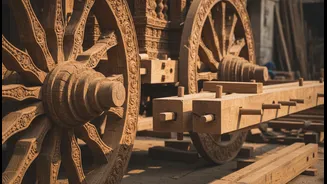
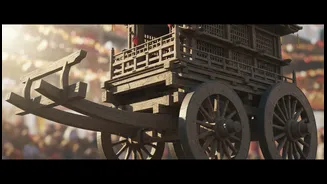
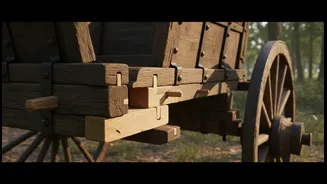
One of the most astonishing aspects of the chariots is that they are constructed without a single iron nail. Instead, the entire structure is held together using a sophisticated system of interlocking wooden joints, pegs, and brackets. This ancient technique, known as mortise-and-tenon joinery in other contexts, provides a unique combination of strength and flexibility. This elasticity is crucial, allowing the massive 45-foot-tall structures to absorb shocks and stresses as they are pulled by thousands of devotees. The design ensures that the immense dynamic forces are distributed evenly across the wooden frame, preventing catastrophic failure and demonstrating a profound understanding of structural mechanics.
Wheels, Axles, and Stability
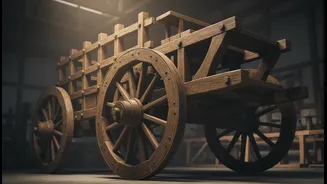
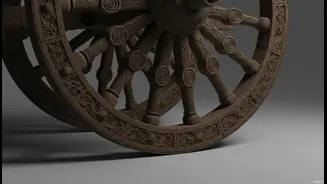
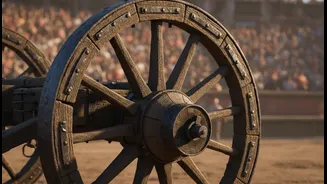
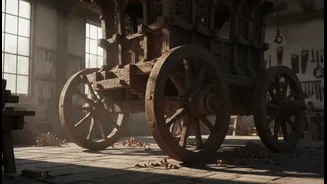
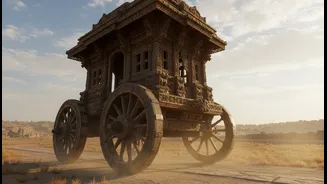
The wheels of the chariots are a marvel in themselves. Lord Jagannath's Nandighosha chariot has 16 wheels, Taladhwaja has 14, and Darpadalana has 12, each with a diameter of about seven feet. The varying number of wheels is a deliberate design choice related to the size, weight, and stability requirements of each specific chariot. The construction of these solid wooden wheels and their attachment to the axles are executed with immense precision to ensure they can bear the massive weight and roll smoothly. The entire assembly acts as a robust chassis, forming a stable base for the towering superstructure and showcasing a deep, intuitive knowledge of load distribution and dynamics.
A Rudimentary But Effective Braking System
Controlling the movement of these colossal structures, which can weigh over 40 tonnes, requires a braking system. The traditional method is a massive wooden log, suspended by ropes at the front of each chariot. On signal, servitors lower this beam to the ground in front of the wheels. As the wheels roll onto the log, the friction slows and eventually halts the chariot's momentum. While simple, this system is highly effective for controlling speed, especially while navigating turns on the semi-circular Grand Road. In recent years, this traditional system has been upgraded with modern materials like rubber fibre and spikes to enhance braking efficiency and safety, blending ancient principles with contemporary engineering insights.