




A Revolution in Forecasting
For decades, weather prediction has relied on numerical weather prediction (NWP) models. These are complex systems that use the laws of physics and fluid dynamics to simulate the Earth's atmosphere. Run on massive supercomputers, these models have been
the gold standard, but they are incredibly time-consuming and expensive to operate. This traditional approach involves dividing the atmosphere into a grid and calculating changes over time, a process that can take hours. While effective, the sheer computational power required has limited how quickly forecasts can be generated and updated, creating a bottleneck in a field where every minute counts.
Enter Artificial Intelligence
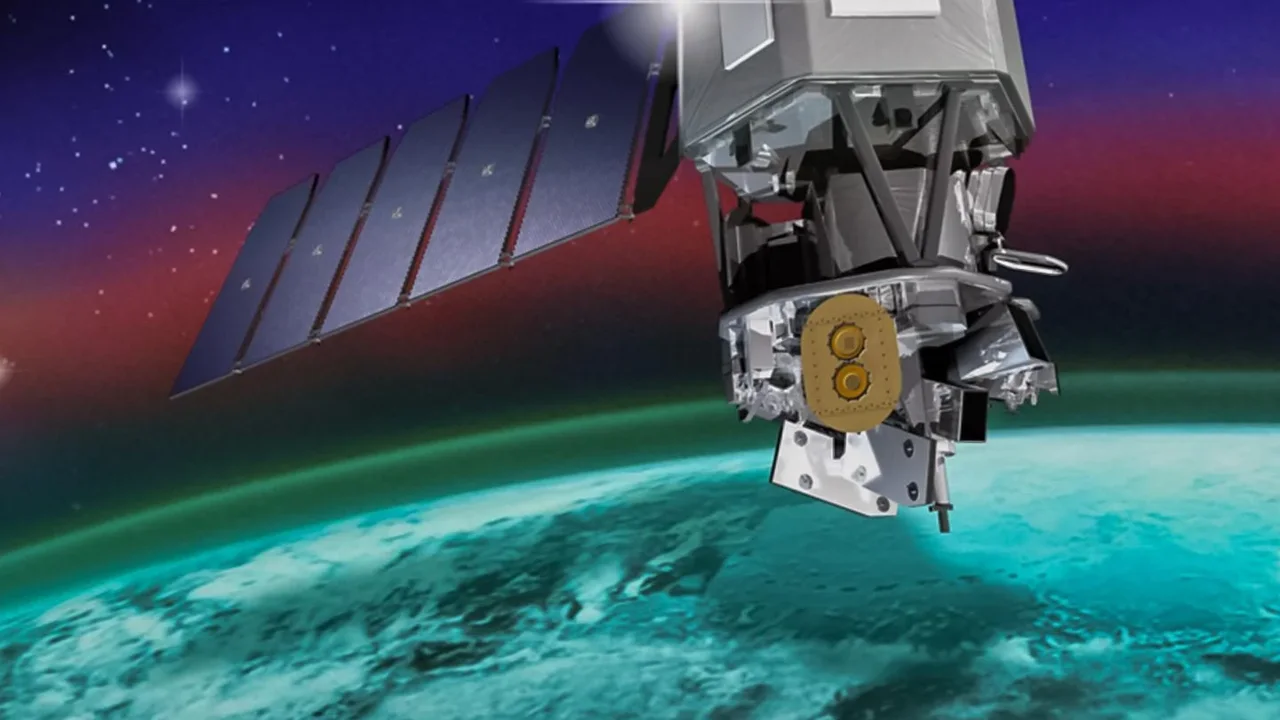
Instead of solving complex physics equations from scratch, AI models take a different approach. They are trained on decades of historical weather data, learning the intricate patterns and cause-and-effect relationships that govern our weather. By analysing this vast trove of information, machine learning algorithms can predict future weather states with remarkable speed and accuracy. Major tech companies and research institutions have developed groundbreaking AI models that are now outperforming traditional methods on many key metrics. The European Centre for Medium-Range Weather Forecasts (ECMWF), a leading meteorological agency, even moved its AI-based model to operational status, signalling a major shift in the field.
The New Generation of AI Models
Several AI models are leading this transformation. Google DeepMind's GraphCast can generate a highly accurate 10-day forecast in under a minute, a task that takes traditional models over an hour on a supercomputer. It has demonstrated superior accuracy in predicting extreme weather events, such as the path of cyclones, further in advance than previously possible. Similarly, platforms like NVIDIA's Earth-2 provide open-source tools and models like FourCastNet and CorrDiff, which democratise access to high-resolution weather prediction. These AI systems are not just faster; in many cases, they are more accurate, especially for medium-range forecasts and tracking large-scale weather phenomena.
Impact on the Indian Subcontinent
For India, the implications of this technology are immense. The India Meteorological Department (IMD) has already begun incorporating AI into its operations. For instance, an AI-based technique is being used to more accurately estimate the intensity of cyclones forming in the Bay of Bengal and the Arabian Sea. Recently, an AI-powered forecast successfully predicted a stall in the 2025 monsoon, providing crucial information to millions of farmers about when to plant their crops. The government has also launched initiatives like the Bharat Forecasting System (BharatFS) to provide village-level forecasts. In Kerala, a network of AI-powered weather stations is being rolled out to provide hyper-local data for farmers and disaster management agencies.
Beyond Weather to Climate
The power of AI extends beyond daily weather forecasts to the broader challenge of climate change. AI models are helping scientists create more robust long-term climate simulations, which are essential for understanding and planning for the future. By processing enormous datasets from satellites and sensors, AI can identify trends like deforestation or the melting of ice sheets. This allows for better predictions of sea-level rise and other long-term impacts, enabling urban planners and policymakers to design more resilient infrastructure and develop effective adaptation strategies to protect vulnerable communities.
Challenges on the Horizon
Despite the incredible promise, AI is not a silver bullet. A major challenge, particularly in a diverse landscape like India, is the availability of high-quality, comprehensive data. AI models are only as good as the data they are trained on, and gaps in observational data, especially in remote regions like the Himalayas, can limit their accuracy. Furthermore, while AI excels at recognising patterns, some models still struggle to predict record-breaking extreme events that fall outside historical norms. Experts believe the most powerful approach for the future will be a hybrid system, combining the speed and pattern-recognition of AI with the physics-based understanding of traditional models.