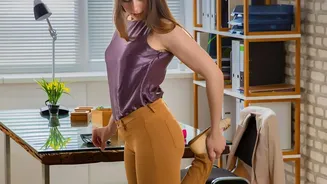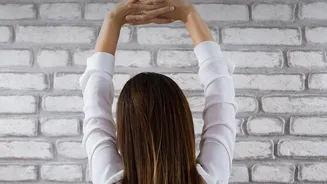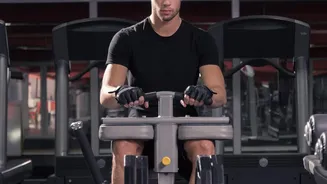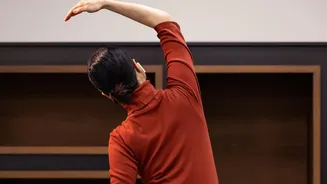




1. Standing Calf Raises
Your lower legs can become stagnant and stiff from prolonged sitting. Calf raises are an excellent way to activate these muscles, boost circulation, and build strength using just your body weight. This exercise targets the two primary muscles in your calves:
the gastrocnemius and the soleus.How to do it: Stand up, holding onto your desk or a sturdy chair for balance. Push through the balls of your feet to lift your heels off the floor, rising onto your tiptoes. Hold this position for a few seconds, focusing on squeezing your calf muscles. Slowly lower your heels back to the ground. For an easier version, you can perform this exercise while seated by simply lifting your heels while keeping your toes on the floor. Aim for 15 to 25 repetitions.
2. Neck Tilts and Rotations
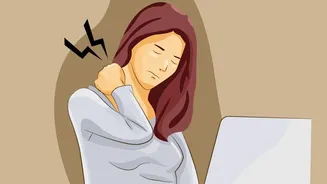
Staring at a screen for hours often leads to significant tension in the neck and upper shoulders. Gentle neck movements help release this tightness and improve flexibility.How to do it: Sit upright with your shoulders relaxed. Slowly tilt your head toward your right shoulder, holding for 15-20 seconds without forcing the movement. Return to the center and repeat on the left side. Afterward, gently rotate your head to look over your right shoulder, holding for 10-15 seconds, then repeat on the left. Avoid any movements that cause sharp pain.
3. Shoulder Shrugs and Rolls
Desk work often causes us to hunch forward, creating stiffness in the shoulders and upper back. Shoulder rolls are a simple yet effective way to release this built-up tension and improve circulation around the shoulder joints.How to do it: Sit or stand tall with your arms relaxed at your sides. Inhale and lift your shoulders up toward your ears. Then, roll them backward in a slow, circular motion as you exhale, squeezing your shoulder blades together. Repeat this 8-10 times, then reverse the direction and perform 8-10 forward rolls.
4. Seated Spinal Twist
Remaining in one position can make your entire back feel rigid. A seated spinal twist promotes mobility in your spine, stretches the muscles along your back and sides, and can help relieve lower back discomfort.How to do it: Sit upright in your chair with both feet flat on the floor. Inhale to lengthen your spine. As you exhale, gently twist your upper body to the right, placing your left hand on your right knee and your right hand on the back or arm of the chair for support. Keep your hips facing forward. Hold the stretch for 15-30 seconds, breathing deeply. Return to the center and repeat on the left side.
5. Wrist and Finger Stretches
Constant typing and mouse use can lead to sore wrists and stiff fingers, and may contribute to repetitive strain injuries like carpal tunnel syndrome. These simple stretches can relieve tension in your forearms and improve hand flexibility.How to do it: Extend your right arm in front of you with the palm facing down. Use your left hand to gently pull your right-hand fingers toward your body until you feel a stretch in your forearm. Hold for 15-30 seconds. Then, flip your hand so the palm faces up and gently pull your fingers down, stretching the other side of your wrist. Repeat on both sides. Follow up by making a tight fist and then spreading your fingers as wide as possible, repeating 5-10 times.
6. Seated Figure-Four Stretch
Sitting all day can lead to tight hips and glute muscles, which can sometimes contribute to lower back pain. The figure-four stretch is perfect for targeting these deep hip muscles without ever leaving your chair.How to do it: While seated, cross your right ankle over your left knee, creating a '4' shape with your legs. Keeping your back straight, gently lean forward until you feel a stretch in your right hip and glute. If you want a deeper stretch, you can apply gentle pressure on your right knee with your hand. Hold for 20-30 seconds, and then switch to the other side.
7. Chest Opener Stretch
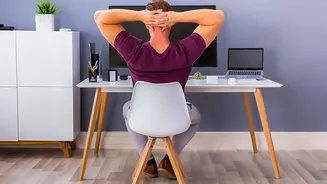
Hunching over a keyboard tightens chest muscles and encourages poor posture, leading to rounded shoulders. Opening up the chest counteracts this and helps relieve related upper back pain.How to do it: You can do this stretch while seated or standing. Clasp your hands together behind your back. Straighten your arms and gently lift them while squeezing your shoulder blades together and puffing out your chest. You should feel a stretch across the front of your chest and shoulders. Hold for 20-30 seconds, breathing deeply throughout the movement.