





From 'More Space' to 'Smarter Space'
For decades, the hallmark of a luxury home was its sheer size—vast living rooms, dedicated dining halls, and single-purpose studies. But in dense urban landscapes like Mumbai or Bengaluru, this is an outdated fantasy. The new status symbol is not how
much space you have, but how smartly you use it. This shift is driven by modern life itself: the rise of remote work, the desire for minimalist living, and the need for our homes to be as dynamic as our schedules. A home must now be a place of rest, an office, a gym, and a social hub. The ultimate luxury, therefore, has become flexibility—the ability for a home to evolve with its occupants, not just house them.
What Is an Adaptable Room?
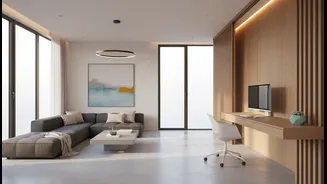
An adaptable room is the opposite of a static one. It's a space designed to serve multiple functions, often transforming seamlessly from one to another. This goes far beyond a simple sofa-bed in the living room. Imagine a home office that, with a few effortless movements, folds away into a wall, revealing a comfortable guest bedroom. Think of a dining area where the table can shrink into a coffee table or a living room that can be divided by movable partitions for privacy. These spaces rely on innovative design principles like open-concept layouts, clever storage, and, most importantly, multifunctional furniture. The goal is to maximize the utility of every square foot without sacrificing style or creating clutter.
The Magic of 'Transformer' Furniture
At the heart of the adaptable room is what many call 'transformer' furniture. These are ingeniously engineered pieces that serve multiple purposes. A wall unit might contain a fold-down desk, a queen-sized Murphy bed, and integrated shelving. An elegant coffee table can rise and expand to become a dining table for eight. Modular sofas can be reconfigured from a large sectional for a movie night into separate chairs for a social gathering. Brands and designers are increasingly focusing on these solutions, using high-quality materials and sophisticated mechanisms that make the transformation smooth and effortless. This isn't about clunky, temporary fixes; it's about permanent, elegant solutions that enhance a room’s function.
Elevating Function with Technology
What truly elevates the adaptable room into the realm of luxury is the integration of smart technology. This is where mechanics meet automation. Imagine partitions that glide into place with a voice command, or lighting that automatically adjusts its brightness and colour temperature depending on whether the room is in 'work mode' or 'relax mode'. Smart home systems can control hidden screens, automated window treatments, and even furniture that reconfigures itself at the touch of a button on your phone. This layer of technology removes any physical effort, making the room's transformation a moment of quiet magic and ultimate convenience—a core tenet of modern luxury.
A Philosophy of Better Living
Ultimately, the trend of adaptable rooms is about more than just clever design and cool gadgets. It represents a deeper shift in our values towards a more intentional and efficient way of life. It's an acknowledgement that a well-designed home should serve its inhabitants, not the other way around. An adaptable space reduces waste, encourages a more organised and clutter-free life, and empowers people to get the most out of their homes, regardless of size. It proves that luxury isn't about owning more, but about having everything you need, exactly when you need it, all within a space that is as beautiful as it is functional.