




The Foundation: Application Without Tension
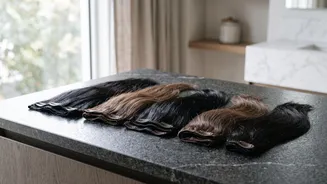
Before styling, the most crucial step is applying your clip-ins correctly to prevent pulling and discomfort. The goal is a secure hold that doesn't strain your scalp or hair follicles. First, choose extensions that are not too heavy for your natural hair;
lightweight or seamless wefts are often best for daily use. Instead of clipping onto a straight, slick part, gently tease the root area where you plan to attach a weft. This gives the clips something substantial to grip without needing to be snapped shut too tightly against the scalp. Distribute the wefts evenly, avoiding placing them in the exact same spot every day to give your hair a rest. A snug fit is good, but if you feel any sharp pulling or pain, it's too tight. Always remove clip-ins before sleeping to prevent tangling and unnecessary stress.
The Relaxed Low Ponytail
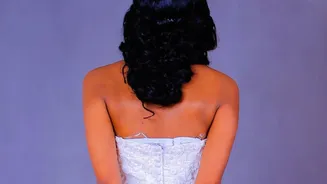
A low ponytail is an effortlessly chic style that is naturally low in tension. It keeps hair controlled without the tight pull of a high pony. To achieve this look, first secure your natural hair into a loose, low ponytail at the nape of your neck, leaving out a top section of hair. Then, attach a two or three-clip weft just above the hair elastic, allowing the extension hair to fall over it. Finally, take the top section of your natural hair and wrap it over the weft, incorporating it into the ponytail. This method ensures the weight of the extension is supported by the elastic, not your scalp. For a polished finish, you can wrap a small strand of hair around the base to hide the hair tie.
The Comfortable Half-Up Style
The half-up, half-down look is perfect for keeping hair out of your face while showcasing length. The key to a tension-free version is strategic placement. Concentrate the clip-in wefts in the lower, 'down' section of your hair first to add volume and length there. Then, when you gather the top half of your hair, you are only lifting your natural hair, which significantly reduces the weight and pull on your roots. Secure the top section loosely with a soft accessory like a silk scrunchie or a claw clip rather than a tight elastic. You can even create a gentle twist instead of a tight ponytail for the top section. This approach gives you all the style benefits without the strain.
Effortless Waves or Curls
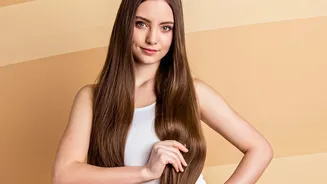
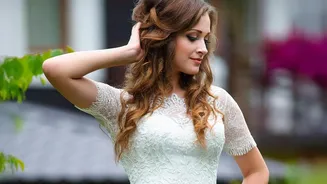
Wearing your hair down with added waves is a classic way to use clip-ins for extra body. For maximum comfort, focus on placing the wefts strategically rather than using too many. Create horizontal parts and apply the wider wefts lower on your head, using the smaller side pieces near your temples. Make sure to leave enough of your own hair at the crown and along your hairline to completely cover the wefts. One of the best ways to ensure a seamless look is to style your natural hair and the extensions together. After all the clips are in, use a curling wand to create waves, curling sections of your real hair and the extension hair together to blend them perfectly.
Daily Care and Removal
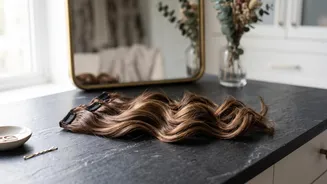
Proper care is just as important as application. At the end of the day, always remove your clip-ins. To do so, gently unsnap each clip and slide it out, being careful not to pull. Once removed, brush them gently, starting from the ends and working your way up to the roots to prevent tangles and shedding. Store them flat or hanging in a designated storage bag to maintain their shape and quality. It's also vital to care for your own hair and scalp. Give your hair 'rest days' without extensions, and ensure you are cleansing your scalp thoroughly to remove any product buildup from teasing or hairspray. A healthy scalp is the foundation for wearing any type of extension safely.