




What is the Big Deal?
In a move that shook the telecom industry, SpaceX recently announced a definitive agreement to acquire a nationwide portfolio of low-band wireless spectrum from the investment firm Grain Management. This isn't just a simple purchase; it's a strategic
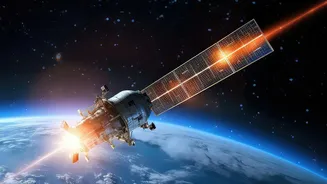
acquisition that positions SpaceX's 'Starlink Mobile' to evolve from a niche service for remote areas into a potential mainstream competitor to established mobile carriers. Pending regulatory approval from the US Federal Communications Commission (FCC), this deal gives Starlink access to the 800 MHz spectrum, a critical piece of the puzzle for providing comprehensive mobile coverage. Elon Musk himself called it 'the last critical piece of the spectrum puzzle' needed for complete phone coverage in the United States, signalling a major ambition to create a unified network using both satellites and ground infrastructure.
Decoding 'Low-Band' Spectrum
Think of the radio spectrum as a set of invisible highways in the air, each carrying data for things like TV, radio, and mobile phones. These highways are divided into different lanes or 'bands'. High-band frequencies are like super-wide, multi-lane expressways that can carry massive amounts of data at incredible speeds, but their signals are fragile. They don't travel far and are easily blocked by things like walls, trees, and even rain. Low-band frequencies, those under 1 GHz, are more like country roads. They might not have the sheer capacity for blistering speeds, but their signals travel much farther and are incredibly resilient. This ability to travel long distances and push through physical obstacles is why telecom companies have historically called low-band spectrum 'beachfront property'. It’s the key to providing widespread, reliable coverage.
The Indoor Signal Problem Solved?
This brings us to the headline's core claim. The unique physical properties of low-band signals are what make them so effective at penetrating buildings. Higher-frequency signals, like those used for much of the 5G network, tend to bounce off or get absorbed by materials like concrete, brick, and coated glass. The longer wavelengths of 800 MHz low-band signals, however, can pass through these obstacles much more easily. For Starlink Mobile, this acquisition is a direct solution to what it called 'one of the key remaining technical gaps' in its plan: providing reliable indoor service. By integrating this spectrum, Starlink's satellites could theoretically connect to a standard smartphone inside a home or office, solving a major limitation that has plagued satellite-to-phone technology.
From Satellite Phone to Your Smartphone
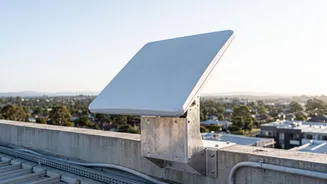
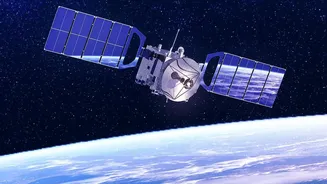
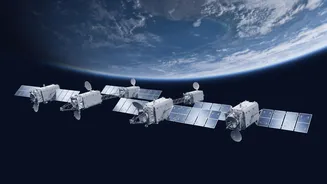
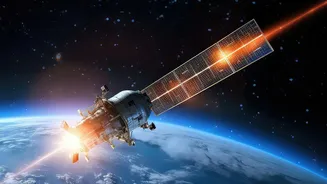
This new service, often called 'Direct to Cell', is designed to work directly with most existing LTE smartphones without requiring a new device or bulky external antennas. This is a world away from the expensive, specialised satellite phones of the past. The plan is to create a single, hybrid network. High-bandwidth tasks would be handled by Starlink's existing mid-band spectrum and its massive new constellation of 15,000 recently-approved Gen 2 satellites, while the 800 MHz low-band layer ensures a constant, stable connection everywhere else, including indoors. The ultimate vision is 'one network that provides Americans with a reliable service indoors, outdoors, in cellular dead zones, and everywhere in between'.
Implications for India and Beyond
While this spectrum deal is currently focused on the US, its success would have global implications, especially for a market like India. Starlink has been pursuing regulatory approval to launch its services in India since 2021, a process that has faced hurdles related to security clearances and spectrum allocation rules. Indian regulations require that all user traffic pass through gateways located within the country, a key point of discussion. The government has stated that Starlink is at broadly the same regulatory stage as other licensed operators like Jio Satellite and OneWeb. Should Starlink's Direct-to-Cell technology prove viable and eventually gain approval in India, it could offer a powerful tool for bridging the digital divide, providing 'last-mile access' in remote and rural areas where building traditional cell towers is economically or geographically challenging.
Hurdles on the Horizon
Despite the ambitious vision, significant challenges remain. The deal still requires FCC approval, which is not guaranteed. Furthermore, some industry analysts are sceptical, arguing that the amount of spectrum acquired is still relatively small and that truly competing in dense urban areas would require building terrestrial towers on the ground. Executives from major US carriers have suggested the service is more likely to be a solution for the last few percent of users in remote locations rather than a full-blown competitive threat to the majority of customers. The real-world performance of a satellite-based network for indoor use remains unproven. The success of Starlink Mobile will depend not only on technological execution but also on navigating a complex web of global regulations and proving its value against entrenched incumbents.