






A Fiery Return From Orbit
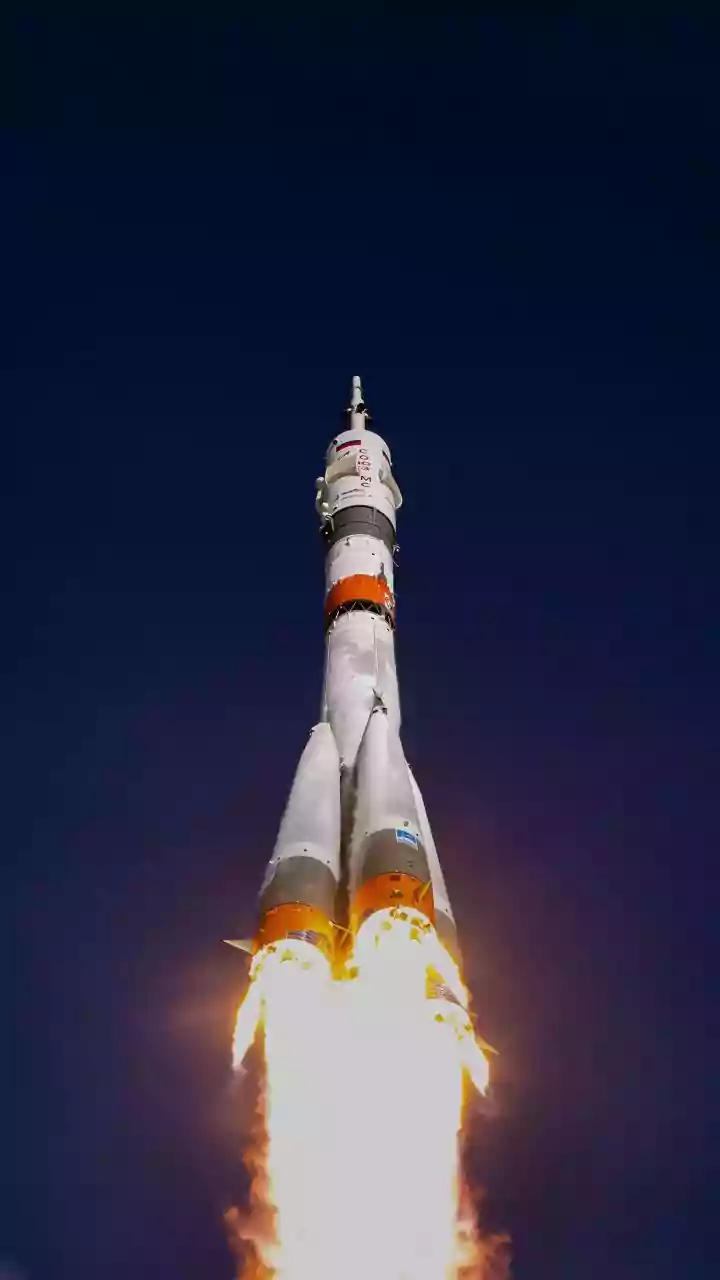
The journey home for the Gaganyaan crew module begins at a staggering velocity of nearly 28,000 kilometres per hour. To land, it must shed this immense speed. The process starts with the service module firing its engines to slow down and begin the fall
from orbit. After separating, the crew module alone hurtles towards Earth. As it hits the upper atmosphere, it acts as a colossal airbrake. The friction and compression of air at these hypersonic speeds create a sheath of superheated plasma around the capsule, with temperatures soaring above 1,500 degrees Celsius. To survive this, the module is equipped with a robust thermal protection system—an ablative heat shield that burns away layer by layer, carrying the intense heat with it and protecting the astronauts inside.
The Precisely Choreographed Parachute Ballet
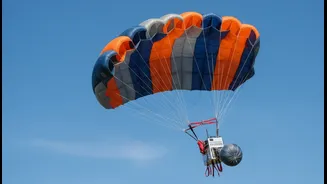
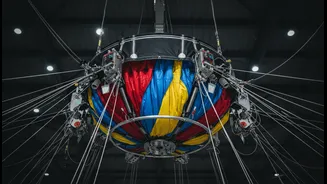
Once atmospheric drag has scrubbed off most of the module's speed, the most critical phase of deceleration begins: the parachute sequence. This is not a single 'chute but a complex, ten-parachute system designed for redundancy and control. The sequence starts with two small apex cover separation parachutes, which eject the protective cover over the main compartment. Next, two drogue parachutes deploy. These are small, strong 'chutes designed to stabilize the capsule at high speeds, preventing it from tumbling and reducing its velocity further. Following successful drogue deployment, three pilot parachutes are released, whose job is to pull out the three main parachutes. Recent tests, including the Integrated Main Parachute Airdrop Test (IMAT-05) on July 7, 2026, have been crucial for qualifying this system under expected load conditions.
From Supersonic to a Gentle Splash
The three massive main parachutes are the final brakes. Together, they must slow the 5.3-tonne crew module from over 200 metres per second to a gentle 11 metres per second before it hits the water. The engineering is so robust that even if one of the three main parachutes fails to open, the remaining two are sufficient to ensure a safe landing for the crew. This entire parachute deployment, from the apex cover jettison to full main parachute inflation, happens over a period of just a few minutes, turning a fiery projectile into a gently descending capsule. This carefully managed descent aims for a designated splashdown zone in the Arabian Sea.
Staying Afloat and Awaiting Recovery
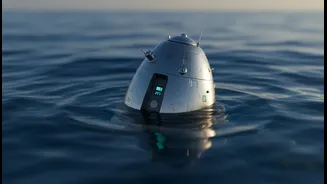
Touching the water is not the end of the mission. The capsule must remain stable and upright in the ocean. This is achieved through an automatic flotation system. Upon splashdown, the parachutes are detached to prevent them from dragging the capsule over, and inflation bags are activated to ensure it floats in the correct orientation. This design, known as being monostable, ensures the hatch is above the water, allowing astronauts to breathe safely. To aid recovery teams, the module releases a bright sea marker dye and activates location beacons. The Indian Navy, which has conducted extensive recovery trials with ISRO, leads the effort to retrieve the capsule and its precious crew as quickly as possible.