


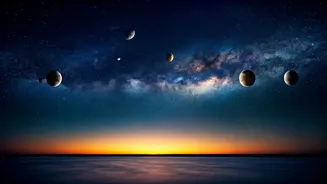


What is a Planetary Alignment?
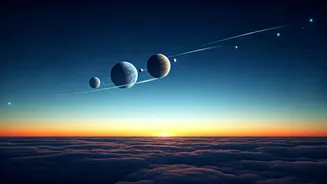
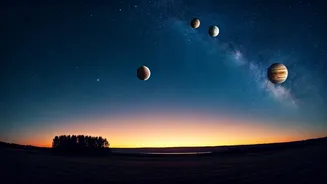
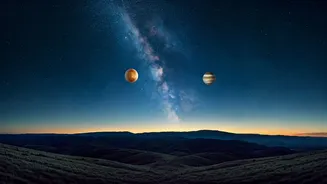
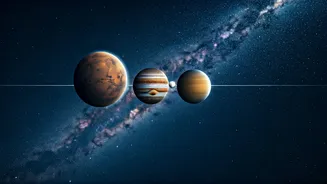
First, let's manage expectations. While the term 'alignment' might conjure images of planets forming a perfectly straight line in space, the reality is a bit different—and visually just as stunning. From our vantage point on Earth, a planetary alignment occurs
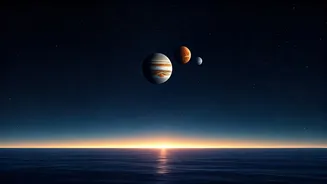
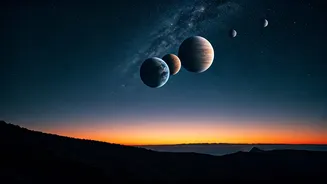
when several planets appear close together in the same small sector of the sky. They won't form a ruler-straight line, but will create a beautiful, scattered string of bright 'stars' along the ecliptic—the path the sun follows across the sky. These events are sometimes called a 'planet parade', and they offer a fantastic opportunity to spot multiple worlds in a single glance.
Do I Really Need a Telescope?
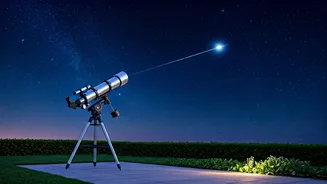
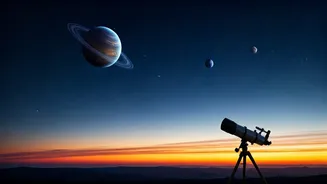
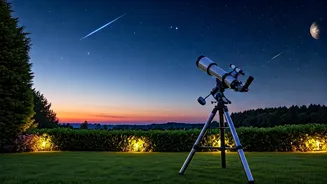
The headline mentions telescopes, and while they enhance the view, they are not a strict necessity. Many of the planets involved in these alignments—particularly Jupiter, Saturn, Mars, and Venus—are bright enough to be seen with the naked eye. They will look like unusually bright, non-twinkling stars. A good pair of binoculars is the perfect intermediate step. Binoculars will make the planets appear as clear, bright discs and might even reveal Jupiter's four largest moons as tiny pinpricks of light. If you do have a backyard telescope, now is the time to dust it off. With it, you can potentially see the cloud bands of Jupiter and the glorious rings of Saturn, turning a great sight into an unforgettable one.
Find Your Perfect Viewing Spot
The biggest enemy of stargazing is light pollution. To get the best view, you need to find a location with a clear, unobstructed view of the horizon, away from the glare of city lights. For those in metro cities like Mumbai, Delhi, or Bengaluru, this can be a challenge. Your best bet is the highest, darkest place you can access safely—a building terrace, a park on the outskirts of the city, or even just a spot in your neighbourhood that's shielded from direct streetlights. If you can take a short drive away from the city centre, your viewing experience will improve dramatically. Give your eyes at least 15-20 minutes to adjust to the darkness; this will help you see fainter objects.
Timing is Everything
Planetary alignments are typically best viewed during a specific window: either just before sunrise in the pre-dawn sky or just after sunset in the twilight. The exact timing depends on the specific alignment. To find the precise viewing window for your location in India, use a reliable stargazing app (like Stellarium, SkyView, or Star Walk) or a website like Time and Date. These tools will use your phone's location to show you exactly where and when the planets will rise and set. As a general rule, you’ll want to start looking about 45 to 60 minutes before the sun comes up or after it goes down.
A Planet-by-Planet Viewing Guide
Knowing what you're looking for makes the hunt more exciting. Here's a quick guide to identifying the planets you're likely to see:
- **Venus:** Almost always the brightest object in the sky after the Sun and Moon. It will appear as a brilliant, silvery-white 'star'.
- **Jupiter:** The second-brightest planet. It shines with a steady, bright white light. Even with binoculars, you might spot its Galilean moons.
- **Mars:** Look for a distinct, reddish-orange hue. Its brightness can vary depending on its distance from Earth, but its colour is a dead giveaway.
- **Saturn:** Appears as a steady, yellowish-white point of light. It's dimmer than Jupiter and Venus, and you'll need a telescope to see its famous rings, but its presence in the planetary lineup is still a treat.
Pro Tips for an Epic Night
To make the most of your stargazing session, keep a few things in mind. First, dress in comfortable layers, as even Indian nights can get chilly when you're standing still for a long time. Second, use a red-light torch if you need light to check a star chart or adjust your equipment. Red light preserves your night vision, whereas white light will ruin it instantly. Finally, bring along a flask of chai or coffee and some snacks. Astronomy is a patient hobby, and being comfortable makes the experience all the more enjoyable.