




More Than a Technology Demo
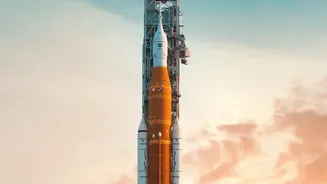
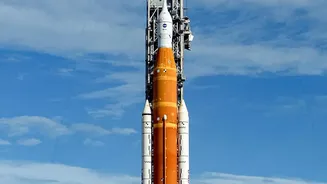
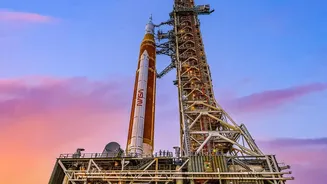
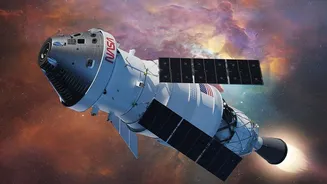
While Artemis II was fundamentally a flight test to prove the Space Launch System (SLS) rocket and Orion spacecraft could safely carry humans to deep space and back, it was also a robust scientific endeavor. For the first time in over 50 years, a crew
was tasked with direct scientific observation of the Moon, blending human perception with advanced instrumentation. The mission, which launched in April 2026, was a critical bridge between the Apollo era and the sustained lunar presence envisioned by the Artemis program. NASA recently released over 800 gigabytes of data from the flight, including images, audio, and crucial environmental readings, passing the baton to the global science community for analysis.
A New View of a Familiar World
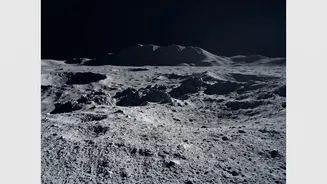
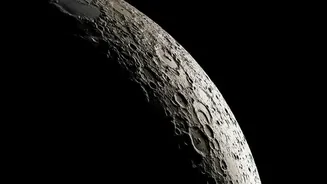
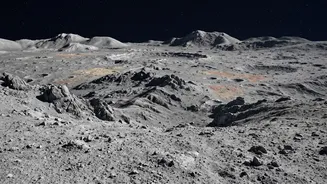
The 11,000 images and videos returned are not just for public inspiration; they are a rich dataset for geologists and planetary scientists. The crew was trained to act as field scientists, and their real-time observations revealed unexpected nuances. They reported a surprisingly colorful Moon, noting subtle hues of gray, black, brown, tan, green, and even blue. These colors, particularly around volcanic areas like the Aristarchus Plateau, offer clues to the mineral composition and volcanic history of the surface. Furthermore, images of the 'terminator'—the line between lunar day and night—provide sharp detail on mountains and craters, mimicking the lighting conditions astronauts will face at the Moon's South Pole on future landing missions.
The Sights and Sounds of Impact
One of the most astonishing findings came from the crew's own eyes. During a planned communications blackout on the far side of the Moon, they witnessed and documented five faint 'pinprick' flashes of light. Scientists on the ground were ecstatic, confirming these were likely impacts from small meteoroids, each perhaps just a couple of inches wide, striking the lunar surface at immense speeds. Apollo astronauts had seen similar flashes, but the Artemis II crew captured the faintest ever observed by the human eye. This data is invaluable for assessing the frequency of such impacts, a critical risk factor for future lunar habitats and infrastructure.
The Invisible Data That Keeps Us Safe
Perhaps the most critical data for future missions is the information you cannot see. Artemis II's journey beyond Earth's protective magnetic field was a key test for astronaut health and safety. Radiation monitoring was a primary objective, with sensors inside Orion constantly measuring the deep-space environment. Preliminary data from the Hybrid Electronic Radiation Assessor (HERA) instrument indicated that the radiation environment was about 20% milder than some models had predicted. This single finding has enormous implications, potentially widening the number of safe landing sites for Artemis III by reopening locations previously considered too risky. The mission also gathered extensive data on how the human body reacts to deep-space travel, essential for planning long-duration stays on the Moon and eventual missions to Mars.