






Why Wet Soil is the Enemy
The primary danger of constantly wet soil is root rot, a condition where roots decay due to a lack of oxygen and the proliferation of fungal pathogens. Strawberry plants have shallow roots that are particularly vulnerable. When soil is waterlogged, the roots can't
breathe and begin to die, leading to wilted leaves, stunted growth, and eventually, the death of the plant. Furthermore, berries that rest on damp soil are prone to fungal diseases like grey mould and anthracnose, which can ruin your precious fruit before you even get a chance to taste it. The goal is to maintain soil that is consistently moist but never soggy.
Choosing the Perfect Pot
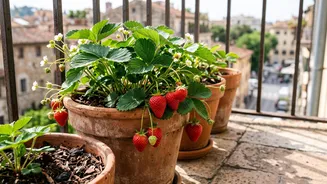
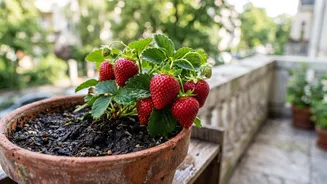
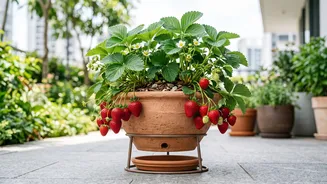
The right container is your first line of defense. Excellent drainage is non-negotiable, so ensure any pot you choose has ample drainage holes at the bottom. Strawberries don't have deep roots, but a pot that is too small will dry out very quickly on a hot day. Aim for a container that is at least 15 to 20 cm deep. In terms of width, a wider pot is often better, allowing space for the plant to spread. Material matters, too. Terracotta pots are porous, allowing for better air circulation to the roots, but they also dry out faster. Plastic pots are lighter and retain moisture longer, which means less frequent watering. Hanging baskets and special strawberry pots with side openings are excellent choices, as they naturally lift the fruit away from the soil.
Creating the Ideal Soil Mix
Never use heavy garden soil directly in your pots, as it compacts easily, smothers roots, and holds too much water. Instead, use a high-quality, well-draining potting mix. You can buy pre-made mixes or create your own. A great recipe for Indian conditions often involves a balanced blend of soil, an aeration and moisture-retaining medium like cocopeat, and a nutrient source like compost or vermicompost. Adding perlite or coarse sand can further improve drainage. The ideal mix feels light and crumbly, holding enough moisture for the roots to drink without becoming a muddy puddle. Strawberries prefer a slightly acidic soil, with a pH between 5.5 and 6.8.
Planting with Precision
How you plant your strawberry is crucial. The most important part to protect is the crown—the thick, central part of the plant where the leaves emerge from the roots. If you bury the crown, it is very likely to rot. If you plant it too high, the roots may dry out. The goal is to set the plant so the crown sits just at or slightly above the soil level. Gently firm the soil around the roots to remove air pockets and water thoroughly after planting to help everything settle.
Mastering Balcony Watering
Potted plants, especially on a sunny or windy balcony, dry out much faster than those in the ground. However, the risk of overwatering remains. Instead of following a strict schedule, check the soil with your finger. If the top inch or two feels dry, it's time to water. Water the soil at the base of the plant in the morning. This allows any moisture on the leaves to dry before evening, reducing the risk of fungal issues. Water until you see it running out of the drainage holes, which ensures the entire root zone is hydrated and helps flush out any accumulated salts.
Keeping Fruit High and Dry
Even with perfect soil, developing berries can still rest on the damp surface. The simplest solution is mulching. A layer of straw (the origin of the berry's name), pine needles, or even coco chips on top of the soil creates a dry bed for the fruit to rest on. This also helps retain soil moisture and keeps the roots cool. Another method is to use strawberry supports, which are small plastic platforms that cradle the plant and lift the berries off the soil. If you're using hanging baskets or window boxes, you can simply let the fruit stems hang over the edge, keeping them clean and well-aerated.