




The Lower Berth: Convenience at a Cost
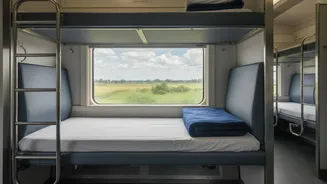
The lower berth is often the most sought-after, and for good reason. It offers the ultimate convenience, with no climbing required, easy access to the washroom, and a prime window seat for watching the world go by. It is automatically preferred for senior
citizens and pregnant women for these very reasons. However, its accessibility is also its biggest drawback. According to Indian Railways rules, the lower berth serves as communal seating for all passengers in the bay (lower, middle, and upper) from 6 AM to 10 PM. If you're hoping for a daytime nap, you'll likely have to share your space. For late-night boarding, you risk waking up the entire bay as you settle in. Conversely, for an early-morning arrival, it's perfect for a quick and quiet exit without disturbing anyone. If your train leaves late and arrives early, the constant activity might make this berth less restful.
The Upper Berth: Your Private Cocoon
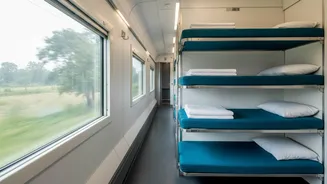
If you value privacy and uninterrupted sleep above all else, the upper berth is your best friend. Once you're up there, it's your personal space for the entire journey; no one will ask you to fold it away or make room. This makes it the ideal choice for anyone boarding late at night. You can climb up and go straight to sleep without disturbing passengers who are already resting. It’s also perfect for those who like to sleep in, as you won't be bothered by the morning hustle and bustle. The main downsides are the climb, which can be tricky for some, and the limited headroom, which makes sitting up difficult. If you need to use the washroom frequently or have heavy luggage, accessing it from the upper berth can be a hassle. But for travellers who just want to get on board and disconnect, the upper berth is a peaceful retreat.
The Middle Berth: A Purely Nocturnal Choice
The middle berth is arguably the most disliked of all, primarily due to its restrictive rules. It can only be opened for sleeping between 10 PM and 6 AM. During the day, it must be folded up, leaving its occupant to share the lower berth for seating. This makes it highly impractical for daytime travel or for anyone who wants the flexibility to rest whenever they please. However, if you are on a purely overnight journey—boarding after 10 PM and arriving shortly after 6 AM—the middle berth can be perfectly adequate. You board, sleep, and de-board without ever needing it during daytime hours. It’s a no-frills option that works best when your travel times align perfectly with the official sleeping hours, but it offers little flexibility otherwise.
Side Berths: A Different Calculation
Side berths (Side Lower and Side Upper) operate on a different dynamic. They are arranged in sets of two along the aisle, offering a bit more separation from the main bay of six. The Side Lower berth doubles as two seats during the day and provides a fantastic, unobstructed window view. However, being right on the aisle means you'll experience constant foot traffic, which can be disruptive. The Side Upper berth offers excellent privacy, much like the main upper berth, and some find it more spacious. It’s a great choice for solo travellers who want to be left alone. For late boarding or early arrivals, the side berths carry similar pros and cons to their main-bay counterparts. The Side Lower allows for an easy exit, while the Side Upper ensures you won't be disturbed by latecomers or early risers in the main cabin.
Making the Smart Choice
To make the best decision, consider your journey's schedule. For a late-night departure (after 10 PM), an Upper or Side Upper berth is ideal as you can go to sleep immediately without inconveniencing others. If your train arrives very early in the morning, a Lower or Side Lower berth allows you to gather your things and get off quickly and quietly. For long, multi-day journeys where you'll spend significant daytime hours on the train, an Upper berth gives you a private space to retreat to, while a Lower berth means you'll be at the center of all activity. The Middle berth should only be considered for short, overnight trips where you won't need daytime seating. By matching the berth's characteristics to your travel timings, you can significantly enhance your comfort and arrive at your destination well-rested.