

A Celestial Gift from Halley's Comet
The Orionid meteor shower is one of the most beautiful displays of the year, and it has a famous origin. The shooting stars you see are actually tiny pieces of debris left behind by Halley's Comet, the most well-known comet in history. Each October, Earth
passes through this trail of cosmic dust. As these particles, some no bigger than a grain of sand, enter our atmosphere at incredible speeds—about 66 kilometres per second—they burn up, creating brilliant streaks of light across the sky. These meteors are known for their speed and brightness, and they often leave persistent, glowing trails that can hang in the sky for several seconds. Watching the Orionids is the closest you can get to seeing a piece of Halley's Comet until its return in 2061.
When and Where to Look in 2026
Mark your calendar for the peak of the Orionids, which occurs on the night of October 21-22, 2026. While the shower is active from early October to early November, your best chance to see the highest number of meteors is during the peak. The prime viewing window is in the pre-dawn hours. For 2026, there’s a challenge and an opportunity: a bright waxing gibbous moon will light up the sky for much of the night. However, the moon sets around 3 a.m. local time, opening up a window of dark sky until dawn begins to break. The meteors appear to radiate from the constellation Orion, but you don't need to stare directly at it. In fact, looking about 45 degrees away from the radiant can reveal meteors with longer, more dramatic tails. They can appear anywhere in the sky, so a wide-open view is best.
Why Your Eyes Are the Only Tool You Need
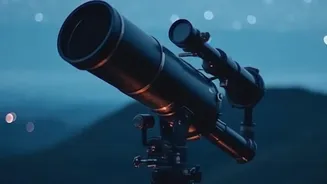
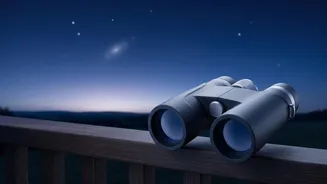
Contrary to what many believe, heavy astronomy gear like telescopes and even high-powered binoculars are not ideal for watching a meteor shower. Telescopes have a very narrow field of view, meaning you'd only be looking at a tiny patch of sky, dramatically reducing your chances of spotting a meteor. The goal is to see as much of the sky as possible, and for that, the naked eye is the perfect instrument. This makes meteor watching one of the most accessible astronomical events. You don’t need to invest in expensive equipment or learn complex setups. Your most important assets are patience and a comfortable spot to recline and look up.
Outsmarting the City Lights
The biggest obstacle for any urban stargazer is light pollution, the glow from streetlights and buildings that washes out all but the brightest stars. While you'll see more meteors if you can drive 30 minutes out of the city, it’s not always possible. To improve your chances from home, find the darkest spot you can. This might be a local park, a sports field, or even your own backyard if it’s shielded from direct streetlights. Try to use buildings or trees to block the direct glare of any nearby lights. Let your eyes fully adapt to the darkness, which takes about 20 to 30 minutes. During this time, do not look at your phone screen, as its bright light will instantly ruin your night vision. Lying on a blanket or a reclining chair is not just for comfort—it helps you take in a wide expanse of the sky without straining your neck.
Patience and Realistic Expectations
Even under perfect, dark-sky conditions, the Orionids are expected to produce about 15 to 25 meteors per hour during their peak. In a suburban or urban environment, that number will be lower—perhaps just a few per hour. Don't go out expecting a constant barrage of shooting stars. Instead, think of it as a celestial fishing trip. There will be lulls, followed by sudden, rewarding moments of brilliance. The key is patience. The experience isn't just about the count; it's about taking the time to connect with the night sky, something that’s all too rare in modern city life. Seeing even one or two bright Orionids streak across the sky against the urban glow can be a truly memorable event.