


From Satellite Internet to Your Pocket
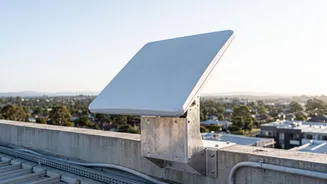
For years, Starlink has been known for bringing high-speed internet to rural and remote areas using a massive constellation of low-Earth orbit (LEO) satellites. The service required a dedicated terminal, or 'dish,' at the user's location. The next evolution
is Starlink's 'Direct to Cell' service, which aims to connect satellites directly to standard, unmodified smartphones. This technology has already started rolling out in partnership with carriers like T-Mobile in the US, allowing for texting and messaging in areas with no traditional cell tower coverage. However, SpaceX's ambition goes far beyond simply filling in the gaps for other carriers.
The Crucial Spectrum Puzzle Piece
The latest major development is SpaceX's agreement to acquire a nationwide portfolio of 800 MHz low-band spectrum from the investment firm Grain Management. Think of spectrum as the invisible radio wave highway that mobile signals travel on. Different bands have different properties. While Starlink already has mid-band spectrum for high-capacity data, low-band spectrum like 800 MHz is essential because it travels farther and is much better at penetrating walls and buildings. Elon Musk called it the 'last critical piece of the spectrum puzzle' needed to provide complete phone coverage. This acquisition, which still requires final approval from the Federal Communications Commission (FCC), signals a strategic shift from being a partner to becoming a network owner.
A New Kind of Hybrid Network
The plan isn't to replace cell towers in cities. Instead, SpaceX wants to create a first-of-its-kind hybrid network that combines its satellite constellation with a ground-based network using the newly acquired terrestrial spectrum. Here’s how it would work: in a city, your phone would use the ground-based network for strong indoor and outdoor coverage. When you drive into a rural 'dead zone', your phone would seamlessly switch to a direct satellite link. This unified system aims to provide reliable service indoors, outdoors, and everywhere in between, effectively eliminating the concept of a dead zone for its users. Most existing smartphones already support the 800 MHz band, meaning customers may not need new devices to access the service.
The Path to a Major Carrier
By owning spectrum licenses instead of just leasing capacity from partners like T-Mobile, SpaceX gains direct operational control. This allows it to build and manage its own service, which it has dubbed 'Starlink Mobile'. The ambition is clear: to compete directly with giants like AT&T, Verizon, and T-Mobile. The market reacted instantly to the news, with shares of the major US carriers tumbling after the announcement. The move is bolstered by a separate FCC approval for SpaceX to launch 15,000 next-generation 'Gen2' satellites, which are optimized for direct-to-phone service and promise over 100 times the bandwidth of current hardware. This combination of satellite capacity and owned terrestrial spectrum is what makes the prospect of Starlink becoming a major carrier a credible threat.
Challenges and the Road Ahead
Despite the bold vision, the road to becoming a major carrier is long and filled with challenges. Firstly, the spectrum deal awaits final regulatory approval from the FCC. Secondly, building out the 'advanced terrestrial deployment' will require massive investment in ground infrastructure. Finally, competition is not standing still. Other companies like AST SpaceMobile and Amazon's Project Kuiper (now Amazon Leo) are also developing their own satellite-to-phone solutions. While the initial 'Direct to Cell' services focus on texting and low-bandwidth data, achieving the speed and reliability of modern 5G networks via satellite is a formidable technical hurdle. Telecom experts note that while the ambition is huge, the impact on the industry's fundamentals in the near term is limited as it will take time for SpaceX to scale its plans.