


From crispy fries to creamy mash, the potato is a master of texture. But why does the same vegetable turn fluffy when baked, firm when boiled, and crisp when fried? The secret isn't magic; it's a fascinating lesson in kitchen science.
The Science Inside the Spud
To understand the
potato's versatility, we need to look at its two key components: starch and water. Potato cells contain starch granules, which themselves are made of two types of starch molecules: amylose and amylopectin. Potatoes are generally categorized as either 'starchy' or 'waxy'. Starchy potatoes, like the common Russet, are high in amylose and have a lower moisture content. Waxy potatoes, such as Red Bliss or new potatoes, are lower in starch, higher in amylopectin, and contain more moisture. This fundamental difference in their composition dictates how they will behave when cooked.
Boiling: The Wet Heat Method
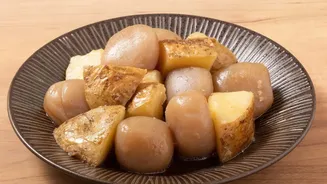
When you boil a potato, you're applying gentle, moist heat. This causes the starch granules inside the potato's cells to absorb water and swell, a process called gelatinization. In waxy potatoes, the higher concentration of amylopectin and lower overall starch content mean the cells tend to hold their shape well, even after boiling for a long time. This makes them perfect for potato salads, gratins, or any dish where you need the potato pieces to remain firm and distinct. For the best results, start potatoes in cold, salted water; this allows them to cook evenly from the outside in, preventing the exterior from turning to mush before the center is cooked.
Baking and Roasting: The Dry Heat Method
Baking and roasting use dry, high heat, which transforms a potato in a completely different way. This environment causes the moisture inside the potato to turn to steam. As the steam escapes, the potato's interior dries out. In a high-starch potato like a Russet, the abundant amylose granules swell and separate from each other, creating a light, fluffy, and mealy texture that’s perfect for absorbing butter and sour cream. The dry exterior, meanwhile, undergoes the Maillard reaction, which is responsible for the delicious browning and crispy skin. For an extra fluffy interior, it’s crucial not to wrap the potato in foil, as this traps steam and essentially boils the potato in its own skin, leading to a dense, gummy result.
Frying: A Two-Stage Transformation
Perfect french fries are a masterclass in texture contrast: a crispy shell giving way to a soft interior. This is achieved through a two-step frying process. The first fry, at a lower temperature, cooks the potato through and gelatinizes the starches. This stage also causes some starch to leak out and form a thin layer on the surface. The second fry, at a much higher temperature, rapidly dehydrates this outer layer, creating an extra-crispy crust that can withstand the moisture from the fluffy interior. Starchy potatoes like Russets are ideal for frying because their low moisture and high starch content lead to a fluffier inside and a crispier exterior.
The Perils of Mashing
Making mashed potatoes walks a fine line between creamy perfection and gluey disappointment. The enemy of fluffy mash is ruptured starch cells. When potatoes are overworked, especially with a food processor, their cells break down and release excess starch. This free-floating starch becomes sticky and viscous, resulting in a heavy, gluey paste. To avoid this, use a starchy potato, which breaks down easily without excessive force. Also, ensure the potatoes are well-drained and even dried briefly in the hot pot to remove excess water before mashing. Adding fat like butter before any liquid like milk helps coat the starch molecules, preventing them from becoming gummy when the liquid is incorporated.