





From Syrupy Sweet to Baked Delight
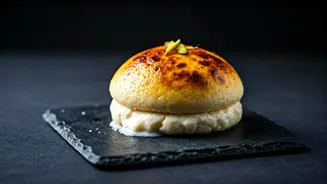
Imagine a traditional rasgulla, but instead of floating in a light sugar syrup, it's nestled in a thick, creamy base of reduced milk (rabri), mawa, and condensed milk, then baked until the top is beautifully caramelised and golden brown. That’s the baked rasgulla, a dessert
that has taken sweet shops and social media feeds by storm. The baking process transforms the texture; the outer layer becomes slightly firm with a delectable crust, while the inside remains soft and spongy, having absorbed the rich, milky goodness. The taste is a complex harmony of familiar sweetness and caramel notes, often described as a mix between rasgulla, rasmalai, and shahi tukda. This modern interpretation reduces the intense syrupiness of the original, offering a less messy and more nuanced flavour profile that appeals to contemporary tastes.
A Comforting Bite of Nostalgia and Novelty
A huge part of its appeal lies in its ability to be both comforting and new. For many young Indians, rasgulla is a taste of childhood, festivals, and family celebrations. Baked rasgulla takes this nostalgic connection and gives it an exciting, modern spin. The concept feels familiar enough to be comforting but different enough to be intriguing. It marries the soul of an Indian mithai with the technique of a Western-style baked dessert, like a pudding or casserole. This fusion of culinary worlds resonates with a generation that has grown up with global influences but still holds a deep affection for traditional flavours. The dish represents a confident re-imagining of Indian cuisine, preserving the core of a classic while fearlessly adapting it for a new era.
The Irresistible Allure of Cheese and Cream
The mention of 'cheese' in the context of this dessert speaks to a broader trend in Indian fusion cooking. While not always made with literal cheese, baked rasgulla is defined by its incredibly rich, thick, and creamy sauce made from condensed milk, mawa, and full-fat milk, which provides a lusciousness akin to cheesecake. Some innovative recipes even incorporate paneer or a touch of cream cheese to enhance this rich texture. This savoury-adjacent creaminess cuts through the sweetness, creating a more balanced and complex dessert. The modern Indian palate, especially among the youth, is increasingly receptive to these layered flavour profiles. This trend is visible across the dessert landscape, with creations like gulab jamun cheesecake and rasmalai tiramisu gaining immense popularity, blending the creamy tang of cheese with the sweetness of traditional mithai.
Made for the Social Media Age
You can't talk about a youth trend without talking about social media. Baked rasgulla is, simply put, incredibly 'Instagrammable'. The sight of the bubbling, golden-brown top, often garnished with pistachios and saffron, is visual catnip for a generation that eats with its eyes first. Food bloggers and influencers have played a huge role in its rise, with cinematic videos of the dessert being scooped from a dish going viral. Restaurants and cafes have recognised this, understanding that a dish that looks good online is a powerful marketing tool that can drive footfall. For young diners, the experience isn't just about eating; it's about discovering, capturing, and sharing the moment, and baked rasgulla is the perfect photogenic star.