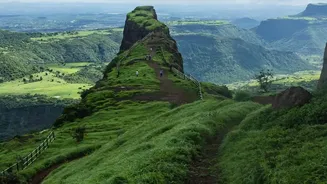







Before You Go: Planning is Everything
A safe monsoon trip begins long before you hit the road. Start by researching your destination thoroughly. Authorities like the National Disaster Management Authority (NDMA) and the India Meteorological Department (IMD) issue regular advisories. Check
these for any active warnings, such as 'Orange' or 'Red' alerts, which signal a need to reconsider or delay your travel. It's wise to learn about the area's history; regions with past landslides are often prone to future incidents. Contacting local hotels or travel agents can provide real-time information on ground conditions. Finally, pack smart. A sturdy waterproof backpack, non-slip waterproof footwear, a raincoat, a torch with extra batteries, a power bank, and a comprehensive first-aid kit are non-negotiable. Also, inform a friend or family member of your detailed itinerary.
Choose Your Destination and Route Wisely
Not all hill stations are created equal during the monsoon. Some areas are significantly more vulnerable to landslides due to their geology and steep slopes. High-risk zones often include the Himalayan states of Himachal Pradesh and Uttarakhand, parts of the Western Ghats like Wayanad and the Nilgiris, and the Sikkim-Darjeeling belt. Even within these states, certain highways are known lifelines that can be easily cut off, such as those leading to Kinnaur, Manali, and the Char Dham routes. Whenever possible, travel only during daylight hours. Poor visibility in heavy rain or at night dramatically increases the risk of missing warning signs like fallen rocks or washed-out road edges. Always build buffer days into your itinerary, as road closures can last for hours or even days.
On the Road: Key Safety Practices
While driving in the hills during monsoon, caution is your best co-pilot. Ensure your vehicle is in excellent condition, with special attention to brakes and tyres. Drive slowly, maintain a safe distance from other vehicles, and never attempt to overtake on blind curves. Be exceptionally vigilant for signs of potential danger. Collapsed pavement, mud, and fallen rocks are clear indicators of instability. If you encounter a road with flowing water or mud, never attempt to cross it; the depth and force of the water can be deceptive, and the road beneath may be washed away. It is always safer to wait or find an alternative route. Avoid stopping near steep slopes or drainage channels, especially after heavy rainfall.
Recognising the Imminent Warning Signs
Landslides often provide subtle warnings before they occur. Being able to recognise these signs can be life-saving. Listen for unusual sounds like trees cracking, boulders knocking together, or a faint rumbling that grows louder—this could indicate moving debris. Look for physical changes in the landscape. New cracks appearing in the soil, roads, or building foundations are major red flags. Other signs include tilting trees, fences, or utility poles, and the ground bulging at the base of a slope. Pay close attention to water. A sudden increase or decrease in stream flow, or water that abruptly turns from clear to muddy, can signal a slide happening upstream. If you notice any of these signs, leave the area immediately if it is safe to do so.
What to Do in an Emergency
If you are caught near a landslide, your immediate actions are critical. Move away from its path as quickly as possible, ideally moving uphill and away from river valleys or low-lying areas. Do not try to cross an approaching debris flow; it can move faster than you can run. If you are in a vehicle, stay alert for any sudden changes on the road ahead. If you find yourself trapped and escape is not possible, curl into a tight ball and protect your head with your hands. If you are inside a building, move to the highest floor and get on top of sturdy furniture to stay above the debris. Once the immediate danger has passed, do not return to the slide area, as follow-up slides are common. Stay away until authorities declare it safe.