

The End of an Era: The ISS Retirement
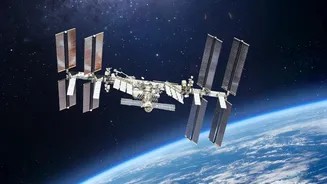
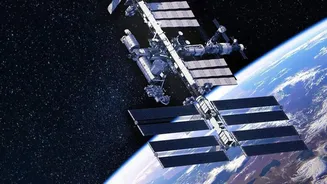
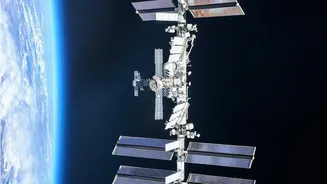
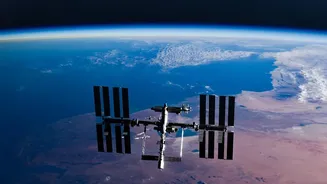
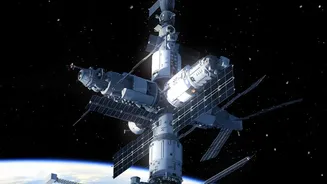
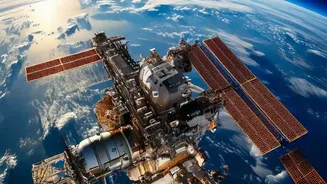
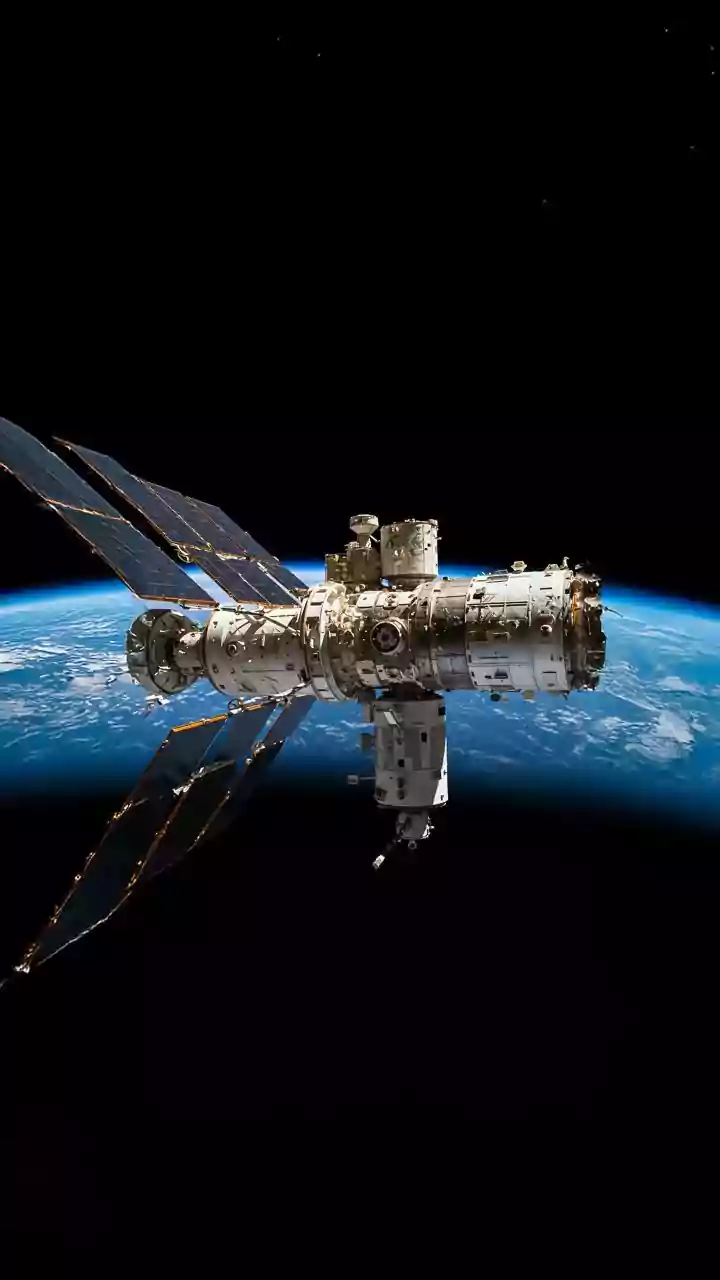
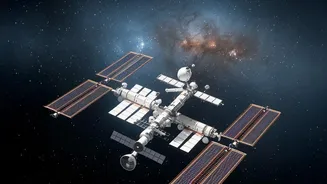
For over two decades, the International Space Station has been humanity's lone outpost in orbit, a testament to global cooperation and a hub for groundbreaking science. But after more than 25 years of continuous service, the 450,000-kilogram structure
is showing its age. Facing structural fatigue and rising maintenance costs, NASA and its partners plan to deorbit the ISS around 2030, guiding it to a controlled re-entry over a remote part of the Pacific Ocean. This retirement marks the end of a significant chapter in space exploration but also serves as the catalyst for a fundamental shift. Instead of building a replacement, NASA is turning to the private sector to ensure a continued human presence in low-Earth orbit (LEO).
A New Business Model for Orbit
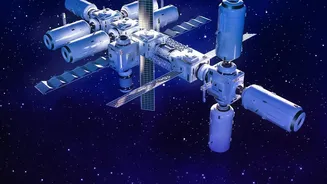
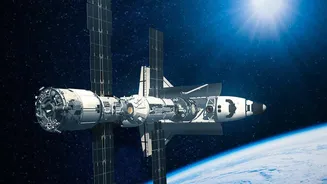
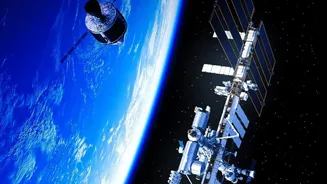
NASA's strategy is to transition from being an owner and operator to an anchor tenant. Through its Commercial LEO Destinations (CLD) program, the agency is funding multiple companies to develop private space stations. This public-private partnership model is designed to spur competition, drive down costs, and create a robust commercial economy in space. Several major players are in the race. Axiom Space plans to attach its first modules to the ISS starting around 2026 or 2027 before separating to become a free-flying station. Others, like the Voyager-Airbus joint venture Starlab and Vast with its Haven-1 station, are developing standalone platforms targeting launch in the late 2020s. Another major project is Orbital Reef, a 'mixed-use business park' in space led by Blue Origin and Sierra Space.
Democratising Access to Microgravity
The single most significant impact of this commercial shift is the expected democratisation of access. The ISS, as a government facility, has been expensive and access has been limited, primarily to national space agencies and their chosen partners. Commercial stations, driven by market competition, aim to offer more frequent and affordable access. This opens the door for a much wider range of customers, including universities, pharmaceutical companies, materials manufacturers, and even nations without their own space programs. By operating more like a business park than a government lab, these stations will offer turnkey services, handling logistics, crew, and operations so that researchers can focus purely on their science. This model has already proven successful with commercial cargo and crew missions to the ISS, which dramatically lowered costs compared to previous government-run programs.
What Kind of Research Will Flourish?
The unique environment of microgravity, where the effects of gravity are nearly absent, allows for revolutionary research that is impossible on Earth. In this environment, protein crystals can grow larger and more perfectly, which is critical for designing new drugs. For example, research on Merck's cancer drug Keytruda in space helped develop a more accessible formulation. Microgravity also accelerates disease modeling for conditions like cancer and osteoporosis and allows for the 3D printing of complex biological structures like organ tissues. Other key areas include materials science, where the absence of gravity-induced defects can lead to the creation of flawless semiconductor crystals and unique metal alloys, and advanced manufacturing. Starlab alone plans to have capacity for over 400 experiments per year, matching the current output of the entire ISS.
Beyond NASA: A Global Commercial Marketplace
While NASA is kickstarting this new ecosystem, the long-term vision is a global marketplace not solely dependent on a single government customer. These commercial stations will be open for business to international space agencies, private companies, research consortia, and even individual entrepreneurs from around the world. Starlab, for instance, is a joint venture that includes American and European aerospace giants Voyager and Airbus, with a partnership with the European Space Agency. Axiom Space has already flown private astronaut missions for customers from several countries. This model fosters a vibrant ecosystem where innovation can come from anywhere, creating new opportunities for nations like India to participate directly in the orbital economy without the massive upfront investment of building a national space station.