






What is the New Expansion?
Anthropic recently announced a suite of new workplace tools and features designed to embed its AI assistant, Claude, more deeply into daily business operations. A central component of this expansion is enabling Claude to securely access and interact with
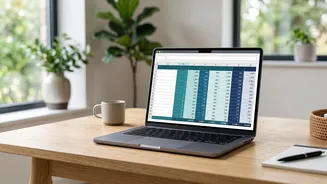
a company's own private data. This means the AI is no longer limited to its general training data; it can now be connected to a company’s customer relationship management (CRM) software, internal databases, document repositories, and other proprietary systems. The expansion includes tools dubbed Claude Meetings, Claude Sheets, and Claude Whiteboards, all designed to use this connectivity for real-time, context-aware assistance.
How It Works: Connectors and Protocols
The connection between Claude and company data is facilitated through a system of secure connectors and APIs. Anthropic is leveraging an open-source standard called the Model Context Protocol (MCP), which acts as a universal bridge between AI models and external data systems. This protocol allows developers to create secure, two-way connections. For businesses, this can be done through pre-built connectors for popular platforms like Salesforce, HubSpot, and Workday, or by building custom connections to internal databases. This framework ensures that Claude doesn't get direct, unrestricted access to a database but rather queries it through controlled endpoints that enforce a company's existing security and access rules.
The Business Advantage: Unlocking Internal Knowledge
The primary benefit for businesses is the ability to turn Claude into a true internal expert. Employees can ask plain-language questions and receive trusted, relevant information drawn directly from the company's own sources. Use cases are extensive and transformational. For instance, a sales team could ask Claude to analyze proprietary sales data from their CRM and generate a report, or a production planner could ask for an update on an at-risk order within their Infor ERP system. It can also power internal search, allowing employees to get coherent answers from various company policy documents or technical wikis without having to hunt for the information manually. This turns the AI from a general-purpose assistant into a specialized, highly efficient work tool.
Security and Trust: The Core Challenge
Allowing an AI to access sensitive company data naturally raises significant security concerns. Anthropic is addressing this by building its enterprise offerings around governance and trust. The company has stated that it does not train its models on data from its Enterprise customers. The connection architecture, using protocols like MCP, is designed to respect and enforce a company's existing role-based access controls. This means an employee using Claude can only access the data they are already permitted to see. Furthermore, features like audit logs and single sign-on (SSO) integration are available on enterprise plans, giving IT departments the oversight and control they require before deploying such a tool widely.
The Competitive Landscape
Anthropic's move is a direct challenge to other major players in the AI-powered workplace productivity space, namely Microsoft's Copilot for 365 and Google's Gemini for Workspace. While OpenAI, Microsoft, and Google are building AI agents for specific job functions, Anthropic's strategy focuses on creating a deeply integrated, centralized AI layer that works across thousands of existing third-party applications. The announcement of this expansion coincided with the beginning of Anthropic's IPO roadshow, signalling a clear strategy to position itself not just as a model builder, but as an indispensable enterprise software company. For businesses in India and elsewhere, this intensified competition will likely lead to more powerful tools, better pricing, and a greater emphasis on security and governance as vendors vie for their trust and business.