




Understanding the GRAP Framework
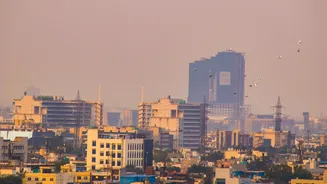
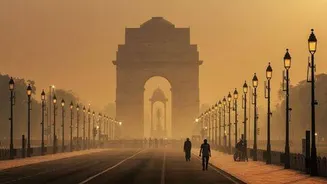
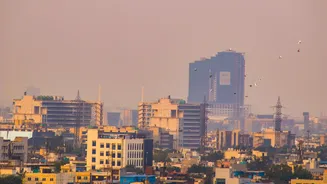
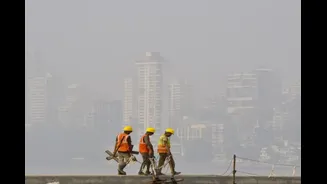
The Graded Response Action Plan, or GRAP, is an emergency response system designed to combat worsening air quality in Delhi and its surrounding regions. Implemented by the Commission for Air Quality Management (CAQM), it consists of four stages triggered
by specific Air Quality Index (AQI) levels. Stage I kicks in when the air is 'Poor' (AQI 201-300), followed by Stage II for 'Very Poor' (AQI 301-400), Stage III for 'Severe' (AQI 401-450), and Stage IV for 'Severe Plus' (AQI above 450). Each successive stage introduces stricter measures, which are cumulative; restrictions from Stage I remain in place when Stage II is activated, and so on.
Stage I and II: The Initial Impact
When the AQI enters the 'Poor' category, Stage I is invoked. As of October 21, 2026, Delhi's AQI has already deteriorated, prompting authorities to implement these initial measures. For travellers, this primarily means stricter checks on vehicle fitness. Authorities increase enforcement of valid Pollution Under Control (PUC) certificates and take action against visibly polluting vehicles. There's also a renewed focus on diverting non-essential trucks via the Eastern and Western Peripheral Expressways. Crucially, inter-state buses entering the NCR must be electric, CNG, or cleaner BS-VI diesel models. Stage II ('Very Poor') intensifies these actions and encourages using public transport and carpooling but doesn't typically halt private car movement for the general public.
Stage III: Major Restrictions on Cars
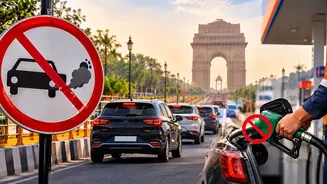
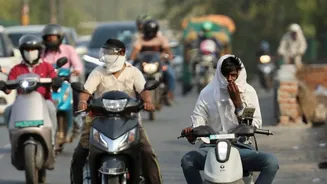
This is where most commuters feel the biggest impact. When the air quality becomes 'Severe', triggering Stage III, significant vehicle restrictions come into play. In Delhi and key NCR districts like Gurugram, Faridabad, Ghaziabad, and Gautam Budha Nagar, the plying of BS-III petrol and BS-IV diesel four-wheelers is banned. This affects a substantial number of older personal cars, forcing their owners to find alternative transport. Furthermore, commercial vehicles like Light and Medium Goods Vehicles (LGVs and MGVs) that don't meet BS-VI standards and are registered outside Delhi may also be barred from entering the city. For anyone driving one of these vehicles, this stage means leaving the car at home is no longer a choice but a rule.
Stage IV: The 'Severe Plus' Scenario
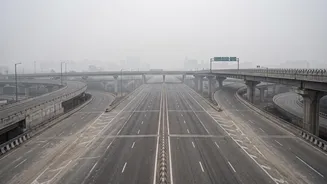
Stage IV represents the most critical level of air pollution and brings the most stringent transport curbs. Should the AQI cross the 450 mark, authorities may ban the entry of all trucks into Delhi, with an exception only for those carrying essential commodities or running on clean fuels. More significantly for commuters, there could be a complete ban on the use of all BS-IV diesel cars, not just those from outside Delhi. Authorities may also decide to implement an 'odd-even' scheme for private vehicles. For those planning travel into or out of the NCR, Stage IV is a red alert, signalling potential large-scale disruptions that require checking advisories before starting any journey.
How to Plan Your Commute
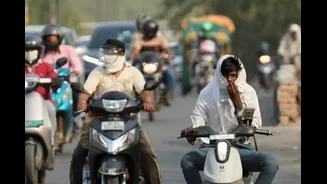
Adapting to GRAP requires proactive planning. The Delhi Metro often increases its trip frequency during high-pollution periods to accommodate the extra passenger load. This makes it the most reliable backbone for your commute. Using ride-hailing apps for shared cabs or carpooling with colleagues are other effective strategies. For inter-city travel to places like Agra, Jaipur, or Chandigarh, it's wise to favour trains or BS-VI compliant buses. Before you travel, always check the current GRAP status and the specific rules in effect. Apps like 'SAMEER' and official government websites provide real-time AQI data and public advisories. Some platforms even offer tools to check if your specific vehicle model is restricted under the current rules.