





What Is This New Airport?
The new facility is Navi Mumbai International Airport, or NMIA, with the airport code NMI. It began domestic operations in late 2025 and launched its first international service in mid-2026. This massive new greenfield airport was built to ease the immense
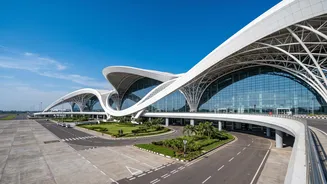
pressure on the city's existing Chhatrapati Shivaji Maharaj International Airport (CSMIA, code BOM) and provide a much-needed second gateway for the sprawling Mumbai Metropolitan Region (MMR). For millions of people living in Navi Mumbai, Thane, Kalyan, and surrounding areas, getting to the airport will now be significantly easier and faster, cutting down on long road journeys through congested city traffic. Phase one of NMIA is designed to handle 20 million passengers annually. The terminal's design is inspired by the lotus, India's national flower.
The First International Connection: Abu Dhabi
The first-ever international route from NMIA is a direct flight to Abu Dhabi (AUH), the capital of the United Arab Emirates. This service is operated by Air India Express and began on July 15, 2026. The inaugural flight, IX207, took off in the early hours, marking the start of a new chapter for both the airport and the airline. The service launched with three flights per week, operating on a Boeing 737 MAX 8 aircraft. The choice of Abu Dhabi as the first destination is strategic; the India-UAE corridor is one of the world's busiest, serving a massive population of expatriates, business travellers, and tourists. This route provides a low-risk, high-demand way for the new airport to begin its global operations.
What Does This Mean for Travellers?
The most immediate benefit is convenience. For those on the Navi Mumbai side of the MMR, the new airport is a game-changer. It represents shorter travel times to the airport and a more accessible starting point for international journeys. In the long run, the introduction of a second major airport is expected to increase competition among airlines, which could lead to more competitive fares for consumers. The launch of international flights from NMIA also signals a 'dual-airport strategy' for airlines like Air India Express, complementing their existing large-scale operations from CSMIA. Travellers booking flights from the Mumbai region should now pay close attention to the airport code on their tickets—BOM for the old airport, and NMI for the new one.
More Than Just Passengers
The launch of international operations is not just about passenger convenience; it's also a significant boost for trade. The very first international flight from NMIA also carried the airport's first global export shipment of perishable goods. This establishes NMIA as a new and vital gateway for cargo, particularly high-value, time-sensitive products that need quick market access. The airport is equipped with a large, modern cargo terminal designed to handle hundreds of thousands of tonnes of freight annually, a capacity that is set to grow in subsequent phases. This dual focus on passengers and cargo is expected to accelerate economic growth across the region.
What's Next for NMIA?
The Air India Express flight to Abu Dhabi is just the beginning. While it is currently the only international route from NMIA, more are on the horizon. Airport operators and airlines are in ongoing discussions to shift more international services to the new facility. A widely discussed plan to move a significant portion of international flights from CSMIA to NMIA was postponed from late 2026 to the summer 2027 schedule to allow for a smoother transition. Indian carriers like IndiGo have announced plans to begin international services from NMIA in early 2027, with several destinations in the Gulf region identified as potential new routes. Travellers can expect a gradual but steady increase in international destinations available from India's newest global gateway.