

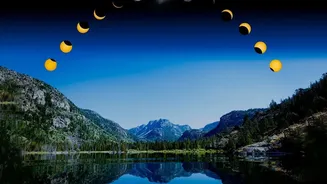
A Lab in the Sky
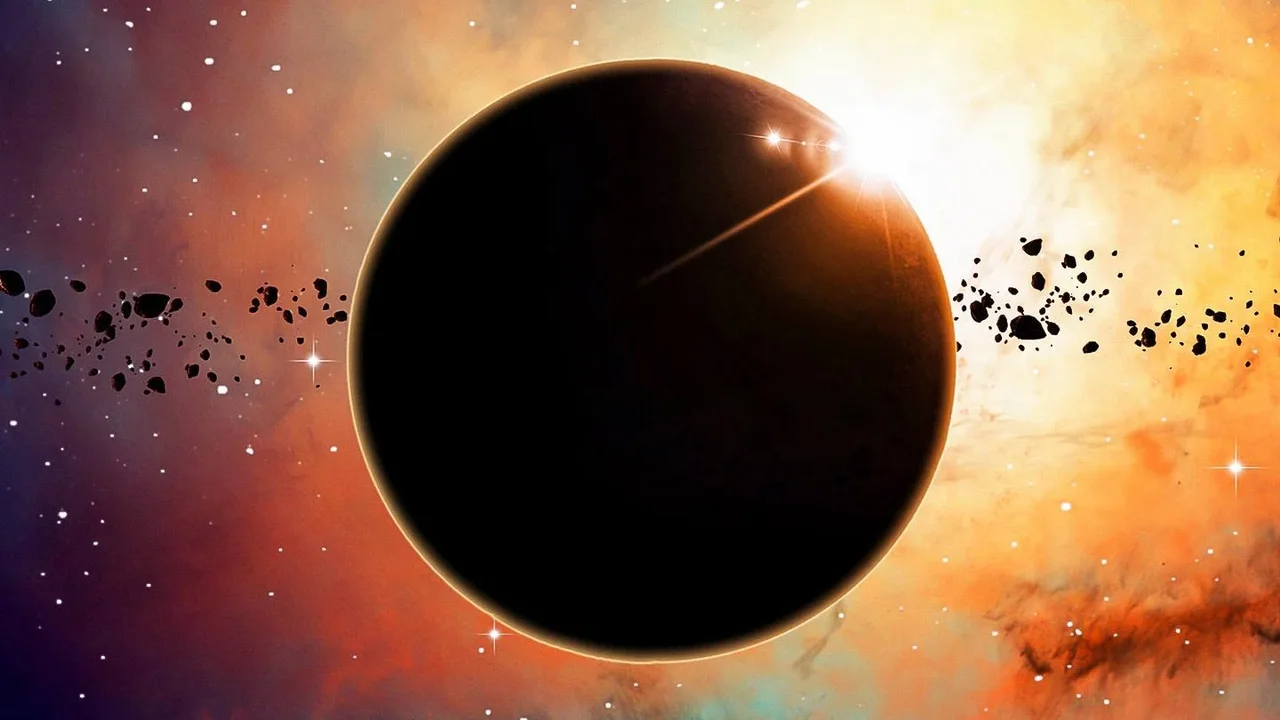
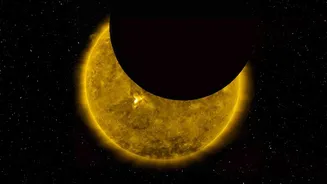
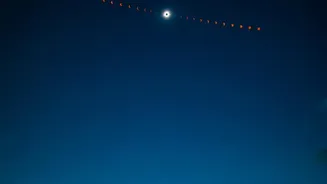
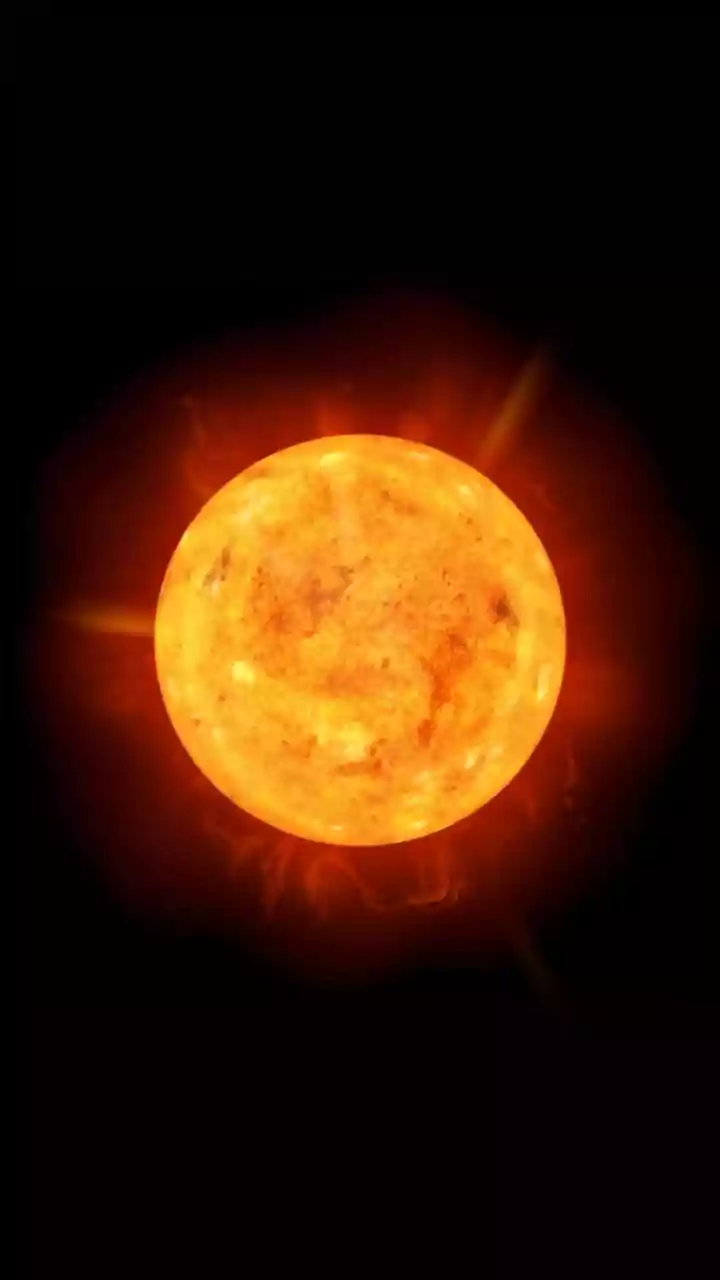
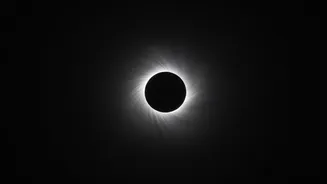
A total solar eclipse offers a rare, fleeting chance to study parts of the sun and its environment that are normally impossible to see. The sun's main body, the photosphere, is so dazzlingly bright that it completely drowns out its much fainter outer
atmosphere, the corona. By blocking the photosphere, the Moon acts like a natural cosmic shield, unveiling the corona's mysterious tendrils and allowing scientists to investigate some of the most profound questions in solar physics. While instruments called coronagraphs can simulate this effect, they struggle to reveal the innermost region of the corona, which is critical for understanding our star. This natural alignment provides a unique window that no Earth-based technology can fully replicate.
Chasing the Shadow for Coronal Secrets
One of NASA's primary goals was to get a better look at this elusive corona. To do this, the agency deployed a WB-57 high-altitude research aircraft, essentially chasing the Moon's shadow at 50,000 feet over the Atlantic. Flying at around 740 kilometres per hour, the jet extended its view of totality from just over two minutes on the ground to nearly three minutes in the air. Equipped with a suite of high-resolution cameras called SAMI, the aircraft captured images of the corona in multiple wavelengths of light. Scientists hope this data will help solve the perplexing "coronal heating problem": why the corona is hundreds of times hotter than the sun's surface below it. These observations also aimed to shed light on how the solar wind, the constant stream of particles flowing from the sun, is formed and accelerated.
Balloons to Probe Earth's Atmosphere
The research wasn't only focused on the sun; it also looked back at our own planet. The sudden plunge into darkness during an eclipse triggers rapid changes in Earth's atmosphere. To study this, the NASA-supported Nationwide Eclipse Ballooning Project dispatched student teams to Iceland and Spain. These teams launched dozens of scientific balloons before, during, and after the eclipse to measure how the atmosphere responds to the temporary loss of sunlight. A key area of interest is the ionosphere, the electrified upper layer of our atmosphere that is crucial for radio communications and GPS signals. The sudden drop in solar radiation causes this layer to cool and thin, creating temporary disturbances. Understanding these effects helps scientists better predict how space weather impacts our technology.
Building on Past Discoveries
The 2026 eclipse was not a standalone event for researchers. Many of the experiments flown on the WB-57 jet and launched via balloons were also used during the major total solar eclipse in April 2024. By conducting similar studies during different eclipses, scientists can compare results and build a more complete picture of the sun's behaviour. The sun is a dynamic and ever-changing star, so each eclipse provides a new snapshot of its activity. This comparative data is invaluable, helping researchers refine their models and improve their ability to forecast the state of the corona and predict space weather events that can affect everything from satellites in orbit to power grids on the ground.