


Greece: The Authentic Horiatiki
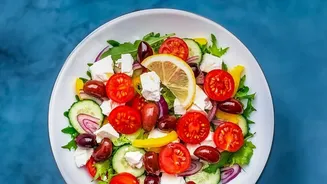
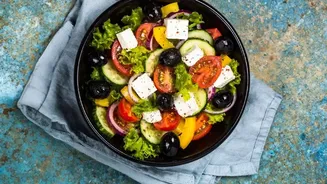
First, let's clear something up: a traditional Greek salad, or 'Horiatiki', contains no lettuce. This is a rustic, 'village' salad built on substance, not leafy greens. It’s a chunky, refreshing combination of ripe summer tomatoes, crisp cucumber, sliced
red onion, and green bell pepper. The stars of the show are the Kalamata olives and, most importantly, a generous slab of feta cheese placed on top, not crumbled within. The dressing is kept beautifully simple: a drizzle of high-quality extra virgin olive oil and a sprinkle of dried oregano. The magic happens when the salt draws juices from the tomatoes, creating a flavourful base perfect for soaking up with crusty bread.
Lebanon: The Herb-Forward Tabbouleh
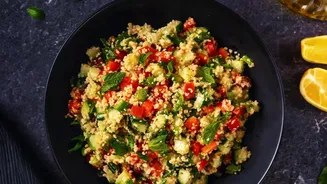
Travel east to Lebanon, and you'll find Tabbouleh, a salad that flips the script on ingredient ratios. While many versions outside the Middle East treat it as a grain salad, authentic Tabbouleh is a parsley salad. In fact, it's a vibrant celebration of finely chopped flat-leaf parsley, with supporting roles played by fresh mint, tomatoes, and onion. The grain component, fine bulgur wheat, is used sparingly. It doesn't even need to be cooked; it simply soaks in the dressing of zesty lemon juice and olive oil, absorbing all the fresh flavours. This isn't a grain bowl; it’s a bright, zesty, and intensely herbaceous experience.
Italy: The Thrifty Panzanella
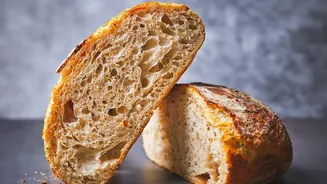
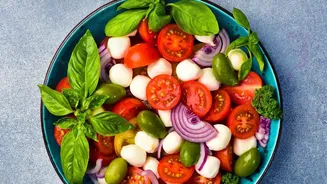
In Tuscany, Italy, resourcefulness bred a culinary icon: Panzanella. This classic summer salad was born from 'cucina povera' (peasant cooking) as a way to use up stale bread. The bread isn't toasted into croutons; rather, day-old loaves are soaked in water and then squeezed dry, giving them a soft, chewy texture that acts like a sponge for flavour. This bread is then tossed with juicy tomatoes, red onions, and fresh basil. Dressed simply with olive oil and vinegar, the Panzanella is a testament to turning humble ingredients into something truly spectacular. It’s a salad where stale bread isn't just an addition, it's the heart of the dish.
Spain: The Refreshing Pipirrana
From the Andalusia region of southern Spain comes Pipirrana, a finely chopped salad perfect for hot summer days. Its base ingredients are similar to other Mediterranean salads—tomato, cucumber, and green pepper—but the preparation makes it distinct. Everything is diced very small, creating a confetti-like mixture that is almost spoonable. The dressing often features sherry vinegar, a classic Spanish ingredient, along with garlic and olive oil. While delicious on its own, Pipirrana frequently serves as a base for other ingredients, commonly topped with tinned tuna and hard-boiled eggs, turning it into a substantial meal.
Turkey: The Tangy Gavurdağı Salatası
Head to Turkey, specifically the gastronomic hub of Gaziantep, for Gavurdağı Salatası, or 'Gavur Mountain Salad'. Like Pipirrana, this salad features finely chopped tomatoes, peppers, onions, and parsley. But what truly sets it apart are two key ingredients: walnuts and pomegranate molasses. The chopped walnuts add a wonderful crunch and earthy richness, while the pomegranate molasses in the dressing provides a unique sweet-and-sour tanginess that is deeply characteristic of the region's cuisine. Often spiced with sumac, this salad is a complex, flavour-packed dish that is commonly served alongside grilled meats.
Morocco: The Cooked Zaalouk
Not all Mediterranean salads are raw. In Morocco, Zaalouk is a popular cooked salad made from eggplant and tomatoes. The vegetables are cooked down with garlic, olive oil, and a blend of spices like cumin and paprika until they are soft and jammy. The mixture is then mashed to a consistency that can be chunky or smooth, depending on the cook's preference. Often served as a dip with khobz (Moroccan bread), Zaalouk is a warm, smoky, and flavourful departure from the crisp, raw salads found elsewhere in the region, showcasing an entirely different approach to vegetable preparation.