






A Deliberate Paradigm Shift
For decades, the Indian Space Research Organisation (ISRO) was the sole custodian of India's space ambitions. From building rockets to launching satellites, it was a government-led endeavour that brought the nation immense success and global recognition.
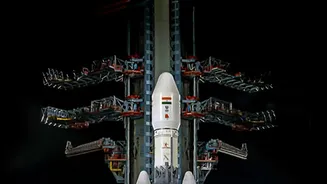
Now, a deliberate transformation is underway. Recognising the explosive potential of the commercial space economy, India has opened its doors to private enterprise. This isn't about replacing ISRO, but evolving its role. The new strategy allows ISRO to focus on cutting-edge research and complex deep-space missions, while empowering private players to handle routine manufacturing and commercial services. This shift, formalised by policies like the Indian Space Policy 2023, has catalysed a startup boom, with the number of private space companies soaring from just a handful to nearly 400 in recent years.
The Key Enablers: IN-SPACe and NSIL
At the heart of this new ecosystem are two key organisations: the Indian National Space Promotion and Authorisation Centre (IN-SPACe) and NewSpace India Limited (NSIL). Think of IN-SPACe as the single-window agency for the private sector. Established in 2020, it acts as a facilitator and regulator, helping startups get the authorisations they need and providing access to ISRO’s invaluable facilities, mentorship, and expertise. NSIL, on the other hand, is ISRO's primary commercial arm. Its mandate is to commercialise ISRO's technologies and services. This includes managing technology transfers, producing launch vehicles like the PSLV through industry partners, and securing international launch contracts. Together, they form a bridge between ISRO's public-sector legacy and the private sector's commercial drive.
From Blueprints to Business
The support for startups is more than just policy on paper. It involves the tangible transfer of sophisticated, space-grade technologies developed over decades by ISRO. IN-SPACe and NSIL have facilitated dozens of Technology Transfer Agreements, moving innovations in areas like adhesives for solar panels, advanced alloys, and satellite converters from ISRO's labs to private companies. This gives startups a crucial head start, saving them immense research and development costs. While a parliamentary panel has raised concerns about some technologies being transferred at potentially low prices, the stated goal is to build a self-reliant industrial base and reduce dependence on imports. By taking over production, private firms allow ISRO to concentrate on its core research mandate, creating a symbiotic relationship that benefits the entire sector.
The New Breed of Space Entrepreneurs
This enabling environment has given rise to a diverse array of ambitious startups. Companies like Skyroot Aerospace and Agnikul Cosmos are making headlines by developing their own private launch vehicles, targeting the burgeoning market for small satellite launches. Skyroot is preparing for the orbital launch of its Vikram-1 rocket, while Agnikul has pioneered the world's first single-piece 3D-printed rocket engine. Others are focused on different parts of the value chain. Pixxel is building a constellation of hyperspectral Earth-observation satellites, providing data for agriculture, climate monitoring, and more. These companies are not just building hardware; they are creating a vertically integrated commercial space ecosystem within India.
Aiming for a Slice of the Global Pie
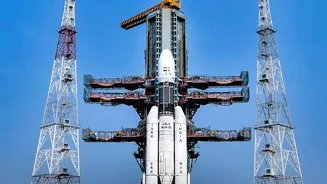
The ultimate goal is to capture a larger share of the global space economy, which is projected to grow into a trillion-dollar industry. India's space economy, currently valued at around $8.4 billion, is projected to reach over $40 billion within a decade. Indian startups are well-positioned to compete globally due to the country's reputation for cost-effective engineering, a large talent pool, and strong institutional support from ISRO. They are targeting markets for on-demand satellite launches, satellite data services, and mission support. NSIL has already demonstrated this potential by securing high-profile contracts, such as launching dozens of satellites for the UK-based company OneWeb using ISRO's heaviest rocket, the LVM3. This proves India’s capability in the lucrative heavy-lift launch market, paving the way for private players to follow.