


What’s Hitting the Moon?
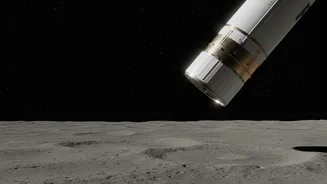
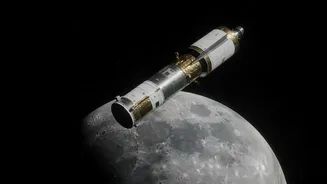
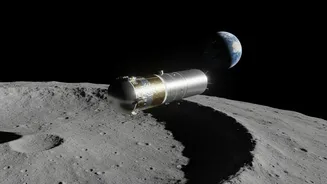
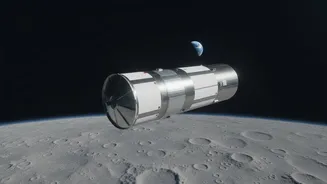
The object on a collision course with the Moon is the spent upper stage of a SpaceX Falcon 9 rocket, designated 2025-010D. It’s a large piece of human-made debris, roughly the height of a five-story building. This rocket stage did its job back in 2025,
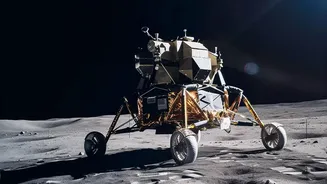
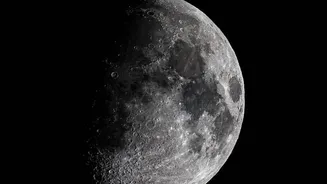
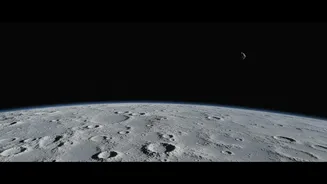
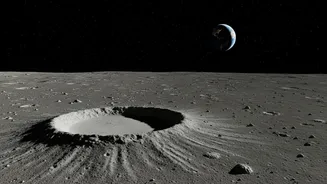
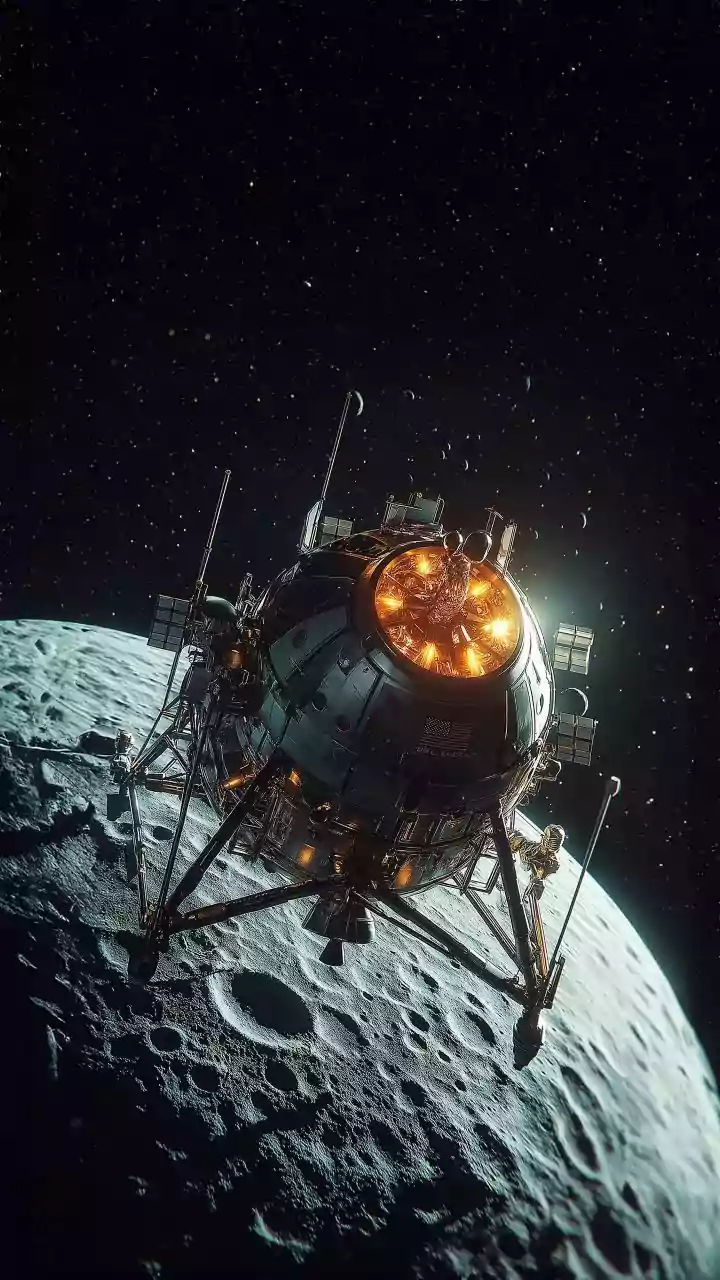
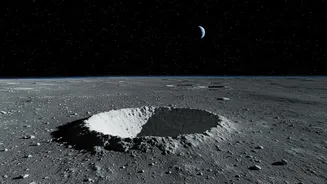
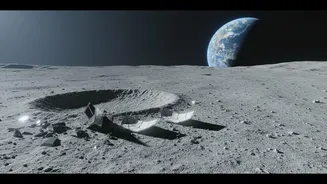
successfully helping to send Firefly Aerospace's Blue Ghost lander to the Moon as part of a NASA commercial mission. After deployment, the stage was left in a long, looping orbit around the Earth. Gravitational forces and solar radiation pressure have since nudged its path, setting it up for this final, fiery rendezvous. The impact is predicted to occur on August 5, 2026, carving out a new crater estimated to be about 18 metres wide and 4 metres deep near the large Einstein Crater on the Moon's western edge.
The Science of Seeing It Coming
Predicting this impact wasn't a fluke. It was the result of meticulous tracking and calculation. Independent astronomers, like Bill Gray of Project Pluto, first identified the trajectory using publicly available data. They track objects in high-Earth orbit, calculating their future paths. NASA's Center for Near-Earth Object Studies (CNEOS) later confirmed the findings, stating there is a 100% chance of impact. The process involves taking numerous observations of an object over time to build a precise orbital model. However, predicting the path of man-made debris like a rocket stage comes with unique challenges. Unlike a solid, predictable asteroid, a hollow, lightweight rocket body is more susceptible to the gentle-but-persistent push of solar radiation, which can slightly alter its course, adding a small margin of error to the exact impact time and location.
A Celestial Proving Ground
So why is this event so valuable? Because unlike the random, unpredictable meteoroids that strike the Moon daily, this impact is a known quantity. Scientists know the object's mass, size, velocity, and material composition with a high degree of certainty. This turns an otherwise routine event into a powerful scientific experiment. Observatories can have their telescopes pointed at the right place at the right time. Researchers will be eagerly watching for the brief impact flash and, more promisingly, the plume of lunar dust and rock (ejecta) thrown into space. Models predict this plume could rise as high as 100 kilometres above the surface. By comparing the real-world observations of the crater size and ejecta plume with their computer simulations, scientists can fine-tune the models they use to understand impact physics.
What This Means for Planetary Defence
Accurately predicting a harmless rocket stage hitting the Moon is more than just an academic exercise; it's a crucial dress rehearsal for planetary defence. The same systems and models used to track this debris are the ones we rely on to find and monitor natural objects like asteroids that could pose a threat to Earth. Every successful prediction builds confidence in our ability to provide an early warning if a dangerous asteroid were ever found on a collision course with our own planet. Observing how the impact excavates lunar material also helps scientists understand the geology of the Moon and the potential hazards for future crewed and robotic missions. While an object of this size would burn up in Earth's atmosphere, the Moon has no such protection, making every piece of debris a potential risk for future lunar infrastructure.