






What is a 'Personal Item,' Really?
Airlines have a very specific definition for a “personal item,” and it’s not just any small bag you can carry. The golden rule is that this item must fit completely under the seat in front of you. This is the crucial difference between a personal item and a standard
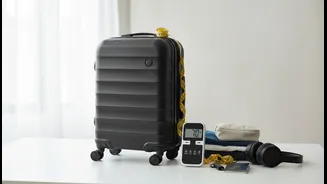
carry-on, which goes in the overhead bin. While most airlines in India allow one personal item in addition to a cabin bag, the space under an economy seat is surprisingly small. Typically, this category includes items like a ladies' handbag, a slim laptop bag, a small briefcase, or a camera bag. The key is its limited dimensions, which are often explicitly stated by the airline.
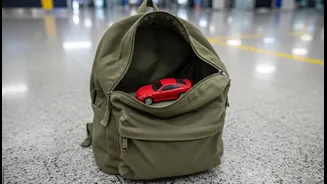
The Ordinary Backpack Trap
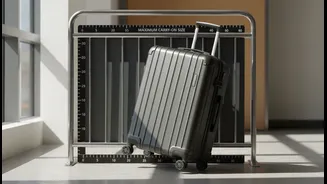
Here's where many travellers get caught out: the “ordinary backpack.” That bag you use for college, commuting, or day trips is often much larger than the personal item allowance. A typical airline like IndiGo specifies personal item dimensions around 45cm x 35cm x 20cm. An ordinary backpack, especially when filled, can easily exceed these measurements in height, width, or depth. Many are designed to hold books, a lunchbox, and a jacket, making them too bulky to slide under a seat without obstructing the aisle or your neighbour's foot space. Airlines are aware of this and gate agents are trained to spot oversized bags. If your backpack looks too big to fit the sizer, you'll be asked to prove it—and if it fails, you'll have to pay.
Checking The Rules for Indian Carriers
Baggage policies can differ, so it's vital to check with your specific airline before you fly. For domestic travel in India, the rules are broadly similar but have nuances. IndiGo allows one cabin bag (7kg, 55x35x25cm) and one personal item (3kg, 45x35x20cm). Air India has similar dimensions for its cabin bag and allows a personal item like a laptop bag or purse with its own size constraints (approx. 40x30x20cm). Vistara also permits a personal item in addition to cabin baggage, but it must be small enough to fit under the seat. The common thread is that the personal item is always secondary and significantly smaller than the main cabin bag. Budget carriers, in particular, are strict as fees for oversized baggage are a key revenue source.
The High Cost of Getting It Wrong
The financial penalty for misjudging your bag size can be steep. If your backpack is deemed too large to be a personal item and you already have a separate cabin bag, you will be forced to check it at the gate. Gate-checked baggage fees are almost always significantly higher than what you would have paid to check a bag online beforehand. You lose any savings you thought you were making by travelling light. These fees can turn a budget-friendly trip into an unexpectedly expensive one, all due to a preventable mistake. It's a stressful start to a journey, involving a last-minute payment and the potential for your bag to be handled roughly as it's sent to the cargo hold.
Smarter Bags for Savvy Travellers
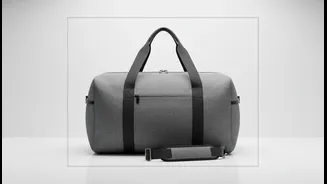
To avoid the backpack trap, consider investing in a bag specifically designed as an under-seat personal item. These are often called “flight bags” or “underseaters.” They are engineered to match the typical dimensions required by most airlines. Alternatively, a large, structured tote bag, a messenger bag, or a slim, professional laptop backpack can work well. The goal is to choose a bag that is clearly not a full-sized backpack. Soft-sided bags can also be a good option, as they can be compressed to fit into tight spaces more easily than a rigid-shell bag. When packing, be realistic about what you can fit; these bags are for in-flight essentials like your wallet, documents, a book, and electronics—not three days' worth of clothes.