


An Ambitious New Target
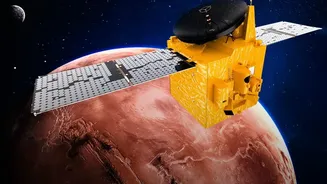
Following the success of its Hope Probe orbiting Mars since 2021, the UAE is setting its sights on a far more complex target: the main asteroid belt between Mars and Jupiter. The mission, known as the Emirates Mission to the Asteroid Belt (EMA), involves
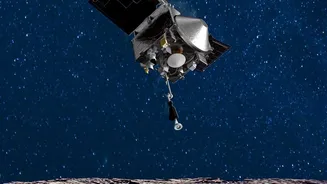
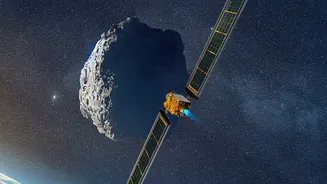
a main spacecraft called the MBR Explorer. This mothership will carry a smaller, autonomous lander probe on an incredible 5-billion-kilometre journey. The plan is to explore seven different asteroids, culminating in the probe detaching and landing on the final target, a mysteriously red asteroid named 269 Justitia, in 2036. Studying Justitia could provide unique insights into the distribution of water and organic materials during the formation of our solar system.
The India-UAE Connection: HEX20
A crucial partner in this venture is HEX20, a space-tech startup with engineering operations based in Technopark, Thiruvananthapuram. This makes it the first private Indian company to be selected for a deep-space mission by the Gulf nation. HEX20 was chosen by the UAE Space Agency and the Technology Innovation Institute (TII) to develop the probe's core systems. Their contribution includes the spacecraft bus—the fundamental structure that supports the probe's instruments and systems—as well as the onboard computer, power systems, and specialised software required to operate in the harsh environment of deep space. The successful development of these components in just 15 months highlights a significant collaboration between the two nations in the high-stakes arena of space technology.
What is Spacecraft Integration?
The probe, having been fully assembled and tested in an Abu Dhabi cleanroom, is now preparing for 'spacecraft integration'. This is a pivotal and delicate phase in any space mission. The lander probe will be transported to a specialised facility in Colorado, where it will be physically and electronically connected to the main MBR Explorer spacecraft. Engineers will meticulously install the probe, connect all wiring, and test the communication links between the lander and the mothership. This process ensures that once in deep space, the MBR Explorer can successfully deploy the probe for its final, autonomous descent to the asteroid's surface. Any issues at this stage could jeopardise the entire landing operation years down the line.
A Leap in Sovereign Capability
For the UAE, this mission is about more than just scientific discovery; it's a strategic move to accelerate its sovereign deep-space capabilities. While the Hope Mars mission was a major achievement, the EMA project represents a significant developmental leap. The lander probe was designed and built in just under two years by a team of Emirati engineers and scientists, in collaboration with partners like HEX20. The ability to create a probe that can operate fully autonomously—making its own decisions without real-time commands from Earth—is a huge technological challenge. This project is a key part of the UAE's National Space Strategy 2031, which aims to position the country among the world's top ten space economies.