




The Challenge: Quality vs. Quantity
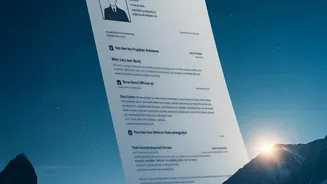
Every job seeker faces the same dilemma: send out a generic resume to dozens of companies and hope for the best, or spend hours meticulously tailoring a single application that might never get a response. The first approach gets lost in the crowd, while
the second is simply not sustainable. This is especially true now that most large companies use Applicant Tracking Systems (ATS) to filter candidates. These systems scan resumes for specific keywords and qualifications from the job description before a human ever sees them. If your resume doesn’t speak the ATS's language, you’re out of the running before the race even starts. This creates a time-consuming and often demoralising cycle for applicants. The need to be both fast and specific has never been greater.
What Are AI Prompt Templates?
Think of an AI prompt template as a detailed set of instructions for a large language model like ChatGPT. Instead of a simple request like, "write a resume for me," a prompt template provides structure and context. You give the AI your existing resume, the job description for the role you want, and a specific command. For example, a template might instruct the AI to "Act as a senior recruiter and rewrite the bullet points from my 'Work Experience' section to highlight achievements relevant to this specific job description." These templates are designed to transform your existing, factual experience into a document that is perfectly aligned with a target role, focusing on everything from keywords to company culture.
Crafting the Perfect Prompt
The magic of AI tailoring lies in the quality of your prompt. A good prompt acts as a blueprint. Start by providing the AI with two key documents: your complete, up-to-date resume and the full text of the job description you're targeting. Then, add your instructions. A powerful prompt template might look like this: "Compare my resume to the job description provided. Identify the top 5 most important skills and requirements listed. Then, rewrite my resume summary and the last two job experience sections to better align with these requirements, using the action-impact format for bullet points. Do not invent any skills or experiences." The key is to be specific. Tell the AI what role to play (e.g., career coach, technical recruiter), what to focus on (e.g., bullet points, skills section), and what to avoid (e.g., generic phrases like "hard-working").
AI as Your Co-Pilot, Not the Pilot
The biggest mistake job seekers make is treating AI output as the final product. An AI-generated resume is a draft, not a finished document. While these tools are incredibly efficient at keyword optimization and rephrasing, they lack personal context and can sometimes make factual errors or sound generic. Recruiters are becoming adept at spotting content that lacks a human touch. Your job is to take the AI's suggestions and refine them. Read the output aloud. Does it sound like you? Is every single statement accurate and verifiable? The goal is to merge the AI's efficiency with your authenticity. Use it to generate ideas and structure, then edit heavily to inject your personality, specific achievements, and a genuine voice. The human element is what ultimately sets a great application apart.
Beyond the Resume
Once you master resume tailoring, you can apply the same principles to other parts of your job search. Use similar prompt templates to generate customised cover letters that connect your experience directly to a company's mission. You can also use AI to prepare for interviews. For example, you could feed it the job description and your new resume, and then ask it: "Based on this role and my background, what are the 10 most likely interview questions I will face, and what are the key points I should make for each?" This turns the AI into a personal interview coach, helping you anticipate questions and structure compelling answers based on your own experience. The same logic applies to writing follow-up emails or even optimising your LinkedIn profile. The possibilities are vast once you learn to guide the technology effectively.