







The Persistent Allure of Mars
Mars remains the ultimate long-term prize for many in the space community. While NASA's Artemis program uses the Moon as a stepping stone, the Red Planet is the clear destination. Missions like the Perseverance rover, which continues to explore Jezero
Crater, are laying the groundwork by searching for signs of past life and caching samples for a potential future return. This international endeavor includes the UAE's Hope orbiter studying the Martian atmosphere and China's Tianwen-1 mission, which successfully deployed its own rover. Looking ahead, Japan plans to launch its Martian Moons eXploration (MMX) mission in late 2026 to collect samples from Phobos, which could be the first material returned from the Mars system. India is also planning its Mangalyaan-2 lander and rover. The commercial sector is heavily involved, with companies like Relativity Space partnering with NASA for future satellite missions to provide daily global measurements of the Martian environment.
Asteroids: The New Gold Rush?
Beyond the planets, asteroids have transformed from celestial curiosities into targets of intense scientific and commercial interest. These remnants from the formation of the solar system hold clues to our origins and, potentially, vast resources. NASA is leading the charge with several ambitious missions. The Lucy mission is on a grand tour of Jupiter's Trojan asteroids, while the OSIRIS-REx spacecraft, after successfully returning a sample from asteroid Bennu, is now on an extended mission (OSIRIS-APEX) to study the asteroid Apophis. Another key mission, Psyche, is en route to a unique metal-rich asteroid that may be the exposed core of an early planet. China is also a major player; its Tianwen-2 mission recently arrived at Kamoʻoalewa, an Earth quasi-satellite, to collect samples before heading to a comet. These missions are not just for science; they are developing the technologies for prospecting and, one day, potentially mining asteroids for valuable minerals, a concept that drives much of the private sector's long-term vision.
Journeys to the Outer Giants
The mysterious outer solar system is also receiving renewed attention. These distant worlds, with their gas giant planets and icy moons, are crucial to understanding planetary formation and the potential for life beyond Earth. NASA's Europa Clipper launched in 2024 to investigate Jupiter's moon Europa, which is believed to harbor a vast liquid water ocean beneath its icy shell. The European Space Agency's (ESA) Juice mission is also exploring Jupiter and its largest icy moons: Ganymede, Callisto, and Europa. Even farther out, NASA's Dragonfly mission, a nuclear-powered quadcopter, is slated to launch in 2027 to explore the surface of Saturn's largest moon, Titan. These complex, long-duration missions represent a significant investment in fundamental science, aiming to answer profound questions about our place in the universe.
A New Ecosystem of Explorers
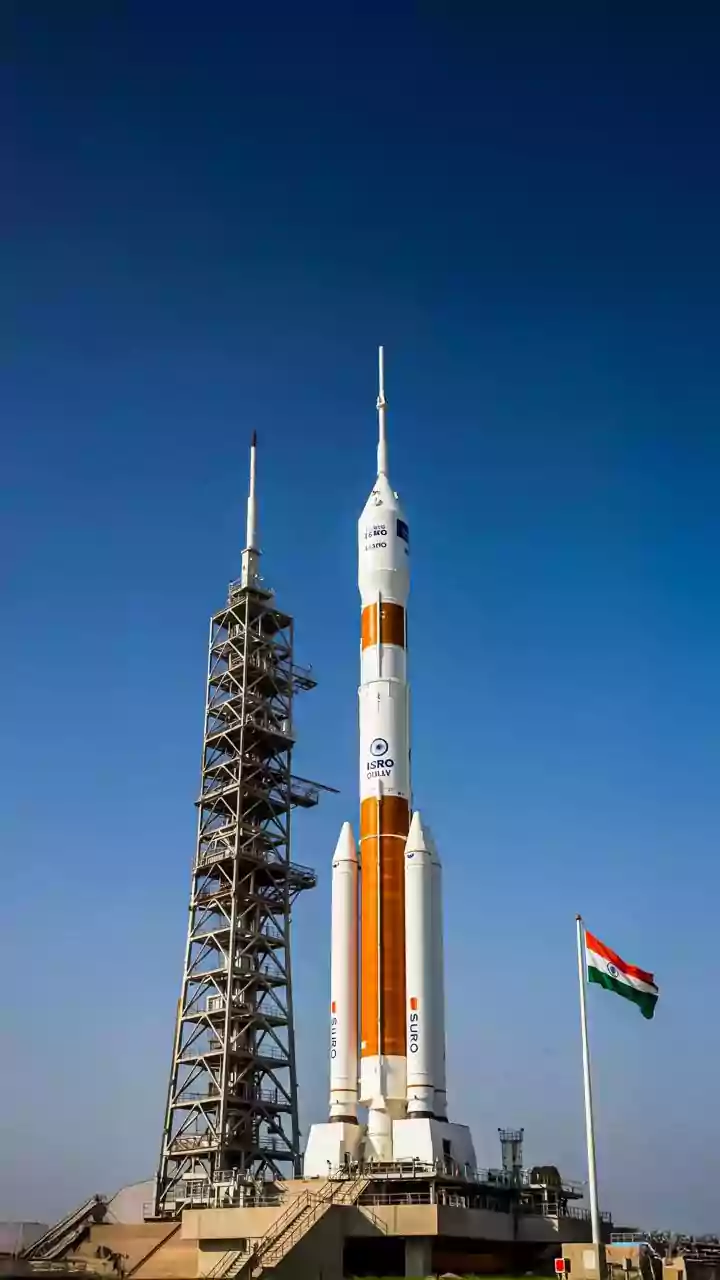
This diversification of targets is powered by a fundamental shift in who is going to space and how. The era of government-only exploration is over. Today, a dynamic ecosystem of public-private partnerships is accelerating progress. Companies like SpaceX, with its reusable rockets and ambitions for Mars, and Blue Origin, developing its New Glenn heavy-lift rocket and Blue Moon lunar lander, have become critical partners for national agencies. This model allows agencies like NASA to focus on pioneering, high-risk science in deep space while leveraging commercial services for more routine operations like delivering crew and cargo to low-Earth orbit. Meanwhile, other nations are rapidly advancing their capabilities. China's ambitious program includes a space station, robotic moon and Mars missions, and plans for a crewed lunar landing by 2030. India's ISRO is also expanding its portfolio with missions to the Sun, Venus, and Mars, alongside its human spaceflight program.