

Ghevar: Rajasthan's Monsoon Jewel
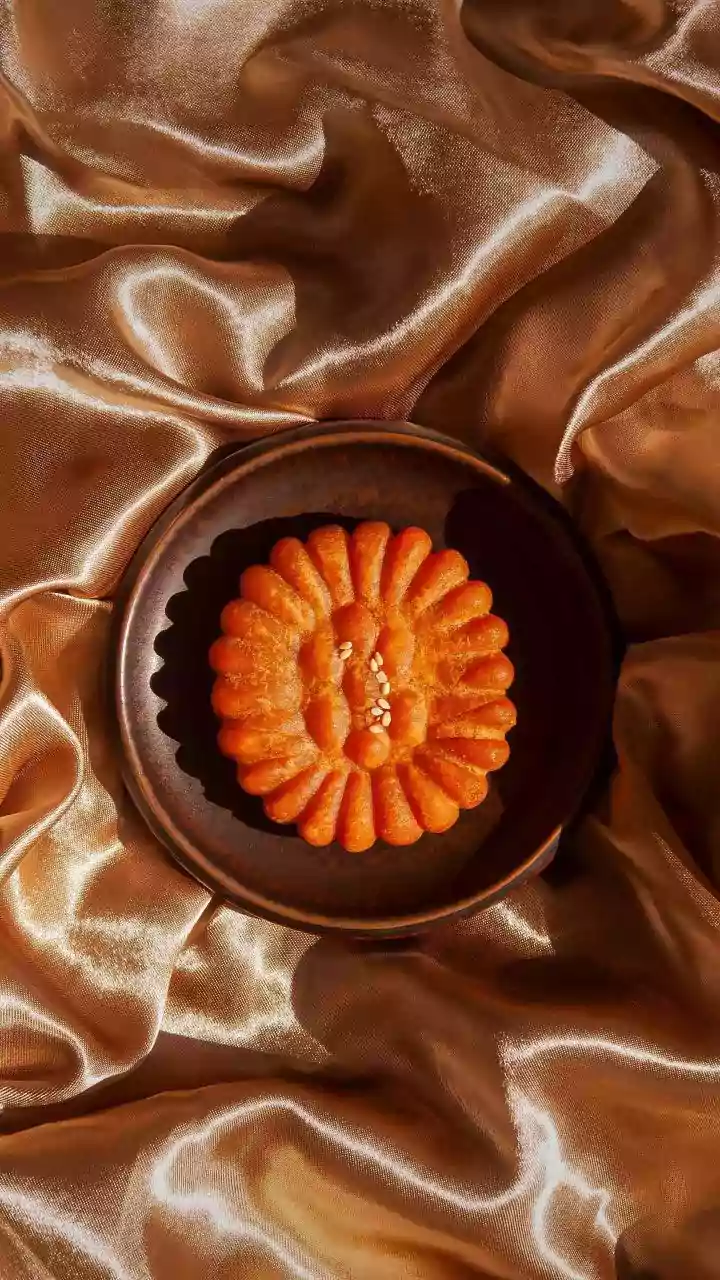
In Rajasthan and across North India, the monsoon months of Sawan bring with them the glorious Ghevar. This disc-shaped sweet, resembling a golden honeycomb, is made from a batter of flour and ghee fried to perfection and then soaked in sugar syrup. Its
preparation is an art form, creating a texture that is simultaneously crisp and porous. Traditionally associated with the festivals of Teej and Raksha Bandhan, Ghevar is often sent from a mother's home to her married daughter as a symbol of love and blessings. On Rakhi, it stands as the centrepiece of the thali, its circular shape symbolising the unending bond between siblings. Topped with rabri (thickened sweet milk) or slivered nuts, each bite is a rich, indulgent experience that is deeply woven into the fabric of regional celebrations.
Chhena Poda: Odisha's Baked Cheesecake
Travel east to Odisha, and you'll find a Rakhi sweet that is unique and utterly delicious: Chhena Poda, which literally translates to 'burnt cheese'. Often called India's answer to cheesecake, this delicacy is made from fresh, well-kneaded chhena (cottage cheese), sugar, and semolina, sometimes studded with nuts and raisins. The mixture is traditionally wrapped in Sal leaves and baked for hours, allowing the sugar to caramelise and form a beautiful brown crust while the inside remains soft and moist. Believed to have originated in the mid-20th century from an experiment with leftover cheese, Chhena Poda has become a beloved dessert for festivals like Durga Puja and Raksha Bandhan. Its smoky, caramelised flavour and delicate texture make it a standout festive treat.
Sutarfeni: The Thread-like Wonder of Gujarat
In Gujarat and parts of Rajasthan, Sutarfeni is a marvel of sweet-making. The name itself describes its appearance: 'sutar' meaning thread and 'feni' meaning fine. This delicate, cotton-candy-like sweet is made from shredded, roasted flour that is pulled into hair-thin strands, roasted in ghee, and blended with sugar. The process is famously laborious, often taking days to perfect the flaky, melt-in-your-mouth texture. Typically flavoured with cardamom and rose water and garnished with pistachios and almonds, Sutarfeni is light, crispy, and aromatic. It symbolises auspicious new beginnings, making it a popular gift during festivals and weddings, including Rakhi, where its intricate structure reflects the delicate and precious sibling bond.
Payasam: The Comforting Elixir of the South
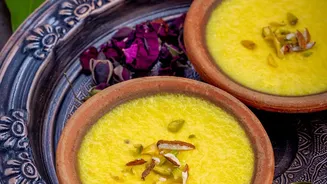
In South India, festive meals often conclude with a warm, comforting bowl of Payasam, and Raksha Bandhan is no exception. Known as Kheer in the North, Payasam has many regional variations but is fundamentally a pudding made with milk or coconut milk, sweetened with sugar or jaggery. While North Indian Kheer often uses dairy milk and sugar, traditional Payasam in states like Kerala and Tamil Nadu frequently features coconut milk and jaggery, giving it a distinct, earthy sweetness. Popular varieties include Moong Dal Payasam, made with lentils and coconut milk, and Semiya Payasam, made with vermicelli. Served during most auspicious occasions, it is considered a divine offering and a symbol of celebration and togetherness.
Balushahi: The North's Glazed Delight
A staple in North Indian sweet shops, Balushahi is a traditional dessert that shines during festive seasons. Unlike a donut, to which it is sometimes compared, Balushahi has a dense, flaky texture. It is made from a maida (all-purpose flour) dough, shaped into discs with a slight indent, and then deep-fried in ghee on low heat until golden. The final step involves soaking the fried pastry in a thick sugar syrup. This process gives it a crisp outer layer and a soft, layered interior. It's a rich, hearty sweet that feels both rustic and celebratory. For Raksha Bandhan, it offers a satisfyingly traditional alternative to more modern or lighter mithai, representing the substantial and enduring nature of the sibling relationship.