



The Shoebox Revolution
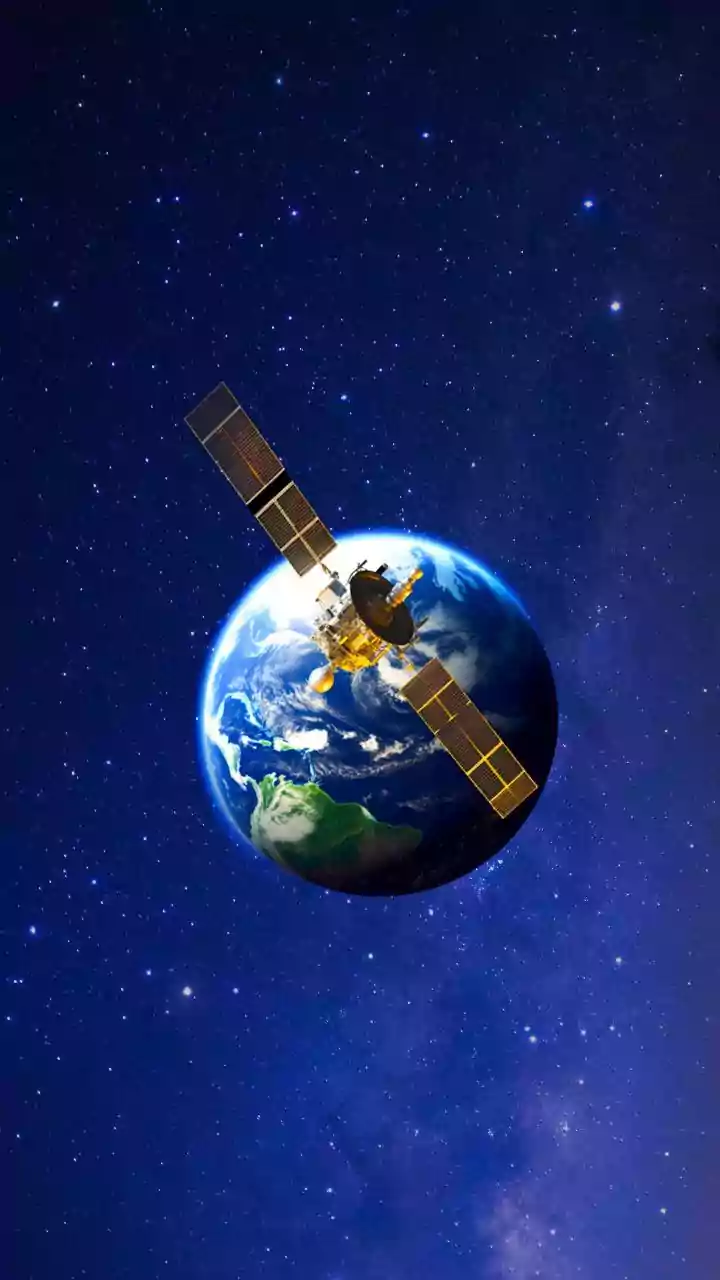
When you picture a satellite, you might imagine a machine the size of a school bus, glittering with solar panels and costing billions. For decades, that picture was accurate. But today, the most disruptive force in the space industry is the small satellite, or 'smallsat'.
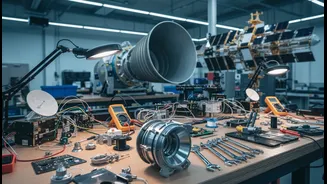
These are spacecraft with a mass under 500 kilograms, and they can range from the size of a refrigerator down to a nanosatellite, like the popular CubeSat, which is a standardized 10x10x10 cm cube. Initially developed for educational purposes, these miniature marvels have evolved into powerful tools. Their rise is fuelled by the same miniaturization of electronics that put a supercomputer in your pocket. By using off-the-shelf components and standardized designs, they can be developed and built faster and far more cheaply than their traditional counterparts.
Space for Everyone
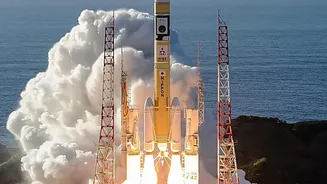
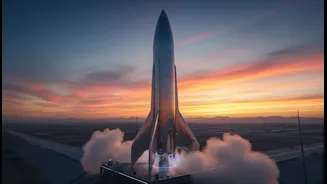
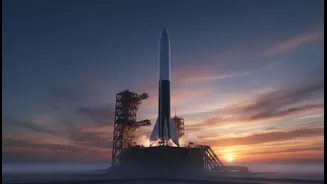
The most profound impact of this cost reduction is the democratisation of space. For the first time, getting a payload into orbit is within reach for universities, small companies, and developing nations. Instead of multi-billion-dollar price tags, missions can be launched for millions, or even less for the smallest CubeSats. This has unleashed a wave of innovation. Indian startups are a prime example of this new energy. Companies like Skyroot Aerospace, which recently had a successful orbital launch with its Vikram-1 rocket, and Agnikul Cosmos are building launch vehicles specifically designed for the smallsat market. Meanwhile, firms like Pixxel are deploying constellations of advanced hyperspectral imaging satellites, and Dhruva Space offers end-to-end solutions, from building satellites to launch services. This burgeoning ecosystem, supported by government enablers like ISRO and IN-SPACe, is creating a self-reliant Indian space industry.
New Eyes on Earth and Beyond
So, what are all these new satellites doing? The applications are transforming life on Earth. Companies like Planet Labs and Orbital Sidekick use constellations of smallsats to image the entire planet daily. This data is crucial for monitoring deforestation, improving crop yields, tracking wildfires in real-time, and managing natural disasters. They are also bridging the digital divide, with companies like Starlink and OneWeb using massive constellations to provide high-speed internet to remote and underserved regions. The innovation extends beyond Earth's orbit. NASA has used CubeSats for deep-space missions, demonstrating their potential for planetary science and creating interplanetary communication relays. Their lower cost and faster development time allow for higher-risk technology demonstrations, accelerating the pace of innovation for all spaceflight.
A Crowded Sky
This rapid expansion is not without its challenges. The proliferation of thousands of satellites, particularly in large constellations, has dramatically increased the risk of collisions and the creation of space debris. A single collision at orbital velocities can generate thousands of new pieces of junk, each capable of destroying another satellite, potentially triggering a chain reaction known as the Kessler syndrome. There are also concerns about light pollution, as streaks from satellite constellations can interfere with astronomical observations. The industry is actively working on solutions, including developing more sustainable, 'green' propellants and designing satellites that can de-orbit themselves safely at the end of their lifespan to burn up in the atmosphere. However, the growing congestion in low-Earth orbit remains one of the most pressing challenges for the long-term sustainability of space activities.