
Meghalaya's Living Root Bridges
In the rainforests of Meghalaya, particularly around Cherrapunji (Sohra) and Mawlynnong, the Khasi and Jaintia people have perfected a form of natural architecture that seems pulled from a fantasy novel. For centuries, they have guided the aerial roots
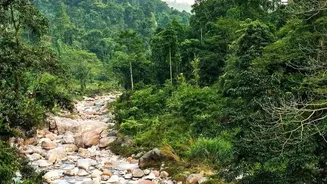
of rubber fig trees (Ficus elastica) across rivers and streams, weaving them together to form sturdy, living footbridges. These are not built, but grown. The most famous example is the Double Decker bridge in Nongriat village, a two-tiered marvel that requires a significant trek of about 3,000 steep stone steps to reach. For those seeking a more accessible experience, the Riwai bridge near Mawlynnong village offers a stunning example just a short 15-minute walk from the road. These bridges are a testament to a harmonious relationship between humans and nature, getting stronger with each passing year as the roots thicken and fuse together.
Manipur's Floating Loktak Lake
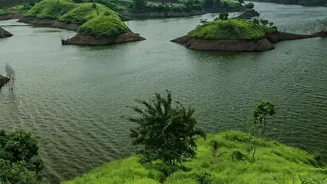
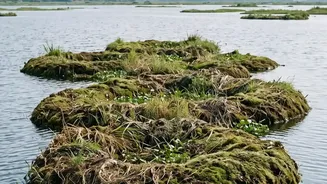
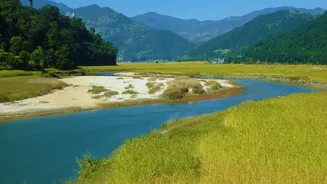
Loktak Lake in Manipur is the largest freshwater lake in Northeast India and a spectacle of nature unlike any other. Its surface is dotted with 'phumdis', which are floating islands of vegetation, soil, and organic matter in various stages of decomposition. These phumdis are so significant that some are large enough for local fishing communities to build their homes on. The largest of these phumdis is home to the Keibul Lamjao National Park, the world's only floating national park. This unique sanctuary is the last natural habitat of the endangered Sangai, or dancing deer, which can be spotted moving delicately across the buoyant landscape. A boat ride at sunrise offers a surreal experience as you glide between these floating islands, witnessing a way of life intrinsically tied to the rhythm of the lake.
Nagaland's Mystical Dzukou Valley
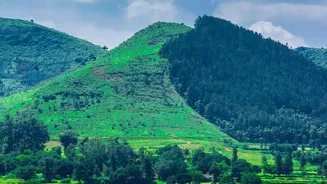
Straddling the border of Nagaland and Manipur, the Dzukou Valley is a trekker's paradise that rewards visitors with scenes of unparalleled beauty. Often called the 'Valley of Flowers of the East', its rolling hills are carpeted in a unique species of dwarf bamboo, creating a landscape that looks like a vast green quilt. During the monsoon season, the valley transforms into a vibrant canvas of wildflowers, most notably the rare Dzukou Lily, which is found nowhere else in the world. Reaching the valley involves a moderate to difficult trek, typically starting from the villages of Viswema or Jakhama. The journey through forests and up steep inclines is challenging but culminates in breathtaking panoramic views from the valley's rim, making it an unforgettable adventure for nature lovers.
Arunachal's Spiritual Tawang
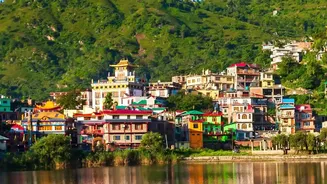
Nestled high in the Himalayas at an altitude of about 10,000 feet, Tawang is a centre of spirituality and staggering natural beauty. The town is anchored by the Tawang Monastery, the largest in India and a vital centre for Tibetan Buddhism. But the journey to Tawang is as spectacular as the destination itself, involving a drive over the breathtaking Sela Pass, which sits at an elevation of around 13,700 feet. The region is dotted with high-altitude lakes of crystal-clear water, such as the picturesque Pankang Teng Tso and the sacred Sangetsar (Madhuri) Lake, whose landscape is marked by dead tree trunks rising from its placid waters. Visiting Tawang requires an Inner Line Permit for Indian citizens, but the effort is rewarded with a profound sense of peace and views of the mighty Himalayas.
Sikkim's Sacred Gurudongmar Lake
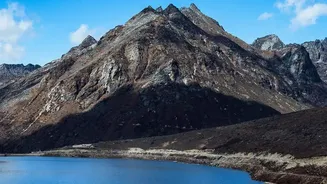
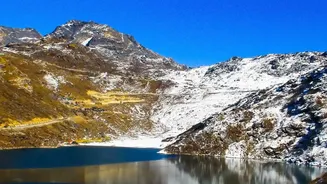
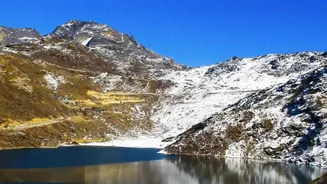
Located at a dizzying altitude of over 17,800 feet, Gurudongmar Lake in North Sikkim is one of the highest freshwater lakes in the world. The air is thin and the landscape is a stark, cold desert, but the sight of the turquoise water against a backdrop of snow-capped peaks is awe-inspiring. Considered sacred by Buddhists, Hindus, and Sikhs, the lake is believed to have healing properties, and a portion of it is said to never freeze completely, even in the harshest winters. The journey to Gurudongmar is an adventure in itself, passing through the rugged, beautiful terrain of Lachen and Thangu. Due to its proximity to the international border with China, a special permit is required for Indian citizens, and the extreme altitude demands proper acclimatisation, but the spiritual and visual rewards are immense.