





Recognising the Problem
Commercial flights operate with two pilots: the Pilot Flying (PF), who actively handles the controls, and the Pilot Monitoring (PM), who manages communication, checklists, and cross-checks the PF's actions. These roles are often swapped between the Captain
and First Officer on different flight legs. Incapacitation isn't always a dramatic collapse. It can be subtle, such as a pilot becoming unresponsive, making uncharacteristic errors, or failing to reply to standard callouts. Aviation procedures often use a 'two-communication' rule: if a pilot doesn't respond appropriately to two verbal prompts, the other pilot must suspect incapacitation and take action.
Taking Control and Securing the Cockpit
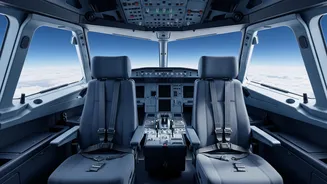
The first and most critical step for the remaining pilot is to maintain control of the aircraft. They will immediately and clearly state, "I have control," to formally establish their command. The priority is to ensure the plane is flying safely, often by engaging the autopilot to manage the flight path and reduce workload. The next step is to secure the incapacitated crewmate. The remaining pilot will call the senior cabin crew member to the cockpit for assistance. The flight attendant, following specific training, will recline the pilot's seat, slide it fully back, and use the seatbelt and shoulder harness to ensure the person cannot accidentally interfere with the flight controls.
One Pilot, Two Jobs
With the aircraft stable and the cockpit secured, the remaining pilot now performs the duties of both the PF and PM. They handle all flight controls, navigation, and systems monitoring while also managing all communications. One of the first and most important radio calls is to declare an emergency with Air Traffic Control (ATC), typically using the phrase "Mayday" or "Pan-Pan." This declaration ensures they get priority handling. ATC can then clear other traffic out of the way, provide a more direct route to a suitable airport, and offer a long, straight-in approach to make the landing sequence less complex.
Help from the Cabin and the Ground
While the pilot focuses on flying, the cabin crew plays a crucial supporting role. They will make an announcement to see if there is a doctor or other medical professional among the passengers to provide first aid to the incapacitated pilot. They are also responsible for preparing the cabin for an emergency landing. In some cases, a flight attendant might be asked to sit in the empty pilot's seat to help with non-flying tasks, such as reading checklists aloud under the pilot's direction. On the ground, ATC works to coordinate a full emergency response, ensuring that medical and fire crews are on standby for the moment the aircraft touches down.
Using Technology to Land Safely
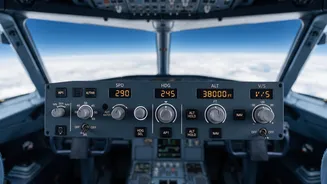
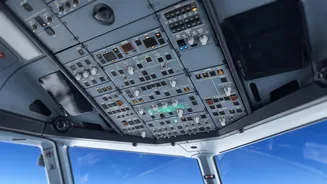
Modern aircraft are equipped with sophisticated automation that makes a single-pilot landing very manageable. The autopilot can fly the aircraft for most of the descent and approach. Many large commercial jets also have autoland systems, which can perform a fully automatic landing in coordination with an airport's Instrument Landing System (ILS). The pilot's job becomes one of monitoring the aircraft's systems, making configuration changes like extending the flaps and landing gear, and managing the aircraft's speed. By using this technology, the pilot can focus on the most critical parts of the landing without being overwhelmed by the dual workload. The goal is always a safe, controlled landing at the nearest suitable airport.