




What the Supreme Court Ordered
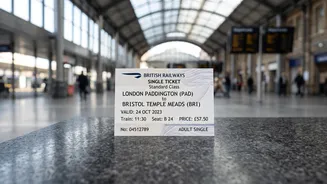
In a significant move for passenger welfare, the Supreme Court of India has directed Indian Railways to extend travel insurance to tickets purchased at station counters, starting from October 27, 2026. Previously, this low-cost insurance, with premiums
as low as 45 paise, was only available as an option for tickets booked online through the IRCTC portal. The court's order, which came during a hearing related to the tragic Odisha train accident of 2023, aims to provide equal access to financial protection for all passengers, particularly those from lower economic strata who often buy tickets offline. The court has made this direction mandatory, holding the Railway Board directly responsible for its implementation.
Understanding Insurance 'Cover'
This ruling brings up an essential concept in any insurance policy: the difference between 'cover' and a 'claim payment'. Think of 'cover', or 'sum insured', as the maximum potential payout your policy offers for a specific event. For the standard IRCTC travel insurance, the cover for accidental death or permanent total disability is ₹10 lakh. This is the highest amount the insurance company is liable to pay under that specific circumstance. The policy also provides cover for other situations, such as up to ₹7.5 lakh for permanent partial disability and up to ₹2 lakh for hospitalisation expenses due to injury. These figures represent the ceiling of your protection, not an automatic payment.
Defining a 'Claim Payment'
A 'claim payment', on the other hand, is the actual amount of money you or your nominee receives after an unfortunate, insured event occurs and you file a formal request (a claim). This amount is determined by the actual loss incurred and the specific terms of the policy. For instance, while your policy might 'cover' hospitalisation up to ₹2 lakh, the 'claim payment' will only be for the actual amount of the hospital bills submitted, provided they are for approved medical treatments following an accident. Similarly, for a permanent partial disability, the payout would be a percentage of the ₹7.5 lakh cover, corresponding to the severity of the disability as assessed by a medical professional and defined in the policy.
Why This Distinction Is Crucial
The distinction is vital to managing expectations. Seeing a headline figure like '₹10 lakh cover' can be reassuring, but it's not a guaranteed lump-sum payment for any incident. The payment is always linked to the actual, proven damages or losses. If a train accident leads to a minor injury requiring ₹20,000 in hospital expenses, the claim payment will be ₹20,000, not the full ₹2 lakh hospitalisation cover. The policy is designed to compensate for the loss you suffered, up to the limit of your cover. It is not a lottery ticket. Understanding this helps passengers appreciate the real value of insurance as a safety net designed to mitigate financial loss, rather than as a source of profit.
How to Navigate Your Train Insurance
With insurance soon to be extended to all ticket types, it's more important than ever for passengers to be informed. When you get your policy details, it's wise to understand the scope of cover and, crucially, the exclusions—situations where the insurance will not pay out, such as self-inflicted injuries or accidents while breaking the law. Most importantly, for policies taken online, you must fill in the nominee details on the insurer's portal after booking. Failure to do so can cause significant delays and legal hurdles for your family if they need to make a claim. The process for nominating someone for counter tickets is yet to be detailed by the Railways, but will be a critical step for passengers.