







The Brain-Belly Connection
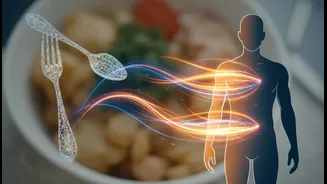
It takes about 20 minutes for your brain to receive and process fullness signals from your stomach. When you eat too quickly, you can easily consume more food than your body needs before this intricate communication system has a chance to tell you to stop.
This process involves hormones that regulate appetite. Fast eating doesn't give these hormones enough time to work, which can lead to overeating and feeling uncomfortably full. Studies, including one conducted among adults in Gujarat, India, have shown a significant link between faster eating speeds and higher Body Mass Index (BMI) and visceral fat levels.
More Than Just Weight
The consequences of speed-eating aren't just about the quantity of food. Rushed meals can lead to poorer digestion, as chewing is the first crucial step in breaking down food. Swallowing larger, poorly chewed pieces forces your stomach to work harder and can lead to bloating, gas, and discomfort. Furthermore, when you eat quickly, your body may not absorb nutrients as efficiently. Over time, this habit has also been associated with an increased risk for conditions like metabolic syndrome and insulin resistance. Essentially, slowing down allows your entire digestive system to function optimally.
Put Down Your Utensils
One of the simplest yet most effective ways to slow down is to consciously put your fork or spoon down between bites. This small action creates a natural pause, forcing you to take a break instead of immediately preparing the next mouthful. This gives you a moment to breathe, check in with your body's hunger signals, and even engage in conversation if you're eating with others. This simple habit helps to break the cycle of continuous, mindless eating and stretches your mealtime closer to that 20-minute mark your brain needs.
Create a No-Distraction Zone
Eating while scrolling on your phone, watching TV, or working on a laptop is a primary driver of fast, mindless eating. These distractions make it difficult to pay attention to your body's fullness cues. Try to designate your dining area as a screen-free zone. By focusing solely on your meal, you engage your senses, noticing the flavours, textures, and aromas of your food. This practice, known as mindful eating, not only slows you down but also increases satisfaction from your meal, potentially making you feel content with smaller portions.
Sip Water Strategically
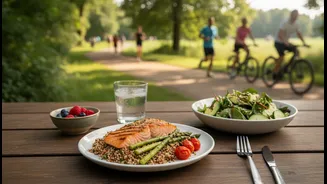
Incorporating sips of water throughout your meal is another easy technique to introduce pauses and slow your pace. This practice not only helps with hydration but also aids in digestion and can contribute to a feeling of fullness. Taking a moment to drink water after every few bites interrupts the rhythm of rapid eating and gives your stomach and brain time to sync up. This strategy is simple to implement whether you're eating at home, at work, or in a restaurant.
Choose Foods That Require Chewing
You can naturally engineer a slower meal by choosing foods with more texture. High-fibre foods like fresh fruits, vegetables, nuts, and lean proteins inherently require more chewing than softer, more processed options. This increased chewing time mechanically slows down your eating rate, contributing to better digestion and increased satiety. So, incorporating a crunchy salad or some raw vegetables into your meal can be a built-in speed bump, helping you savour your food and feel full with less.