



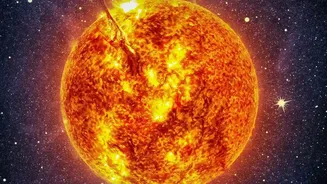
What is a Solar Storm?
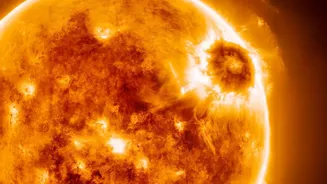
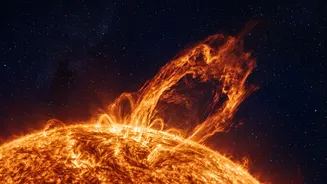
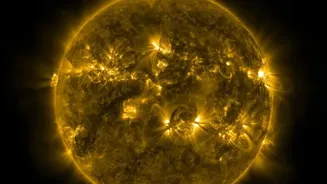
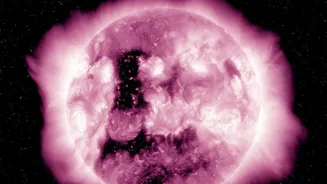
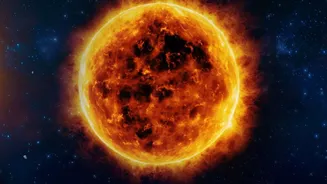
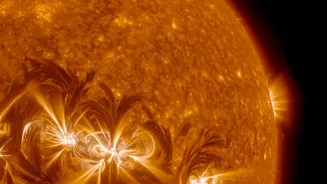
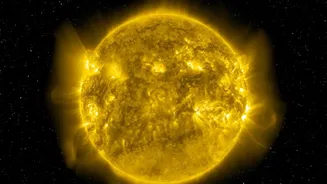
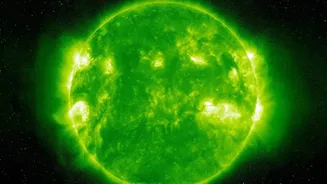
A solar storm is a powerful burst of energy from the sun. Think of it like a massive, cosmic eruption. These events often begin with a solar flare, which is an intense flash of radiation. Sometimes, these flares are accompanied by something even more
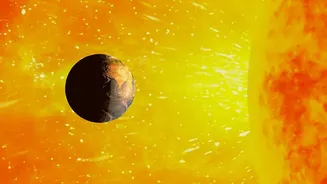
significant: a Coronal Mass Ejection, or CME. A CME is a giant cloud of electrified gas and magnetic fields that gets blasted from the sun's atmosphere into space at incredible speeds. While the sun releases CMEs frequently, they become a problem for us only when Earth is directly in their path.
The Impact on Modern Life
When a CME collides with Earth, it interacts with our planet's natural magnetic field, creating what is known as a geomagnetic storm. While our atmosphere protects humans on the ground from direct harm, the technology that powers our society is highly vulnerable. These storms can induce powerful electrical currents in power grids, potentially overloading transformers and causing widespread blackouts. They can also disrupt high-frequency radio communications used by aircraft, damage the sensitive electronics in satellites, and interfere with GPS signals, affecting everything from navigation to financial transactions. In essence, a strong solar storm could cripple the very infrastructure of modern life.
The Challenge of Prediction
The biggest challenge with solar storms has always been prediction. The energy from a solar flare travels at the speed of light, meaning we only have about eight minutes of warning before it hits. CMEs take longer to arrive, typically one to four days, but knowing exactly which ones will hit Earth and how severe the impact will be has been difficult. This short and often uncertain warning time gives utility providers and satellite operators very little opportunity to take protective measures, such as temporarily shutting down parts of the grid or putting satellites into a safe mode to protect their delicate circuitry.
Enter AI: The DAGGER System
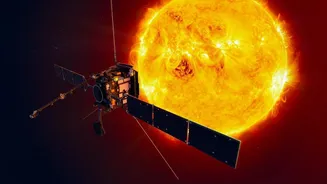
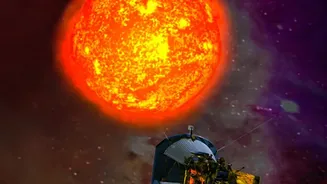
This is where NASA is turning to artificial intelligence for a solution. Researchers have developed an AI-powered model called DAGGER (Deep Learning Geomagnetic Perturbation). This system was trained using deep learning on vast amounts of data from NASA satellites that monitor the solar wind—the constant stream of particles flowing from the sun. By identifying subtle patterns in this solar wind data, DAGGER can predict the location and severity of a geomagnetic disturbance anywhere on Earth with about 30 minutes of advance warning. It is the first system to combine real-time satellite measurements with the rapid analytical power of AI to provide fast, accurate, global forecasts.
Why 30 Minutes of Warning Is a Game-Changer
While 30 minutes might not sound like a lot of time, in the context of a solar storm, it's a critical window of opportunity. This advance notice can allow power grid operators to re-route power and take vulnerable equipment offline to prevent catastrophic damage. Satellite operators can orient their spacecraft to better protect sensitive components, and airlines can reroute flights that would pass over the poles, where radiation effects are strongest. According to Vishal Upendran, a lead researcher on the project from the Inter-University Center for Astronomy and Astrophysics in India, this AI makes it possible to inform decisions that could minimize or even prevent devastation. The predictions are updated every minute, providing a continuously evolving picture of the incoming threat.