





The Sunshine Vitamin's Shadow
Vitamin D is essential for our bodies to absorb calcium, making it crucial for strong bones, teeth, and muscle function. It also plays a vital role in supporting our immune system. While our bodies can produce it naturally when exposed to sunlight, modern
urban lifestyles with limited outdoor time mean that most people don't get enough. Studies suggest an overwhelming majority of Indians, with some estimates ranging from 70% to as high as 90%, have insufficient levels of this critical nutrient. This widespread deficiency is linked to a higher risk of conditions like osteoporosis, rickets in children, and other health concerns, making it a significant public health issue across all age groups and regions.
The Vegetarian's D3 Dilemma
When it comes to supplementing Vitamin D, there are two main forms: D2 and D3. Vitamin D3 (cholecalciferol) is the form our body produces from sunlight and is widely considered more effective at raising and maintaining vitamin levels than D2 (ergocalciferol). The challenge for India's large vegetarian and vegan population has been the source of D3. Until now, the vast majority of Vitamin D3 used in supplements and for food fortification was derived from lanolin, a waxy substance extracted from sheep's wool. While the animals are not harmed, this animal by-product makes many fortified products unsuitable for those following a strict plant-based diet, creating a significant nutritional gap.
A Green Breakthrough From Algae
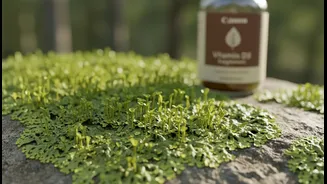
The game-changer is the arrival of a completely plant-based Vitamin D3. In a significant development, the Food Safety and Standards Authority of India (FSSAI) has approved a 'Made in India' plant-derived Vitamin D3 for use in fortified foods, beverages, and supplements. This new ingredient, chemically identical to its animal-derived counterpart, is sourced from sustainable plant materials like algae or lichen. The process involves growing these organisms in controlled environments, free from pesticides, and using light to trigger the natural production of cholecalciferol. This provides a clean, scalable, and effective source of D3 that aligns perfectly with vegetarian and vegan principles.
Unlocking Nutrition for India
This approval is more than just a new ingredient; it's a major step towards enhancing nutritional security in India. Food fortification—the process of adding essential micronutrients to staple foods—is one of the most effective strategies to combat widespread deficiencies. With a plant-based D3 now available, manufacturers can fortify everyday items like edible oils, milk alternatives, wheat flour, and other packaged foods without alienating a huge segment of consumers. A company called Fermenta Biotech has developed an Indian-patented process for this, marketing its product as VITADEE Green. This allows for large-scale public health programs to reach more people, helping to bridge the country's massive vitamin D gap in a way that respects cultural and dietary choices.
The Future of Fortified Foods
Consumers can soon expect to see more products on shelves bearing the fortification logo, explicitly mentioning a plant-based source for Vitamin D3. The new ingredient is heat-stable and available in oil and powder forms, making it easy for manufacturers to incorporate into a wide variety of products, from biscuits and juices to cereals and plant-based yoghurts. For consumers, this means greater choice and easier access to a crucial nutrient. It empowers individuals to meet their dietary needs without compromising their ethical or dietary principles. While this innovation is excellent news, it's not a reason for those already taking conventional D3 to switch, as both forms are equally effective. The key benefit lies in the expansion of choice and accessibility for everyone.