

The New Lunar Gold Rush
For decades, scientists have theorised that water ice could be hiding in the Moon's darkest, coldest craters. Recent missions have turned theory into fact, confirming the presence of water not just as trace molecules, but as substantial ice deposits.
The latest data, gathered using sophisticated instruments like neutron spectrometers, provides unprecedented detail on the location and concentration of this ice. This isn't just a scientific curiosity; it's the foundation for a future lunar economy. Water is heavy and expensive to launch from Earth, costing thousands of dollars per kilogram. Being able to source it directly on the Moon—a practice known as in-situ resource utilisation (ISRU)—radically changes the logistics and economics of space exploration.
How Neutron Spectrometers See Water
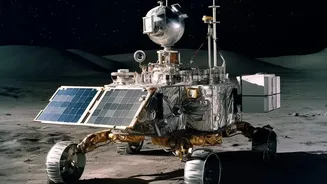
You can't see water ice buried under lunar soil, but you can detect its chemical signature. This is where neutron spectrometers come in. These instruments don't look for water directly; they look for hydrogen, the 'H' in H₂O. The Moon's surface is constantly bombarded by high-energy cosmic rays, which creates a spray of particles, including neutrons. When these neutrons strike the lunar soil, their speed is affected by the elements they encounter. If a neutron collides with a hydrogen atom—which is very similar in mass—it slows down significantly. Spectrometers in orbit or on rovers can measure the energy of these neutrons. An abundance of slow-moving neutrons is a tell-tale sign of high hydrogen concentrations, which strongly indicates the presence of water ice. This technique allows scientists to map hydrogen-rich areas from above, pinpointing the most promising locations for future robotic or human exploration.
From Ice to Breathable Air
Finding water is just the first step. The real prize is what you can do with it. Through a process called electrolysis, an electric current can split water molecules (H₂O) into their constituent parts: hydrogen and oxygen. The oxygen can be used to create breathable air for astronaut habitats, a critical component for any long-term stay on the Moon. It can also serve as an oxidiser for rocket propellant, which makes up a significant portion of a rocket's mass. The hydrogen can be used as a powerful, clean rocket fuel. This ability to produce air and fuel on-site would dramatically reduce humanity's reliance on Earth for supplies, enabling more ambitious and sustainable missions, not just on the Moon but potentially to Mars as well.
Why the South Pole is Prime Lunar Real Estate
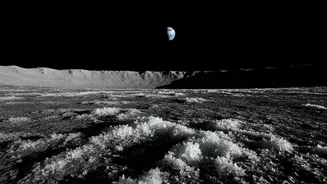
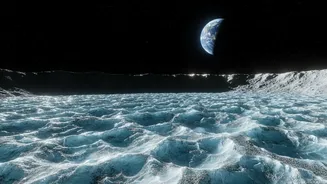
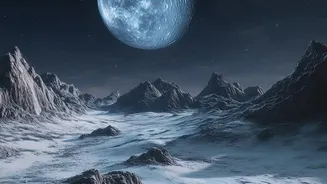
The Moon's south pole is a land of extreme contrasts. While some peaks are bathed in near-constant sunlight—ideal for solar power generation—the floors of many deep craters have not seen the sun in billions of years. These permanently shadowed regions (PSRs) are some of the coldest places in the entire solar system, with temperatures plunging low enough to act as perfect 'cold traps'. Any water delivered by comets or asteroids, or formed through chemical processes over eons, would become frozen and trapped in these craters, safe from being evaporated by sunlight. This unique geography makes the south pole the most sought-after location for the world's space agencies and private companies, all vying to establish a foothold in this resource-rich area.
Unlocking the Next Era of Exploration
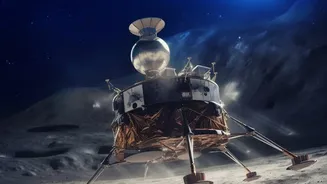
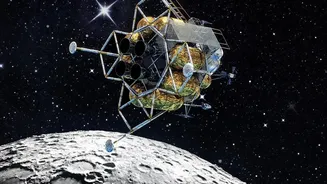
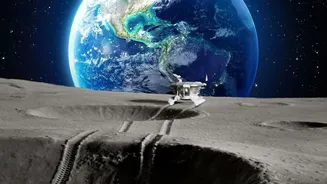
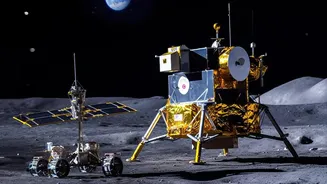
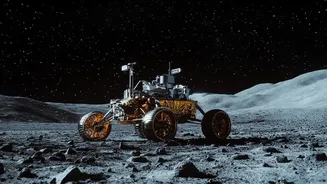
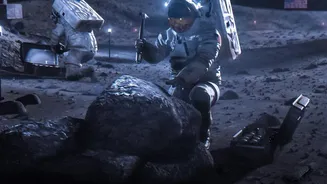
These detailed ice maps are more than just data; they are a roadmap for the future. Space agencies like NASA, with its Artemis program, are planning missions specifically targeting these regions. The goal is to send rovers and, eventually, astronauts to verify the deposits on the ground and test extraction technologies. The success of these missions will depend on the accessibility and purity of the ice. If the water can be mined efficiently, it will pave the way for refuelling stations, research outposts, and a sustained human presence. This moves the Moon from being a destination for short visits to a vital staging post for the exploration of the deeper solar system. The discovery of accessible water is the key that could finally unlock humanity's future among the stars.