






In the vastness of space, a tiny, fast-spinning rock is causing a big stir. Near-Earth object 1998 KY26 is behaving strangely, and a new study has just cast serious doubt on the leading theory trying to explain its odd journey through our solar system.
A Small Rock with Big Mysteries
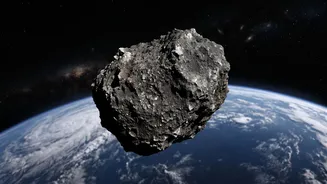
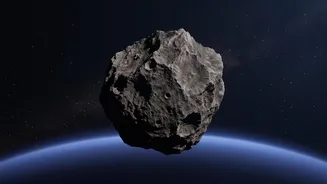
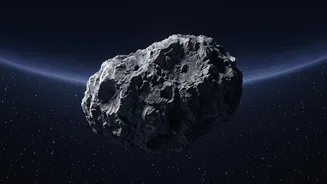
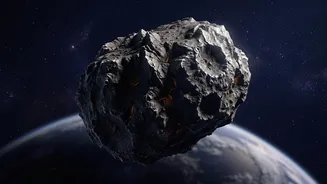
Discovered in 1998, the asteroid known as 1998 KY26 is a cosmic neighbour of particular interest. It is remarkably small, measuring only about 11 metres across, roughly the size of a small house. What truly makes it stand out is its astonishing rotation speed; it completes a full spin in just over five minutes, making it one of the fastest-rotating objects ever observed. This rapid spin suggests it is likely a solid, monolithic piece of rock, as a looser 'rubble pile' would tear itself apart at such speeds. But the biggest puzzle is its movement. The asteroid shows a slight, unusual acceleration that cannot be explained by gravity alone. This has led scientists to seek other forces that might be giving it an extra push.
The 'Dark Comet' Hypothesis
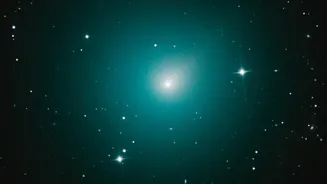
One of the most compelling explanations for this mysterious acceleration was the 'dark comet' theory. A typical comet gets a propulsive kick when the sun heats its icy surface, causing gas and dust to shoot out, creating a visible tail. A dark comet is a stealthier version of this—an old, mostly dormant comet that has lost most of its surface ice but still retains some buried pockets. The idea was that 1998 KY26 could be releasing just enough gas from this hidden ice to gently push it off its expected course, but so faintly that no tail is visible through telescopes. This would make it appear like a normal asteroid while behaving like a comet, seemingly solving the puzzle of its non-gravitational acceleration.
New Findings Raise the Temperature
Fresh doubts about this explanation have emerged from new research by aerospace engineers at the Georgia Institute of Technology. Korbin Hansen and Masatoshi Hirabayashi created a detailed thermal model of the asteroid, calculating temperatures across its surface and deep inside. Their findings, published in the journal Icarus, suggest that 1998 KY26 is simply too warm to hold onto buried water ice for long periods. For ice to survive, it would need to stay below approximately -128 degrees Celsius. However, the model indicates that even the asteroid's coldest regions average around -61 degrees Celsius. At these temperatures, any significant amount of ice providing the push would have vanished in just a few thousand years, a very short time in cosmic terms.
Back to the Drawing Board
This thermal analysis effectively challenges the dark comet hypothesis. If the asteroid is too warm to sustain the very ice needed to create a propulsive outgassing effect, then that effect cannot be the source of its strange acceleration. This leaves scientists once again searching for an answer. While the new study casts doubt on one theory, it doesn't definitively solve the mystery. One alternative explanation is solar radiation pressure, where sunlight itself exerts a tiny but constant force on the asteroid. However, it remains unconfirmed whether this force is sufficient to account for the observed movement. The puzzle is further complicated by another, more outlandish theory from some researchers suggesting the object could even be the lost Soviet Phobos 1 space probe from 1988, given its size and high reflectivity.
Awaiting a Close_Up
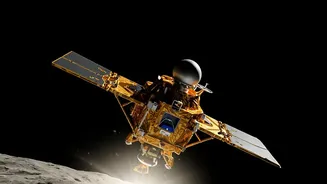
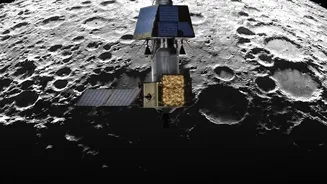
Ultimately, the only way to solve the mystery of 1998 KY26 is to see it up close. Fortunately, that is exactly the plan. Japan's Hayabusa2 spacecraft, which famously returned samples from the asteroid Ryugu, is now on an extended mission. Its final destination is 1998 KY26, with a planned rendezvous in July 2031. This visit will make it the smallest asteroid ever to be explored by a spacecraft. The mission will provide invaluable data on the asteroid's composition, structure, and behaviour, helping scientists understand not only this specific object but also the broader population of small near_Earth asteroids, which is crucial for planetary defense.