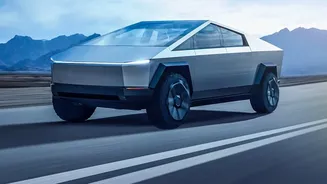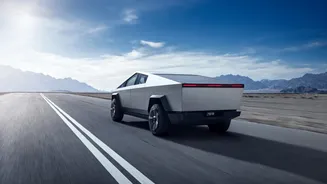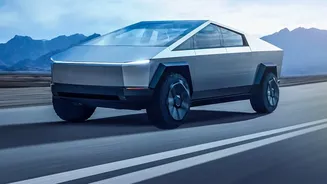



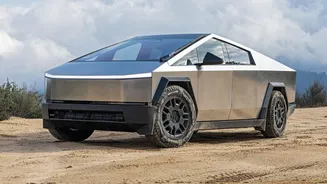

The future of Tesla's polarizing Cybertruck is shrouded in uncertainty. Following a recent announcement by CEO Elon Musk, production at its Texas home is winding down, sparking intense speculation about whether the iconic truck is being discontinued.
The Big Announcement
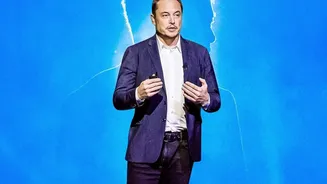
In early November 2026, Tesla CEO Elon Musk announced via a post on X that the company would be 'winding down production of the Cybertruck at Gigafactory Texas around the middle of next year'. The stated reason for this significant shift is to allocate factory space for the increased production of the 'Cybercab', Tesla's autonomous robotaxi. This news confirmed a major pivot in the company's strategy but left a critical question unanswered: what happens to the Cybertruck? Musk did not specify whether production would move to another facility or cease altogether, creating a vacuum of information that has fueled widespread debate among customers, investors, and industry analysts.
A History of High Hopes and Hurdles
Since its dramatic unveiling in 2019, complete with a famously shattered 'unbreakable' window, the Cybertruck has been one of Tesla's most talked-about, and troubled, projects. Originally slated for a 2021 launch with a starting price of around $39,900, a series of delays and production challenges pushed the first deliveries to late 2023, with the base price swelling to over $60,000. Musk himself once admitted, 'We dug our own grave with Cybertruck,' acknowledging the immense difficulty of manufacturing its unique stainless-steel exoskeleton. Despite initial ambitious sales projections of 250,000 units annually, sales have fallen far short. Data showed a significant drop in U.S. sales from 38,965 in 2024 to 20,237 in 2025. The vehicle has also been subject to numerous recalls for issues ranging from faulty accelerator pedals to exterior panels that could detach.
Reading Between the Lines
While Tesla has made no formal statement on the Cybertruck's ultimate fate, comments from key figures offer some clues. The Cybertruck's lead engineer, Wes Morrill, posted on X that the vehicle was an 'incredible technology development platform and lives on through Cybercab,' a statement that some have interpreted as a farewell. Musk later added that Tesla is 'still building Cybertruck for another 8 or 9 months' but then 'needs to focus on scaling Cybercab'. He also added, 'There will never be another vehicle like it,' which many took as a sign that the model is being discontinued. The Giga Texas factory is currently the only plant equipped to handle the Cybertruck's specialized manufacturing demands. Moving production would likely require a significant new investment in tooling and logistics at another site.
Could Production Move to Mexico?
One potential, though speculative, destination for Cybertruck production could be Tesla's planned Gigafactory in Mexico. When the facility was announced, reports from late 2023 noted that the Governor of Nuevo León mentioned the Cybertruck as one of several vehicles that could be produced there. However, plans for Giga Mexico have been fluid, with the primary focus said to be on Tesla's next-generation, lower-cost vehicle and the robotaxi. Furthermore, reports have indicated that the start of production at the Mexico plant has been pushed back, potentially to late 2026 or early 2027, which may not align with the timeline for winding down operations in Texas. As of now, Tesla has not officially linked the Giga Mexico project to the future of the Cybertruck.
A Strategic Shift to Autonomy
The decision to prioritize the Cybercab over the Cybertruck represents a clear strategic shift for Tesla. The company is increasingly staking its future on robotics and artificial intelligence rather than just electric vehicle manufacturing. The Cybercab, a two seat autonomous vehicle with no steering wheel or pedals, is central to this vision. Tesla has already deployed hundreds of these vehicles in Austin as part of a paid robotaxi service. By freeing up production space at its flagship Texas factory, Tesla is signaling that it believes the path to future growth lies in scaling its autonomous fleet, even if it means sacrificing one of its most distinctive, albeit commercially challenged, products.